Learn French With Édith Piaf with these 23 Song Recommendations (Full Translations Included!)
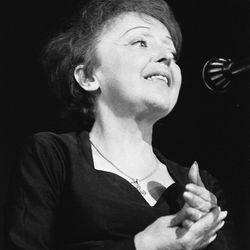
Édith Piaf, from France, had a life story as dramatic as her songs. She rose from poverty to become one of her country's most beloved voices, often called "the Little Sparrow."
Her performances were full of passion, making her a powerful presence on stage. Many remember her for classics like "La Vie en rose" and "Non, je ne regrette rien," which continue to move listeners today.
Piaf was 44 and already in poor health when she recorded this in 1960, and she sings it like someone closing a ledger. The lyric refuses both halves of her life in one breath, "Ni le bien qu'on m'a fait / Ni le mal" [Not the good I've been given / Nor the bad], and then waves the whole question away with "Tout ça m'est bien égal" [It's all the same to me]. Most songs about the past want something from it, an apology or another chance. This one wants it gone.
Then she does something colder than forgetting. "Avec mes souvenirs / J'ai allumé le feu" [With my memories / I lit the fire] turns the memories into fuel, which is a strange and very good image, and "C'est payé, balayé, oublié" [It's paid for, swept away, forgotten] lands like three items being ticked off a list. The last verse explains why she bothered with any of it. After all that clearing out she arrives at "Ça commence avec toi" [It starts with you]. The burning was never the point. She was making space for someone.
Have you ever had a song get stuck in your head? Not just for an hour, but for your whole life? That's what Edith Piaf is singing about in "Padam, Padam." She describes a tune that follows her everywhere, one she says will one day drive her mad: "Un jour cet air me rendra folle" (One day this tune will drive me mad). It's not a real song playing on the radio, but the sound of her own memory. This tune has a life of its own; it speaks before she can and its voice drowns out her own. It's the sound of her past running up behind her to play the "coup du souviens-toi" (the 'remember this?' trick).
This relentless tune forces her to look back at her past loves. It tells her, "Rappelle-toi tes amours" (Remember your loves), and brings back the whole performance of romance, from passionate declarations to cheap promises of forever. The tune knows all her secrets, and it feels like it's pointing a finger at her, making her drag her past around "Comme une drôle d'erreur" (Like a strange mistake). The repeating "Padam, padam" is like a heartbeat, the rhythm of a past that is always present and beating inside her like a "coeur de bois" (a wooden heart).
This song is one of the most famous love songs ever for a reason! Édith Piaf sings about a love so powerful it changes the way she sees everything. The title itself, "La Vie En Rose," means seeing life in pink, or through rose-colored glasses. For her, this feeling comes from one person. She describes him with such simple, perfect details, like "Un rire qui se perd sur sa bouche" (A laugh that gets lost on his mouth), calling it the "portrait sans retouche" (unedited portrait) of the man she belongs to.
It's all about how his presence transforms her world. When he holds her and speaks softly, she says, "Je vois la vie en rose" (I see life in pink). All her troubles and sorrows just disappear. He has promised they are for each other for life—"C'est lui pour moi / Moi pour lui dans la vie" (It's him for me / Me for him in life)—and this love brings her a happiness so intense she feels she could die from it. It's a total, all-consuming declaration of love.
¡Prepárate para enamorarte con "La Vie En Rose" de Édith Piaf! Esta canción es pura magia y nos transporta a un mundo donde el amor lo transforma todo. Desde el primer verso, la cantante nos describe a su amado con detalles que nos hacen suspirar: "Des yeux qui font baisser les miens" [Unos ojos que hacen bajar los míos] y "Un rire qui se perd sur sa bouche" [Una risa que se pierde en su boca]. ¡Es como si lo tuviéramos justo enfrente!
Cuando él la abraza y le habla en voz baja, ella ve "la vie en rose" [la vida en rosa]. ¡Qué frase tan hermosa para describir la felicidad! Él le dice "mots d'amour" [palabras de amor], palabras cotidianas que le "fait quelque chose" [le hacen sentir algo]. Es un amor tan profundo que los problemas y las tristezas se desvanecen. Ella está tan feliz que podría "mourir" [morir] de alegría. La canción es una declaración de amor total: "C'est lui pour moi, moi pour lui dans la vie" [Es él para mí, yo para él en la vida]. ¡Es el tipo de amor que todos soñamos!
“La Foule” significa “La multitud”, y la canción convierte una fiesta callejera en una aventura de amor de apenas unos instantes. La narradora está rodeada de sol, música, gritos y risas: “Et perdue parmi ces gens qui me bousculent” [Y perdida entre esa gente que me empuja]. De pronto, la multitud la lanza hacia un hombre. Quedan apretados, con las manos unidas, movidos por el mismo gentío: “Nous ne formons qu’un seul corps” [No formamos más que un solo cuerpo]. Es una imagen preciosa y un poco absurda: no son ellos quienes deciden bailar, sino el oleaje de personas que los empuja. Aun así, ella se siente feliz, embriagada y llena de alegría por la sonrisa de él.
Pero la misma multitud que los junta también los separa. Cuando ella grita y trata de retenerlo, su voz se pierde entre las risas. El gentío se lleva al hombre de sus brazos y la arrastra lejos, dejándola con los puños crispados y una rabia enorme: “Maudissant la foule qui me vole l’homme qu’elle m’avait donné” [Maldiciendo a la multitud que me roba al hombre que me había dado]. Ese verbo, voler, aquí significa “robar”, no volar: la multitud le “regala” un amor por un momento y después se lo quita. La canción pasa de la euforia al desamparo con una velocidad brutal, como si una fiesta entera pudiera cambiarle la vida y desaparecer antes de que ella siquiera conozca el nombre de ese hombre.
This song tells a whole love story in just a few minutes, and it's a real emotional rollercoaster. Édith Piaf sings from the perspective of a woman lost in a massive street party, feeling completely overwhelmed. She's "Étourdie, désemparée" (Dizzy, distraught) when suddenly the crowd shoves her right into the arms of a stranger. What starts as a chaotic accident becomes an instant, magical connection. They are literally swept off their feet, "Emportés par la foule" (Carried away by the crowd), dancing so closely that they become "un seul corps" (a single body).
But the same crowd that gives her this incredible moment of joy is also cruel. Just as suddenly as he appeared, the man is ripped away from her. She screams, but her voice is lost in the noise. The crowd, which just a moment ago felt like a force of destiny bringing them together, becomes a monster that steals him away. The final line is just devastating: she curses the crowd for taking "L'homme qu'elle m'avait donné / Et que je n'ai jamais retrouvé" (The man it had given me / And whom I have never found again). It’s a story about how quickly happiness can appear and disappear, all at the mercy of chance.
Is love worth all the fuss? Edith Piaf and Théo Sarapo tackle this eternal question in their playful yet poignant duet À Quoi Ça Sert L'amour ?. Throughout the song they volley back and forth, listing every contradiction of romance: it can make you soar with joy and drown in tears, last forever yet disappear in a heartbeat, leave only sorrow yet taste like honey in memory. Their conversation feels like a late-night café debate where both singers admit they have heard all the warnings, but still cannot resist believing in love again and again.
The message glows with French charm: life without love would be empty, because even the heartbreaks become treasured memories. In the end the two voices proclaim that finding the right person makes every risk worthwhile. Joy, pain, laughter, and tears all blend into one unforgettable adventure – and that, they conclude, is exactly what love is for.
Hast du jemals eine Melodie im Kopf gehabt, die einfach nicht weggehen will? Edith Piaf, die legendäre französische Sängerin, treibt dieses Gefühl in „Padam, Padam“ auf die Spitze. Sie singt über eine Melodie, die sie Tag und Nacht verfolgt: „Cet air qui m'obsède jour et nuit“ (Diese Melodie, die mich Tag und Nacht verfolgt). Diese Melodie ist keine neue; sie ist so alt wie sie selbst und wird von den Geistern ihrer Vergangenheit getragen. Sie ist so aufdringlich, dass sie Piafs eigene Stimme übertönt und sie an den Rand des Wahnsinns treibt.
Der „Padam“-Sound ist wie ein Herzschlag, der sie unerbittlich an alles erinnert. Die Melodie zwingt sie, sich an ihre Liebesaffären zu erinnern, die „comédie des amours“ (die ganze Komödie der Liebe), mit all den billigen Versprechungen und flüchtigen Momenten. Es ist, als ob ihre gesamte Vergangenheit vor ihren Augen abläuft, angetrieben von diesem unaufhaltsamen Rhythmus. Am Ende beschreibt sie diesen Takt als einen, der „bat comme un coeur de bois“ (schlägt wie ein Herz aus Holz) – ein kraftvolles Bild für ein Herz, das vielleicht zu viel gefühlt hat und nun gefühllos schlägt.
In "Comme Moi," which translates to "Like Me," Édith Piaf paints a beautiful picture of a woman deeply in love and waiting for her partner. She wonders if, somewhere else in the world, another woman is feeling the exact same way. Is someone else also filled with happiness, peeking through a blue silk curtain to watch for her love's arrival? This creates a powerful feeling of shared, universal experience.
The song is filled with small, intimate details that bring the scene to life. The singer imagines this other woman:
- Pinning a flower to her dress
- Checking the time impatiently
- Hearing her own heart beat faster as she hears footsteps on the stairs
In the end, the singer's imagination merges with her reality. The waiting is over, and she describes the breathtaking moment of finally being in her lover's arms, a feeling so intense she says her heart "dies" in his embrace.
"Milord" is Édith Piaf singing as a dockside girl in a French port town, calling out to an English gentleman she's noticed passing by.
She admits she's nobody to him, just a shadow of the street, while he once walked past looking proud and triumphant with a beautiful woman on his arm. But now she finds him alone, heartbroken: his love sailed away on a ship and left him behind.
Rather than pity him from a distance, she invites him in out of the cold, offers him a seat at her table, and gently coaxes him to laugh, sing, and dance again. It's a song about tenderness between strangers, and about choosing joy again after heartbreak.
Em “Non, Je Ne Regrette Rien”, Édith Piaf canta como alguém que fechou a conta com o passado e se recusa a pedir desculpas por ter vivido. “Non, rien de rien” [Não, nada de nada] volta como uma resposta firme: ela não lamenta nem o bem que recebeu nem o mal que sofreu, porque “tout ça m'est bien égal” [tudo isso me é indiferente]. A expressão “je me fous du passé” [eu não estou nem aí para o passado] é bem coloquial e direta, quase provocadora.
As imagens ficam ainda mais decididas: o que aconteceu foi “payé, balayé, oublié” [pago, varrido, esquecido]. Ela acende um fogo com as próprias lembranças, deixa para trás tristezas, prazeres e amores acompanhados de “trémolos” [tremolos, aquelas oscilações dramáticas na voz ou na música]. Depois de varrer tudo, anuncia: “je repars à zéro” [recomeço do zero]. E esse recomeço tem um destinatário claro: “aujourd'hui, ça commence avec toi” [hoje, isso começa com você]. A canção sai de uma declaração quase desafiadora e termina com a possibilidade de uma vida nova ao lado de alguém.
Édith Piaf, die französische Sängerin, beschreibt in „La Vie en Rose“ eine Liebe, die den Alltag plötzlich heller wirken lässt. Zuerst sieht sie ganz genau den Mann, der ihr gehört: „Des yeux qui font baisser les miens“ [Augen, die meinen Blick senken] und „Un rire qui se perd sur sa bouche“ [ein Lachen, das sich auf seinem Mund verliert]. Wenn er sie in die Arme nimmt und leise mit ihr spricht, sagt sie: „Je vois la vie en rose“ [Ich sehe das Leben durch eine rosarote Brille]. Diese Redewendung bedeutet hier: Alles wirkt schön, hoffnungsvoll und voller Liebe, selbst die gewöhnlichen Worte des Tages.
Die Gefühle werden schnell sehr groß. Der Mann ist „entré dans mon coeur“ [in mein Herz eingetreten], und sein Dasein wird für sie zur Ursache ihres Glücks. Sie versprechen einander, fürs ganze Leben zusammenzugehören. Sobald sie ihn sieht, schlägt ihr Herz schneller. Nächte voller Liebe lassen Sorgen und Kummer verschwinden, bis sie „heureux, heureux à en mourir“ [so glücklich ist, dass sie dafür sterben könnte]. Ein bisschen übertrieben ist das schon, aber genau darin liegt der Charme: Für die verliebte Stimme dieses Liedes verändert eine Umarmung die ganze Welt.
Le Roi a fait battre tambour is a traditional French folk ballad, far older than any single artist. This recording is Édith Piaf's version of a song people had been singing for generations before her.
The story is a small tragedy told in a handful of lines. A king spots a beautiful woman and asks his marquis who she is. She turns out to be the marquis's own wife. The king, wielding his royal power, tells the marquis to hand her over anyway, and to console him for the loss, offers to make him a marshal of France. Before she is taken away, she says a last farewell to her husband. The final verse jumps forward: the queen sends flowers, and the scent of that bouquet kills the marquise.
It reads almost like a fairy tale, but it carries a sharp, simple point: rank can force away what someone loves, and a title can never make up for what is actually lost.
„La Vie en rose” Édith Piaf to piosenka o zakochaniu, które zmienia sposób patrzenia na świat. Bohaterka opisuje mężczyznę przez jego spojrzenie i śmiech: „Des yeux qui font baisser les miens” [Oczy, przez które spuszczam wzrok] oraz „Un rire qui se perd sur sa bouche” [Śmiech, który gaśnie na jego ustach]. To bardzo osobisty portret, bez ozdobników. Kiedy on bierze ją w ramiona i mówi cicho, „Je vois la vie en rose” [Widzę życie w różowych barwach]. Ten zwrot oznacza patrzenie na wszystko z niezwykłym optymizmem, jakby miłość zmieniała kolory codzienności.
W tej historii szczęście kryje się w prostych słowach. Mężczyzna mówi jej „des mots d’amour” [słowa miłości], ale także „des mots de tous les jours” [zwyczajne, codzienne słowa], a jednak one wywołują w niej coś wyjątkowego. Dzięki niemu smutki i kłopoty znikają, a serce zaczyna bić mocniej już na sam jego widok. Obietnica „C’est lui pour moi, moi pour lui dans la vie” [On jest dla mnie, ja jestem dla niego przez całe życie] jest bardzo bezpośrednia, nawet odrobinę przesadna, lecz właśnie dlatego brzmi jak szczere wyznanie osoby całkowicie zakochanej.
Édith Piaf, francuska artystka, śpiewa tu z niezwykłą stanowczością: „Non, rien de rien” [Nie, zupełnie nic] i „je ne regrette rien” [niczego nie żałuję]. Podmiot liryczny odcina się zarówno od dobra, które go spotkało, jak i od zła: „Ni le bien qu’on m’a fait / Ni le mal” [Ani od dobra, które mi wyrządzono, / ani od zła]. Wszystko to jest mu „bien égal” [zupełnie obojętne]. To bardzo bezpośrednie, niemal zuchwałe stanowisko: przeszłość nie ma już władzy nad jego życiem.
Najciekawszy obraz pojawia się w słowach „C’est payé, balayé, oublié” [To spłacone, zamiecione, zapomniane]. Francuski czasownik balayer znaczy „zamiatać”, więc dawne smutki i miłości zostają symbolicznie wymiecione. „Avec mes souvenirs / J’ai allumé le feu” [Z moimi wspomnieniami / rozpaliłam ogień] brzmi jeszcze mocniej: wspomnienia służą tu do zamknięcia starego rozdziału, a nie do życia w nim. Na końcu pojawia się ktoś ważny: „Car ma vie / Car mes joies / Aujourd’hui / Ça commence avec toi” [Bo moje życie, bo moje radości, dzisiaj zaczynają się z tobą]. Po całkowitym rozliczeniu z przeszłością zaczyna się nowy początek, związany z adresatem piosenki.
Édith Piafs ”La Vie en rose” är en kärleksvisa från Frankrike där en älskad man förändrar hela berättarens syn på världen. Hon beskriver hans blick, hans skratt och de enkla kärleksorden han viskar. När han håller om henne säger hon: ”Je vois la vie en rose” [Jag ser livet i rosa]. Uttrycket betyder att kärleken får livet att verka ljusare och vackrare än vanligt, ungefär som att se världen genom rosa glasögon.
Det fina är hur konkret lyckan blir: mannen har kommit in i hennes hjärta, hennes bekymmer och sorger försvinner, och så fort hon ser honom börjar hjärtat slå. ”C’est lui pour moi, moi pour lui dans la vie” [Han är den rätte för mig, jag för honom i livet] låter stort och mycket säkert, nästan lite dramatiskt, men det passar sångens varma löfte om kärlek för livet. Här är kärleken både vardaglig, med ”ord av varje dag”, och överväldigande: till och med nätterna av kärlek ska aldrig ta slut.
Have you ever loved someone so much you wished you could stop time? That's the powerful feeling behind Édith Piaf's classic song, "Mon Dieu," which literally means "My God."
In this song, Piaf isn't just singing; she's making a desperate and emotional prayer. She begs God for just a little more time with her beloved, bargaining for anything from a few days to a single month. She wants this precious time to create more memories, to adore him, and to simply fill her life with his presence. It's a beautiful and heartbreaking song about holding on to love against all odds, even when you know you might be wrong to ask for it.
"Le Mauvais Matelot" is a small, dark folk tale set on a ship in the port of Marseille. Below deck, chained "in the hold of the ship, far from the sky, deep down" (dans la cale du navire, loin du ciel, tout au fond), sits a young sailor who never wanted to go to sea at all: "I am a son of the earth, my father is a plowman" (je suis fils de la terre, mon père est laboureur), he tells the captain's daughter when she comes to see him in the dark, "and the sea scares me" (et la mer me fait peur). He was pressed into the navy against his will and can't even swim.
The girl falls for him anyway. "Drop my chains, I will marry you" (faites tomber mes chaînes, je vous épouserai), he begs, promising to take her far from the water and back to the wheat fields of home. But her father finds out, and it costs him everything: "he stole my daughter, tore my heart apart" (il m'a volé ma fille, m'a déchiré le cœur), the captain cries. By the last verse the boat is still dancing in the port, but the captain is dead, having jumped overboard from grief, and the young sailor is left to sleep "in the water" (dans l'eau) he always feared.
En «À quoi ça sert l’amour ?» («¿Para qué sirve el amor?»), Edith Piaf y Théo Sarapo juegan con una pregunta que parece sencilla y termina siendo imposible de responder del todo. La canción admite que amar puede hacer sufrir y llorar, pero también dar alegría «avec des larmes aux yeux» [con lágrimas en los ojos]: una mezcla triste y maravillosa. El amor llega sin explicación, de repente, y cuando se acaba puede dejar «un immense chagrin» [una pena inmensa]. Aun así, la letra guarda una idea luminosa: el dolor de hoy puede convertirse mañana en un recuerdo feliz, y hasta un amor perdido puede dejar «un goût de miel» [un sabor a miel].
La conversación cambia cuando aparece un «tú» muy concreto. «Toi, t’es le dernier / Mais toi, t’es le premier» [Tú eres el último / pero tú eres el primero] expresa una certeza romántica y un poco absoluta: antes de esa persona no había nada importante, y con ella todo encaja. Por eso la respuesta final no es una teoría, sino una decisión: «À chaque fois j’y crois / Et j’y croirai toujours» [Cada vez creo en él / y siempre creeré]. Para la canción, el amor sirve precisamente para vivir esas alegrías y esos desengaños, porque una vida sin ellos sería, en sus propias palabras, como haber vivido para nada.
Em
Pripravte sa na pieseň, ktorá vás chytí a nepustí! Edith Piaf v „Padam, Padam“ spieva o melódii, ktorá ju prenasleduje dňom i nocou. Nie je to len taká obyčajná pieseň, je to melódia, ktorá je s ňou odjakživa, „Il vient d'aussi loin que je viens“ [Prichádza z tak ďaleka ako ja]. Je to ako starý priateľ, ktorý sa vždy objaví v nevhodnú chvíľu, aby jej pripomenul všetko, čo prežila. Dokonca jej aj skáče do reči, „Mais il m'a coupé la parole“ [Ale prerušil ma].
Táto melódia je ako zrkadlo, ktoré jej ukazuje prstom na minulé lásky a spomienky. „Il dit: Rappelle-toi tes amours“ [Hovorí: Spomeň si na svoje lásky]. Je to ako keby jej hovorila, že „Y a pas d'raison Pour qu'tu n'pleures pas“ [Nie je dôvod, prečo by si neplakala] so všetkými tými spomienkami. Piaf sa cíti, akoby „traîne après moi Comme une drôle d'erreur“ [ťahala za sebou ako zvláštnu chybu] túto melódiu, ktorá pozná všetky jej tajomstvá. Je to pieseň, ktorá bije „comme un coeur de bois“ [ako drevené srdce] a núti ju prežiť celú komédiu lásky znova a znova. Je to naozaj silné, ako dokáže jedna melódia vyvolať toľko emócií!
Oletko valmis sukeltamaan Edith Piafin ikoniseen kappaleeseen ”Padam, Padam”? Tämä kappale kertoo pakkomielteisestä sävelmästä, joka seuraa laulajaa kaikkialle. Se on kuin vanha ystävä, joka tuntee kaikki hänen salaisuutensa ja muistuttaa menneistä rakkaista. Piaf kuvailee, kuinka tämä sävelmä on ollut olemassa niin kauan kuin hän itsekin: ”Cet air n'est pas né d'aujourd'hui / Il vient d'aussi loin que je viens” [Tämä sävelmä ei syntynyt tänään / Se tulee yhtä kaukaa kuin minäkin]. Se on kuin varjo, joka hiipii hänen perässään ja saa hänet muistelemaan menneitä.
Kappaleen ”Padam, padam, padam” -hokema on kuin sydämenlyönti, joka sykkii läpi koko laulun. Se edustaa tätä pakkomielteistä sävelmää, joka ei anna Piafille rauhaa. Se muistuttaa häntä kaikista menneistä rakkaista ja hetkistä, jolloin hän luuli löytäneensä ikuisen rakkauden: ”Rappelle-toi tes amours / Rappelle-toi puisque c'est ton tour” [Muista rakkaasi / Muista, koska on sinun vuorosi]. Vaikka muistot ovat kipeitä, ne ovat osa häntä, ja tämä sävelmä on kuin vanha ystävä, joka pitää huolen siitä, ettei hän unohda mitään. Se on kaunis ja samalla surullinen kuvaus siitä, miten menneisyys voi elää meissä.
Edith Piaf v pesmi "Padam, Padam" opisuje melodijo, ki jo obseduje podnevi in ponoči, in pravi, da ta melodija ni nova, ampak jo spremlja že od nekdaj, kot da jo vleče sto tisoč glasbenikov. Ta melodija jo spravlja ob pamet in ji preprečuje, da bi spregovorila, saj vedno govori pred njo in njen glas preglasi njenega. To je kot nekakšen refren, ki se ji nenehno ponavlja v glavi.
Melodija ji prinaša spomine in jo sili, da se spominja svojih ljubezni in preteklosti. Kot pravi: "Rappelle-toi tes amours / Rappelle-toi puisque c'est ton tour / Y a pas d'raison / Pour qu'tu n'pleures pas / Avec tes souvenirs sur les bras" [Spomni se svojih ljubezni / Spomni se, saj je tvoj čas / Ni razloga / Da ne bi jokala / S svojimi spomini v naročju]. Zdi se, kot da jo ta melodija preganja in ji kaže s prstom, kar jo sili, da se sooči s svojimi preteklimi izkušnjami. Edith Piaf se spominja vseh teh ljubezenskih komedij, ki so se odvijale ob tej melodiji, in vseh tistih poceni "vedno" obljub, ki so se izkazale za prazne. Na koncu se zdi, da je ta melodija kot srce iz lesa, ki bije in bije, polno žalosti in spominov.

