Learn Spanish With Intocable with these 23 Song Recommendations (Full Translations Included!)
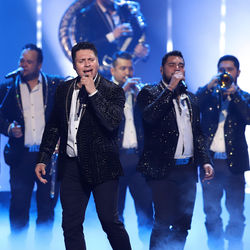
Intocable is a Grammy-winning band from Zapata, Texas, in the United States, formed in the early 1990s by childhood friends Ricky Muñoz and René Martínez. Muñoz leads on vocals and accordion, while Martínez anchors the rhythm on drums, and together they built a sound that blends traditional norteño and conjunto rhythms with the polish of pop balladry.
That mix of accordion-driven polka and heartfelt melody helped Intocable become one of the most influential groups in Tejano music, inspiring a generation of bands that followed their lead. Their catalogue includes more than twenty Latin top ten hits, and their honors include a Grammy Award for Best Mexican/Mexican American Album and multiple Latin Grammy wins for Best Norteño Album.
In 1999 the band faced tragedy when three members died in a road accident, but Ricky and René kept Intocable going, returning to the stage within months. More than three decades later, the group still fills arenas across Mexico and the United States, and their songs remain a cornerstone of romantic norteño music for millions of fans.
This song asks a question that anyone who's been through a tough breakup will understand: "¿Y todo para qué?" (And all for what?). The singer has given everything to someone, his affection, his trust, his whole life. He says, "Te di mi cariño, te di mi confianza / Te di mi calor" (I gave you my affection, I gave you my trust / I gave you my warmth). He's at a total loss, wondering why he was made to fall in love if it was all going to end like this.
But here’s the part that really gets you. Even though he feels like he lost, he sings, "Pero no me arrepiento / Si en cada momento me hiciste feliz" (But I don't regret it / If in every moment you made me happy). It's such a powerful mix of heartbreak and gratitude. He's devastated, but he can't bring himself to regret the good times. It's a classic song about loving someone so much that even the pain was worth it.
Get ready for a huge, heartfelt declaration of love. The singer asks his partner to just be in the moment with him: "Cierra tus ojos / Toma mis manos y abrázame con fuerza" (Close your eyes / Take my hands and hold me tight). He wants to make sure she knows exactly how he feels, telling her "cuanto te amo / Y lo feliz que soy" (how much I love you / And how happy I am).
He then lists all the incredible things he would do for her love. These aren't small promises; he says he would climb to the clouds and walk blindly for her. He even says, "No me importaría morir entre tus brazos / Porque te amo" (I wouldn't mind dying in your arms / Because I love you). It's a song about a love so complete and all-consuming that it feels like a dream, which is exactly what the title, "Sueña," means.
Bir adam sevgilisine verdiği her şeyi tek tek sayıyor, sonra da bunun neye yaradığını soruyor. Kıtalarda liste uzayıp gidiyor: "Te di mi cariño, te di mi confianza" (Sana sevgimi verdim, sana güvenimi verdim), sonra sıcaklığı, en sonunda da hayatının kendisi. Üstelik hepsi "Por tan solo un minuto" (Sadece bir dakika için) süren bir tutku uğruna. Nakarat şarkıya adını veren soruyu soruyor: "¿Y todo para qué?" (Peki bütün bunlar ne içindi?).
Asıl güzel kısım nakaratın ortasındaki dönüş. Daha az önce kadına neden onu umutlandırdığını sorarken birden "Pero no me arrepiento" (Ama pişman değilim) diyor, çünkü kadın onu her an mutlu etmiş. Kırgın ama kin tutmuyor. "Que por no mirarte, me puedes matar" (Seni görmemenin beni öldürebileceğini) satırı da tam bir norteño aşk şarkısına yakışacak kadar abartılı ve içten.
"Por Un Beso" is Intocable's confession of a love the singer can't bring himself to speak. He's consumed by wanting one woman — "Que por dentro estoy muriendo por un beso suyo" (that inside I'm dying for one kiss from her) — but the moment she's near he freezes: "Me quedo sin fuerza con ganas de amarle" (I'm left without strength, wanting to love her). He admits she has no idea she fills his thoughts, and that it's fear alone keeping him from bringing her a rose and saying "te quiero" (I love you). At night she takes over his dreams — "Cada noche está en mis sueños" (Every night she's in my dreams) — and he wakes feeling as if she already belongs to him, still stuck wanting to break "las cadenas del maldito miedo" (the chains of this damned fear) for the one kiss he can't work up the nerve to take.
Texas group Intocable brings us a classic breakup panic with "No Te Vayas" (Don't Go). The narrator refuses to accept that things are over, flat-out complaining that you cannot simply wipe out deep feelings in an afternoon: "Te quiero demasiado / Para olvidarte / En unas horas" (I love you too much to forget you in a few hours). He treats the departure as an act of deliberate cruelty, straight up begging, "No seas cruel con mi corazón" (Don't be cruel to my heart). It is dramatic, desperate, and completely unapologetic about pleading for another chance instead of keeping his dignity intact.
He piles on the melodrama with big, stormy imagery. He claims, "Me pierdo en la marea / Y mis lágrimas se acaban" (I get lost in the tide, and my tears are running out). You can almost hear him throwing his hands in the air when he admits he has run dry of tears while drowning in his own emotional sea. Instead of moving on gracefully, he craves the heat back in his life, crying out that he needs "el fuego de tu pasión" (the fire of your passion) so he is not left holding "un triste adiós" (a sad goodbye).
Facet wylicza wszystko, co oddał, a potem pyta, po co. W zwrotkach leci cała lista: "Te di mi cariño, te di mi confianza" (Dałem ci moją czułość, dałem ci moje zaufanie), do tego ciepło, a na koniec całe życie, i to wszystko "por tan solo un minuto" (za jedną tylko minutę) jej namiętności. Refren zadaje pytanie z tytułu: "¿Y todo para qué?" (I po co to wszystko?).
Najlepszy jest zwrot w refrenie. Przed chwilą pytał, po co w ogóle dawała mu nadzieję, a zaraz potem mówi: "Pero no me arrepiento" (Ale niczego nie żałuję), bo w każdej chwili dawała mu szczęście. Jest zraniony, ale nie zgorzkniały. A w linijce "Que por no mirarte, me puedes matar" (Że możesz mnie zabić, gdy na ciebie nie patrzę) przesadza tak serdecznie, jak wolno tylko w norteño o miłości.
Ein Mann zählt auf, was er alles hergegeben hat, und fragt dann, wofür. In den Strophen kommt die Liste: "Te di mi cariño, te di mi confianza" (Ich gab dir meine Zuneigung, ich gab dir mein Vertrauen), dazu seine Wärme und am Ende sein ganzes Leben, und das alles "por tan solo un minuto" (für nur eine Minute) ihrer Leidenschaft. Der Refrain stellt die Frage, die dem Song den Namen gibt: "¿Y todo para qué?" (Und wozu das alles?).
Das Schöne ist die Wendung im Refrain. Gerade hat er noch gefragt, wozu sie ihm überhaupt Hoffnung gemacht hat, und dann sagt er: "Pero no me arrepiento" (Aber ich bereu es nicht), weil sie ihn in jedem Moment glücklich gemacht hat. Er ist verletzt, aber nicht verbittert. Und mit "Que por no mirarte, me puedes matar" (Dass du mich umbringen kannst, wenn ich dich nicht ansehe) übertreibt er so herzlich, wie man es nur in einem Norteño-Liebeslied darf.
Το τραγούδι μοιάζει με ερώτηση που κάνει κανείς αφού έχει τελειώσει ο χωρισμός. Ο ήρωας απαριθμεί όσα έδωσε στην αγαπημένη του: «Te di mi cariño, te di mi confianza» (σου έδωσα την τρυφερότητά μου, σου έδωσα την εμπιστοσύνη μου), ακόμα και «Mi vida te la di» (τη ζωή μου σου την έδωσα). Και σε αντάλλαγμα ζητούσε ελάχιστα, «Por tan solo un poquito» (για λίγο μόνο) από το πάθος της.
Το ρεφρέν γυρίζει γύρω από μία ερώτηση: «¿Y todo para qué?» (και όλα για ποιο λόγο;). Το πιο ενδιαφέρον έρχεται μετά. Παραδέχεται ότι έχασε και αμέσως λέει «Pero no me arrepiento» (όμως δεν μετανιώνω), γιατί κάθε στιγμή εκείνη τον έκανε ευτυχισμένο. Υπάρχει εδώ λιγότερη πίκρα και περισσότερη ευγνωμοσύνη, και γι' αυτό το τραγούδι πιάνει πιο βαθιά από ένα συνηθισμένο παράπονο για ραγισμένη καρδιά.
Intocable takes the classic romantic obsession trope and pushes it straight past subtle metaphors into wild territory. The narrator does not just fancy someone; he treats the entire affair like a dangerous physical addiction. Right from the start, he calls this person "la droga de mi cuerpo" (the drug of my body) and insists she has entered his bloodstream. It is intensely dramatic. He even describes meeting up as "inyectándome a escondidas" (injecting myself in secret), framing their intimacy as a risky habit that society condemns. There is genuine fear mixed into his attraction: he warns that "una sobredosis me pueda matar" (an overdose could kill me) every time they end up together.
The chorus doubles down on this feverish panic. He piles on labels like "eres peligro, eres un mal, eres veneno" (you are danger, you are an evil, you are poison), yet he immediately circles back to how much he craves her touch. The line "mis venas ya, las tengo que inyectar" (my veins now, I have to inject them) shows someone completely consumed by desire, unable to step away even when he knows it burns him up inside. It is blunt, melodramatic, and completely hooked on the rush.
È la canzone di un uomo che ha dato tutto e si ritrova a mani vuote. Fa l'elenco senza giri di parole: «Te di mi cariño, te di mi confianza» (ti ho dato il mio affetto, ti ho dato la mia fiducia), poi addirittura «Mi vida te la di» (la mia vita te l'ho data), e tutto in cambio di briciole, «Por tan solo un minuto» (per un solo minuto) della passione di lei.
Il ritornello ripete «¿Y todo para qué?» (e tutto per cosa?) come chi continua a girarci intorno senza trovare risposta. La parte più bella arriva alla fine: ammette di aver perso, ma dice «Pero no me arrepiento» (ma non me ne pento), perché lei lo ha reso felice in ogni momento. Niente rancore, solo un cuore spezzato che resta grato, sopra una fisarmonica norteña che non molla mai.
Sangeren har gitt alt og står igjen med ett spørsmål: "¿Y todo para qué?" (Og alt dette for hva?). Han lister opp det han har gitt bort, "Te di mi cariño, te di mi confianza" (Jeg ga deg min kjærlighet, jeg ga deg min tillit), og lurer på hvorfor hun i det hele tatt fikk ham til å forelske seg.
Det fine er vendingen i refrenget. Han innrømmer at han tapte, men synger likevel "Pero no me arrepiento" (Men jeg angrer ikke), fordi "en cada momento me hiciste feliz" (i hvert øyeblikk gjorde du meg lykkelig). Bitter og takknemlig på samme tid, og det er nettopp derfor sangen treffer.
Um homem faz a lista de tudo o que deu para a mulher que ama e depois pergunta para que serviu. Os versos vão empilhando: "Te di mi cariño, te di mi confianza" (Te dei meu carinho, te dei minha confiança), depois o calor e, no fim, a própria vida. E tudo isso em troca de uma paixão que durou "Por tan solo un minuto" (Por apenas um minuto). O refrão faz a pergunta que dá nome à música: "¿Y todo para qué?" (E tudo para quê?).
A melhor parte é a virada no meio do refrão. Ele acabou de perguntar por que ela o iludiu e, de repente, diz "Pero no me arrepiento" (Mas não me arrependo), porque ela o fez feliz a cada momento. Está magoado, mas não guarda rancor. E o verso "Que por no mirarte, me puedes matar" (Que por não te ver, você pode me matar) é exagerado do jeito que uma boa balada norteña tem que ser.
Ця пісня звучить як запитання, яке ставлять уже після розриву. Герой перелічує, що віддав коханій: «Te di mi cariño, te di mi confianza» (я віддав тобі свою ніжність, я віддав тобі свою довіру), і навіть «Mi vida te la di» (своє життя я віддав тобі). А натомість просив зовсім небагато, «Por tan solo un poquito» (лише за краплинку) її пристрасті.
Приспів крутиться навколо одного питання: «¿Y todo para qué?» (і все заради чого?). Та найцікавіше далі. Він визнає, що програв, і одразу каже «Pero no me arrepiento» (та я не шкодую), бо щомиті вона робила його щасливим. Образи тут менше, ніж вдячності, і саме тому пісня чіпляє сильніше за звичайну скаргу на розбите серце.
Rozpráva muž, ktorý dal všetko a zostal s prázdnymi rukami. Pieseň začína otázkou „¿Qué más quieres de mí?“ (Čo ešte odo mňa chceš?) a potom ako zoznam vypočíta, čo všetko odovzdal: lásku, dôveru, teplo, ba aj „Mi vida te la di“ (svoj život som ti dal), a to len za minútku jej vášne.
Refrén je jedna veľká výčitka: „¿Y todo para qué?“ (A to všetko načo?). Zaujímavé je, že hrdina sa nesťažuje na to, že by bol nešťastný. Priznáva, že prehral, no hneď dodáva „Pero no me arrepiento“ (ale neľutujem), lebo s ňou bol v každej chvíli šťastný. Na konci mu už chýbajú slová a prosí ju len o jedno: „Dímelo por favor“ (povedz mi to, prosím).
Zpěvák nejdřív vypočítá všechno, co dal, a teprve pak se ptá, k čemu to bylo. Ve slokách jde celý seznam: "Te di mi cariño, te di mi confianza" (Dal jsem ti svou něhu, dal jsem ti svou důvěru), k tomu teplo a nakonec celý život, a to všechno "por tan solo un minuto" (za pouhou jednu minutu) její vášně. Refrén pak položí otázku z názvu: "¿Y todo para qué?" (A k čemu to všechno?).
Nejlepší je obrat uprostřed refrénu. Chvíli předtím se ptá, proč mu vůbec dávala naději, a hned nato řekne: "Pero no me arrepiento" (Ale ničeho nelituji), protože s ní byl v každé chvíli šťastný. Je zraněný, ale ne zahořklý. A ve verši "Que por no mirarte, me puedes matar" (Že když se na tebe nedívám, můžeš mě zabít) přehání tak srdečně, jak se to smí jen v norteñu o lásce.
Эта песня звучит как вопрос, который задают уже после расставания. Герой перечисляет, что отдал любимой: «Te di mi cariño, te di mi confianza» (я отдал тебе свою нежность, я отдал тебе своё доверие), и даже «Mi vida te la di» (свою жизнь я отдал тебе). Взамен он просил совсем немного, «Por tan solo un poquito» (всего лишь за капельку) её страсти.
Припев крутится вокруг одного слова: «¿Y todo para qué?» (и всё ради чего?). Но самое интересное идёт дальше. Он признаёт, что проиграл, и тут же говорит «Pero no me arrepiento» (но я не жалею), потому что она делала его счастливым каждый миг. Обиды тут меньше, чем благодарности, и от этого песня трогает сильнее, чем обычная жалоба на разбитое сердце.
Dit is een liefdeslied van iemand die al alles heeft weggegeven en nog steeds niet weet of het genoeg was. Hij begint met een vermoeide vraag, "¿Qué más quieres de mí?" (Wat wil je nog meer van me?), en somt dan op wat hij gaf: "Te di mi cariño, te di mi confianza" (Ik gaf je mijn liefde, ik gaf je mijn vertrouwen). In ruil kreeg hij volgens hem maar "un poquito de tu gran pasión" (een klein beetje van je grote passie). Het refrein stelt de vraag uit de titel, "¿Y todo para qué?" (En waarvoor was het allemaal?).
Het mooiste moment komt aan het eind van het refrein. Hij geeft toe dat hij verloren heeft, maar zingt: "Pero no me arrepiento / Si en cada momento me hiciste feliz" (Toch heb ik geen spijt / Want elk moment maakte je me gelukkig). Geen wrok dus, eerder dankbaarheid met een flinke kater. Het tweede couplet is dramatischer, met "por no mirarte, me puedes matar" (als ik je niet zie, kan dat me doden), precies het soort overdrijving dat in een norteño-ballade thuishoort.
Въпросът в заглавието е въпрос, който си задава всеки, когото са зарязали: "¿Y todo para qué?" (И всичко това за какво?). Певецът е дал всичко и го изброява едно по едно: "Te di mi cariño, te di mi confianza" (Дадох ти обичта си, дадох ти доверието си), а после дори "Mi vida te la di" (Живота си ти дадох). В замяна е получил "Por tan solo un minuto" (Само за една минута) от нейната страст. Той не крещи, а пита, и точно това боли.
Най-хубавото идва в припева. Макар да признава "Si al final yo perdí" (Щом накрая аз загубих), той веднага добавя "Pero no me arrepiento" (Но не съжалявам), защото "en cada momento me hiciste feliz" (във всеки миг ме правеше щастлив). Няма омраза, само тъга и благодарност в едно. Акордеонът и спокойното темпо на нортеньо правят болката почти нежна.
Az énekes egy olyan kapcsolatról beszél, amelybe mindent beletett. Felsorolja, mit adott: a szeretetét, a bizalmát, a melegségét, végül az egész életét, és mindezt csak egy kevés figyelemért cserébe. Már az első sorban megkérdezi: „¿Qué más quieres de mí?” (mit akarsz még tőlem?).
A refrén egy fájdalmas kérdés: „¿Y todo para qué?” (és mindez minek?). Nem érti, miért ébresztett benne reményt a másik, ha végül ő maradt vesztes. Mégis kimondja, hogy „Pero no me arrepiento” (de nem bánom), mert minden pillanatban boldog volt vele. A második versszakban már szinte könyörög: „Dímelo por favor” (mondd meg, kérlek), mert nem talál szavakat, és nem tudja, hogyan adhatná oda a szerelmét. A dal egyszerre szemrehányás és vallomás.
Ova pjesma zvuči kao pitanje postavljeno nakon prekida. Pjevač nabraja sve što je dao voljenoj ženi: «Te di mi cariño, te di mi confianza» (dao sam ti svoju nježnost, dao sam ti svoje povjerenje), pa čak i «Mi vida te la di» (svoj život sam ti dao). A zauzvrat je tražio vrlo malo, «Por tan solo un poquito» (za samo mrvicu) njezine strasti.
Refren se vrti oko jednog pitanja: «¿Y todo para qué?» (i čemu sve to?). Najzanimljivije dolazi poslije. On priznaje da je izgubio, a odmah dodaje «Pero no me arrepiento» (ali ne kajem se), jer ga je ona u svakom trenutku činila sretnim. U pjesmi ima manje ljutnje nego zahvalnosti, i zato pogađa jače od obične tužaljke o slomljenom srcu.
Det her er en mand, der gør status efter et brud og ikke kan få regnestykket til at gå op. Han har givet alt: "Te di mi cariño, te di mi confianza" (Jeg gav dig min kærlighed, jeg gav dig min tillid), og til gengæld fik han kun "Por tan solo un poquito" (For bare en lille smule) af hendes store passion.
Omkvædet er et spørgsmål, han stiller igen og igen: "¿Y todo para qué?" (Og hvad var det hele godt for?). Det fine er, at han ikke ender bitter. "Pero no me arrepiento" (Men jeg fortryder det ikke), synger han, fordi hun trods alt gjorde ham glad i hvert øjeblik. Han har tabt, men han ville gøre det igen.
C'est la chanson d'un homme qui a tout donné et qui se retrouve les mains vides. Il fait la liste sans détour : « Te di mi cariño, te di mi confianza » (je t'ai donné mon affection, je t'ai donné ma confiance), puis carrément « Mi vida te la di » (ma vie, je te l'ai donnée), le tout pour quelques miettes, « por tan solo un minuto » (pour juste une minute) de sa passion à elle.
Le refrain répète « ¿Y todo para qué? » (et tout ça pour quoi ?) comme quelqu'un qui tourne en rond dans sa tête. Le plus beau moment arrive à la fin : il admet qu'il a perdu, mais lâche « Pero no me arrepiento » (mais je ne regrette rien), parce qu'elle l'a rendu heureux à chaque instant. Pas de rancune, juste un cœur cassé qui reste reconnaissant, sur fond d'accordéon norteño.
Det här är en kärlekssång från någon som redan har gett bort allt och fortfarande inte vet om det räckte. Han börjar med en trött fråga, "¿Qué más quieres de mí?" (Vad mer vill du ha av mig?), och räknar sedan upp vad han gav: "Te di mi cariño, te di mi confianza" (Jag gav dig min ömhet, jag gav dig mitt förtroende). I gengäld fick han bara "un poquito" (lite grann) av hennes stora passion. Refrängen ställer titelns fråga, "¿Y todo para qué?" (Och allt det här, för vad?).
Det finaste ögonblicket kommer i slutet av refrängen. Han erkänner att han förlorade men sjunger "Pero no me arrepiento" (Ångrar jag ändå ingenting), för "en cada momento me hiciste feliz" (i varje stund gjorde du mig lycklig). Ingen bitterhet alltså, mer tacksamhet med en rejäl baksmälla. Andra versen är mer dramatisk, med "me puedes matar" (du kan döda mig) om han inte får se henne, precis den sortens överdrift som hör hemma i en norteño-ballad.

