Why learn languages with music

Some songs move into your head after one listen. You didn't study them. You didn't make flashcards. They just stayed.
That's the whole case for learning a language with music, and it's a better one than it sounds.
Can you actually learn a language with songs?
Yes, with one condition: you have to listen on purpose. A song playing in the background is a nice noise. A song where you know what every line means is practice you'll happily repeat fifty times.
How German songs fixed my grades
I didn't believe it either. I was struggling with German at school when a friend told me to try learning it through music. The melodies made the words stick, and the lyrics handed me phrases people actually say.
My grades went up fast. My teacher noticed, and picked me as the student who'd improved most that semester.
So I built LyricFluent. You pick songs you already like, read every line next to its translation, then play games made from the lyrics.
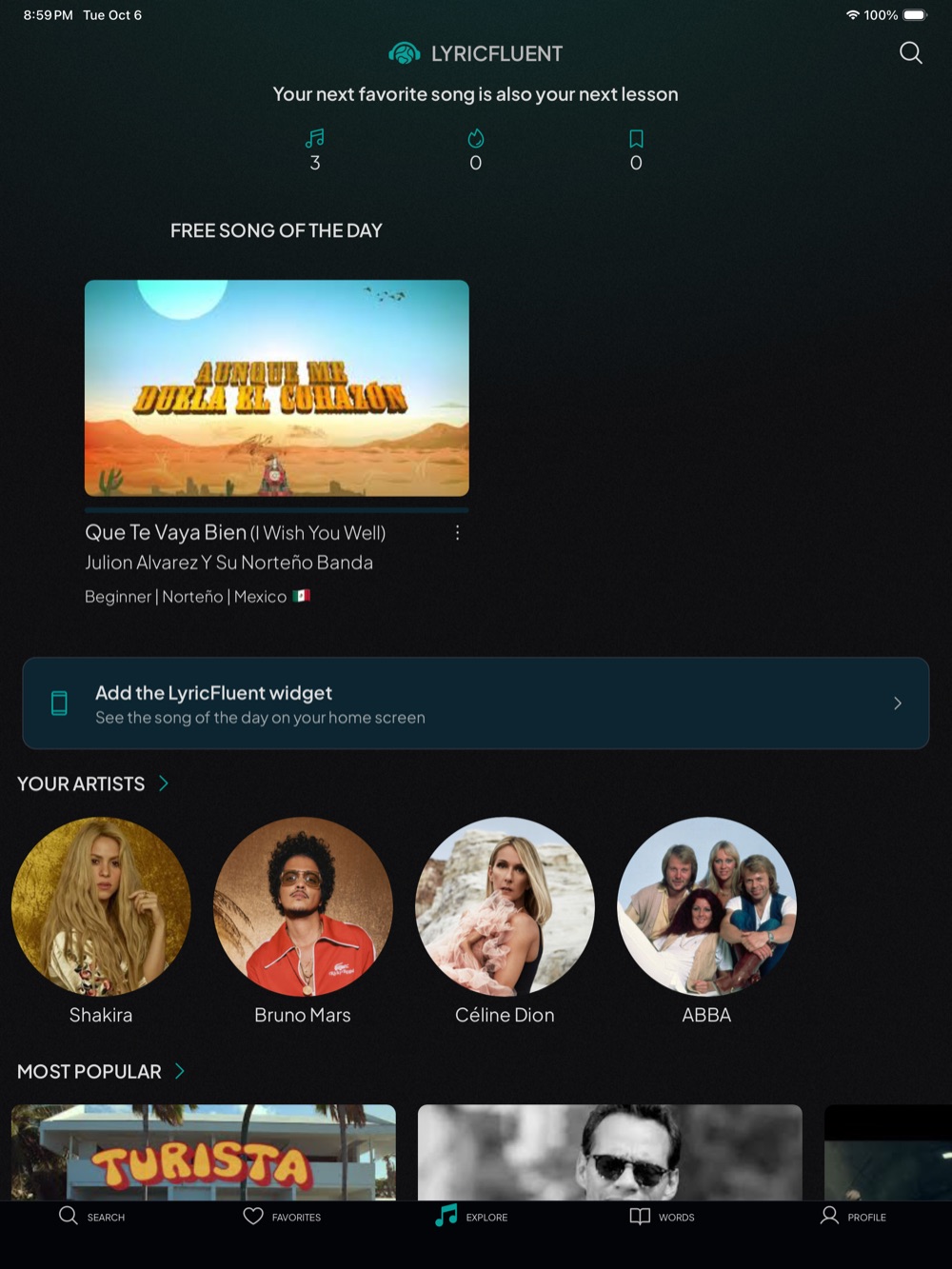
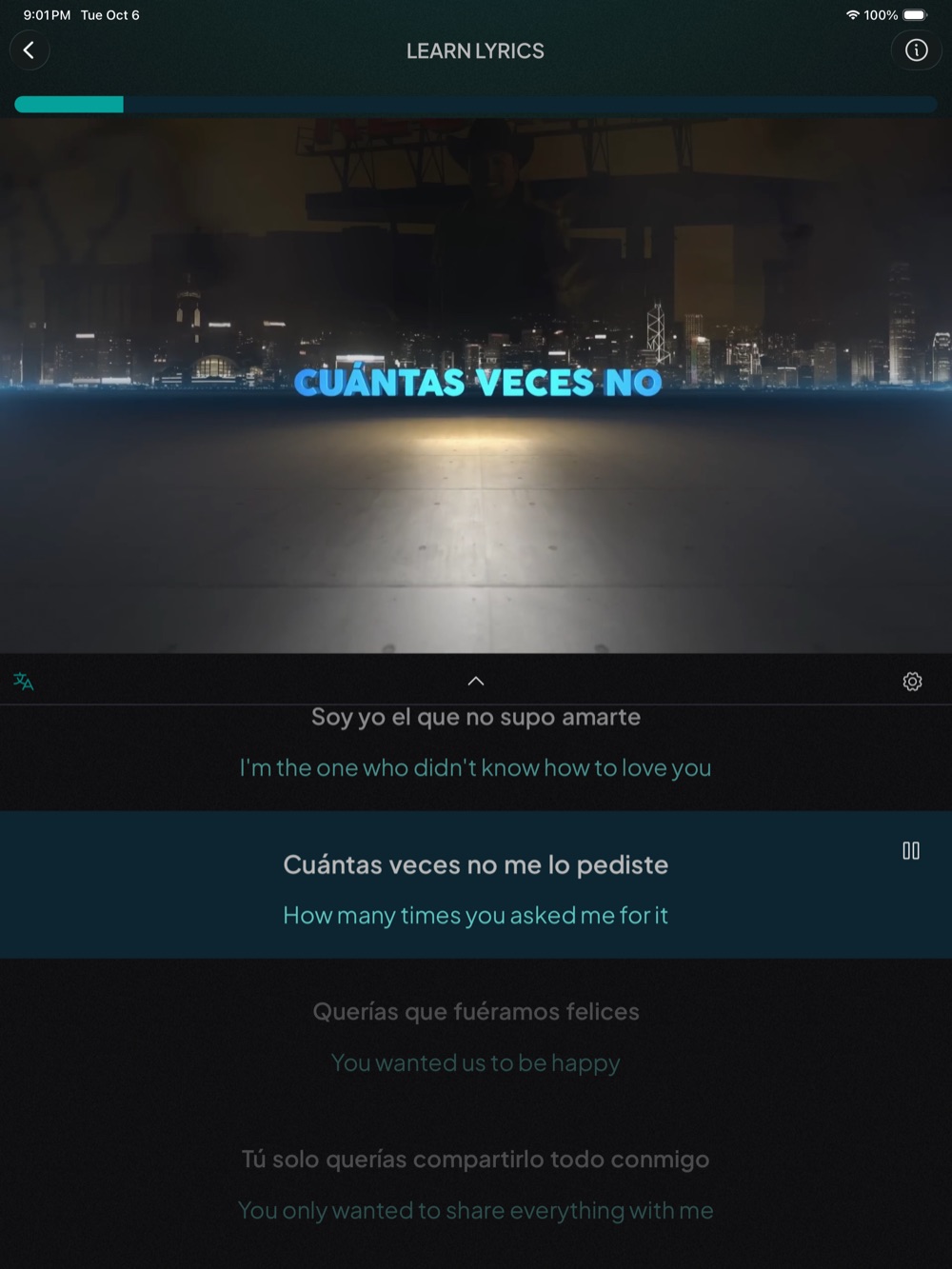
Heard enough? Try LyricFluent now.
What songs are good at
Words you'll use. Songs are full of everyday phrases that textbooks skip.
Slang. Songs teach you how people actually talk: the shortcuts, the street words and the phrases no textbook will print.
Pronunciation. You hear real speakers at real speed, and singing along gets your mouth used to the sounds.
Culture. Jokes and references start to make sense once you know the songs people grew up with.
Coming back. You don't need willpower to replay a song you love. Understanding it becomes the goal.
Where songs fall short
Grammar. You'll pick up a lot by ear, the way kids do. To speak correctly and confidently, you'll still want some grammar on the side.
Background listening. A playlist on while you cook won't teach you much. You have to work with the lyrics and the translations, which is why LyricFluent turns them into games.
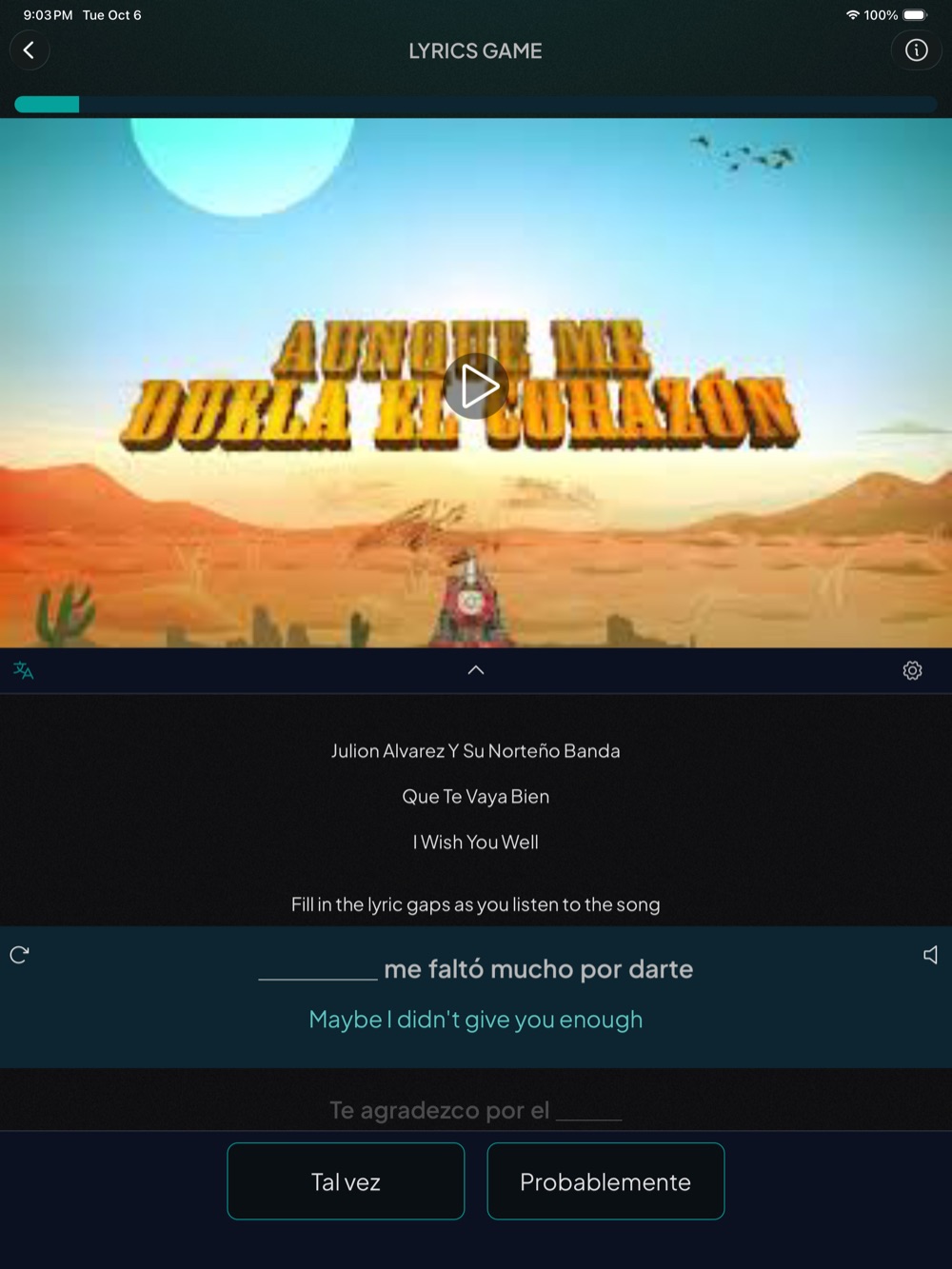
Want the step-by-step version? Read how to learn languages with music.
The short version
Songs won't replace a grammar book. They will get you listening every day, picking up real phrases, and finally understanding the music you already love. Pick one song and start there.

