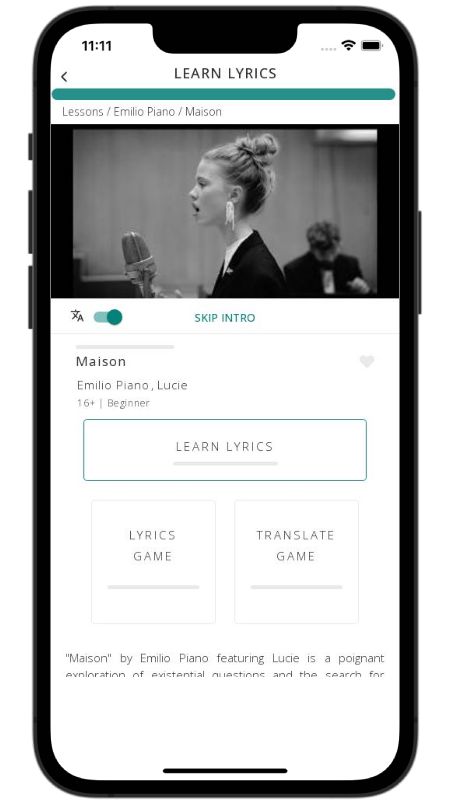
Maison Lyrics in English by Emilio Piano, Lucie
Vacille means to 'waver', 'flicker', or 'falter'. It beautifully describes an unsteady movement, like a candle flame about to go out or someone stumbling.
In the song, the artist poses a deep question about happiness, describing it as a fragile thread. He asks what happens "Quand il vacille et se brise" (When it wavers and breaks), using this word to paint a vivid, poignant picture of how delicate and unstable joy can be. It's a fantastic, evocative verb to learn for expressing nuanced emotions.
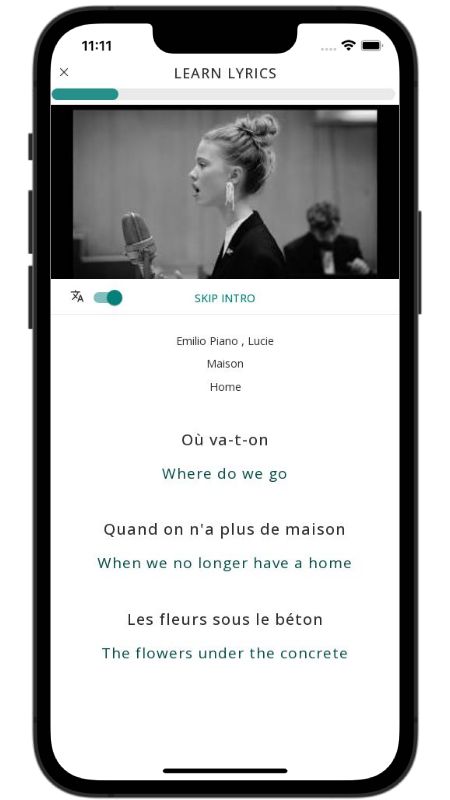
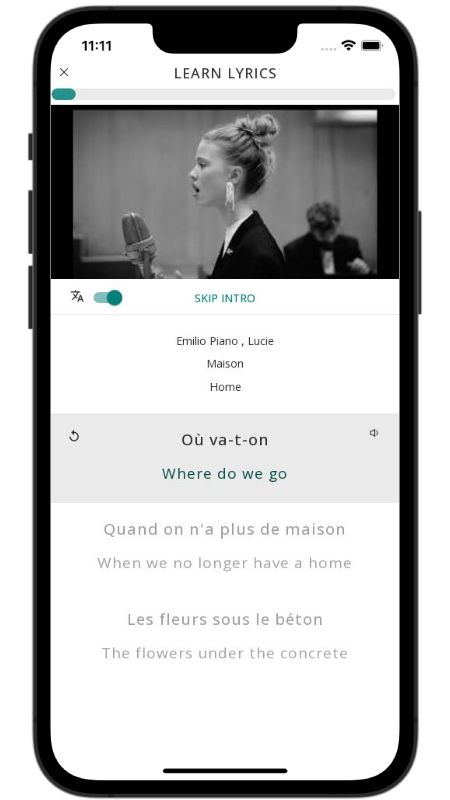
Have you ever felt completely lost as you grow up, wishing someone had a manual for adulthood? In "Maison" (Home), Italian artist Emilio Piano teams up with Lucie to ask the kinds of big, unanswerable questions we usually only whisper to our mothers. The narrator keeps turning back with a plea: Maman, dis-le-moi ("Mom, tell me"). They wonder where you go when you have lost your home (Où va-t-on / Quand on n'a plus de maison), or where happiness disappears to when that delicate thread snaps (ce fil fragile / Quand il vacille et se brise). There is also a biting, honest observation about adult life: Est-ce qu'un jour on sait vraiment / Ou est-ce qu'on fait semblant, tout le temps ("Do we ever truly know, or are we faking it all the time?"). The French phrase faire semblant literally means to "make a semblance" of something, but you use it whenever you pretend or bluff your way through a situation.
Yet the track does not get stuck in gloom, even with all the talk of freezing winters and flowers buried under concrete (les fleurs sous le béton). Instead, Lucie offers a wonderfully practical resolution to life's eternal confusion: Peut-être que j'en ferai des chansons ("Maybe I'll make songs out of them"). The chorus sweeps away the dread with a reassuring promise that past the storm, there is only love waiting: Au-delà / De l'orage il y a / De l'amour ("Beyond the storm there is love"). Once the clouds part and the sky opens up (le ciel s'ouvre), the chaos settles down, and everything turns out completely fine.