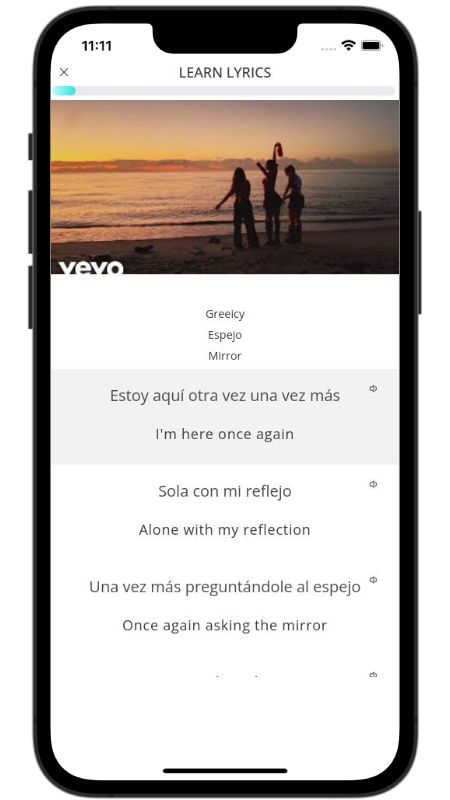
Espejo Lyrics in English by Greeicy
Pasajero is a fascinating word that most commonly means "passenger". However, in this song it is used as an adjective to mean "fleeting" or "temporary".
Greeicy sings about making negative feelings temporary: "Volver lo malo pasajero" (Make the bad thing fleeting). This powerful line captures the song's core message of resilience and self-love, reminding us that difficult times will pass.
Colombian pop star Greeicy starts this track right where so many of us end up after a hard day: staring straight into the bathroom mirror. She opens by asking her own glass reflection, "¿Qué pasó? / Si la culpa la tengo yo" ("What happened? / Is it my fault?"). Instead of spiraling down, though, she turns that self-blame on its head. Solitude stops looking like a scary void and turns into a person she can face down. She belts out "Me siento bien y no es por nadie... sólo de mí" ("I feel good and it's not because of anyone... it's just on me"). Her peace is not a gift from a partner; she chose it.
What makes this track hit so hard is the stubborn logic behind her self-love. Greeicy explains that real romance cannot work if you skip your own foundations, singing "Que no existe amor de dos si no te sabes querer" ("There is no love between two people if you don't know how to love yourself"). Any setback is "algo pasajero" ("something temporary"), and she handles the bounce-back on her own terms. Keep an ear out for the spoken outro where she asks, "¿Vos crees que, que te amas lo que mereces amarte?" ("Do you think you love yourself as much as you deserve to?"). Using "vos"—the casual, regional Colombian way to say "you"—makes it sound like a trusted friend calling you out to check on your heart.