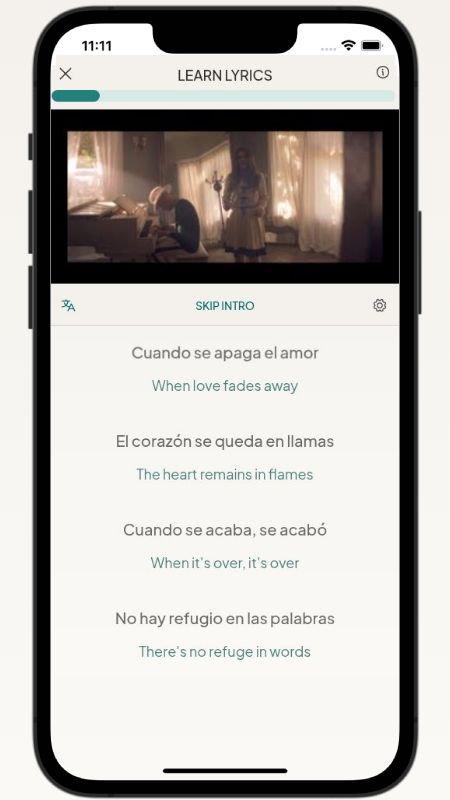
Te Esperé Lyrics in English by Jesse & Joy
Refugio translates to "refuge" or "shelter". It's a word that evokes a sense of safety and protection, which makes it interesting in the context of a breakup song.
In "Te Esperé", the lyrics state, "No hay refugio en las palabras" (There is no refuge in words). This powerful line suggests that when love ends, words alone cannot provide comfort or solace from the pain, highlighting the depth of the emotional wound.
Mexican pop duo Jesse & Joy start "Te Esperé" right in the wreckage of a breakup. The opening line hits hard: "Cuando se apaga el amor / El corazón se queda en llamas" ("When love goes out, the heart stays on fire"). It sounds like a total contradiction, but anyone who has had their heart broken knows the feeling of cold silence mixed with burning grief. The singer admits that words are useless shelter, comparing the agonizing wait for an ex to an impossible longing: "Te esperé, como la luna espera el día" ("I waited for you, like the moon waits for the day"). It feels dramatic because it is; she straight up confesses, "llegué a sentir que me moría" ("I reached the point of feeling like I was dying").
Then the mood flips. Life keeps moving even when you want it to pause, and time quietly patches things up ("el tiempo cerró la herida" [time closed the wound]). Fear disappears, and the past stops hurting because someone new walks through the door: "De pronto nada está perdido" ("Suddenly nothing is lost"). By the final chorus, the whole waiting game gets a triumphant punchline with the killer closing line, "Te esperé, pero alguien más llegó a mi vida" ("I waited for you, but someone else arrived in my life"). You took too long, and life moved on without you.