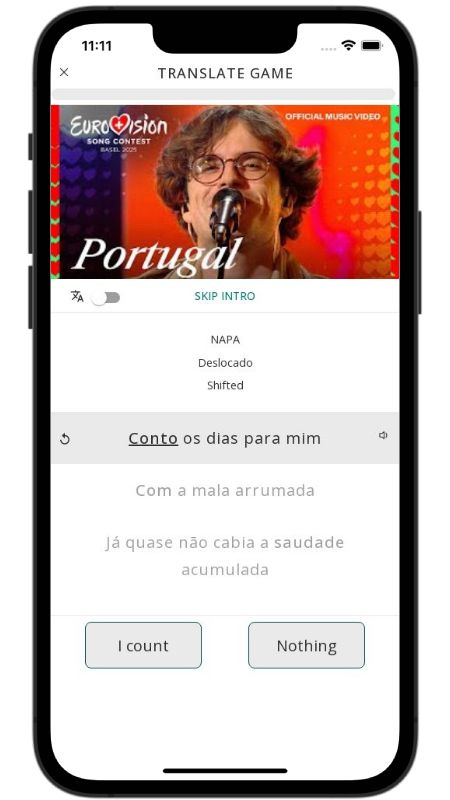
Deslocado Lyrics in English by NAPA
Assombra is the Portuguese word for "haunts". It comes from the verb assombrar, which can also mean to overshadow or fill with dread.
In this song about homesickness, the artist sings, "A solidão que assombra a hora da partida" (The loneliness that haunts the hour of departure). He uses this powerful, almost gothic word to describe a loneliness so profound it feels like a persistent ghost, perfectly capturing the pain of leaving home.
Ever felt completely out of place in a big city? That is the exact feeling Portuguese artist NAPA sings about in "Deslocado" (which literally means "displaced" or "out of place"). He packs his bags and looks out an airplane window, peering past the wing to spot the blue ocean and the green garden below. The city he lived in—with its "monte de betão" ("pile of concrete") and overwhelming "mar de gente" ("sea of people")—never felt like home to him. No matter how long he stayed, it simply didn't move him.
Instead, all his thoughts pull him right back to his roots in the Atlantic: "Vim de longe, eu vim do meio do mar, no coração / Do oceano... À minha casa, ilha, paz, Madeira" ("I came from far away, I came from the middle of the sea, in the heart / Of the ocean... To my home, island, peace, Madeira"). The Portuguese word saudade pops up early on ("saudade acumulada" / "accumulated longing"), expressing that deep, unmistakable ache of missing home. You can feel the sheer relief in his voice when he repeats the message to his mom: "Mãe, olha à janela, que eu tou a chegar a casa" ("Mom, look out the window, I'm arriving home"). Notice the casual contraction "tou" instead of "estou"—it is how people actually speak when they are rushing back to the place they love.