Onde Quero Estar Lyrics in English by Paulo Sousa
Sufocar means 'to suffocate' or 'to choke'. It's a powerful, dramatic word that adds a layer of urgency and desperation to this romantic song.
When the singer says "Beija-me, não quero sufocar" (Kiss me, I don't want to suffocate), he's using it metaphorically. He's not literally running out of air, but expressing an intense, almost painful longing for a kiss, as if he can't breathe without it. This poetic hyperbole makes the feeling of desire incredibly vivid and memorable.
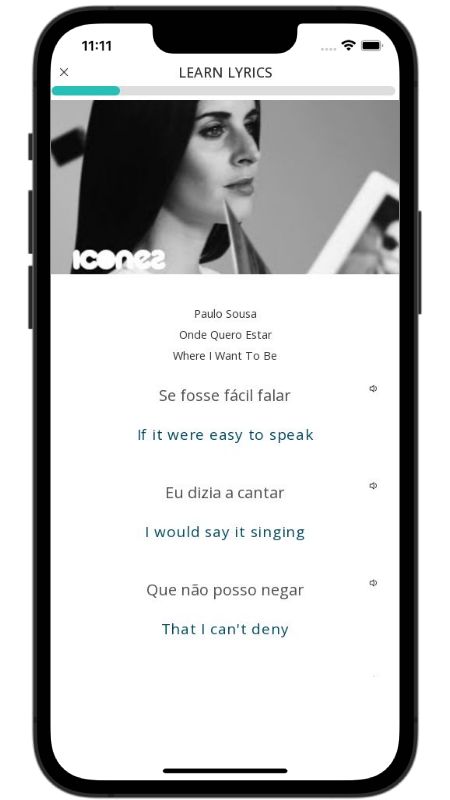
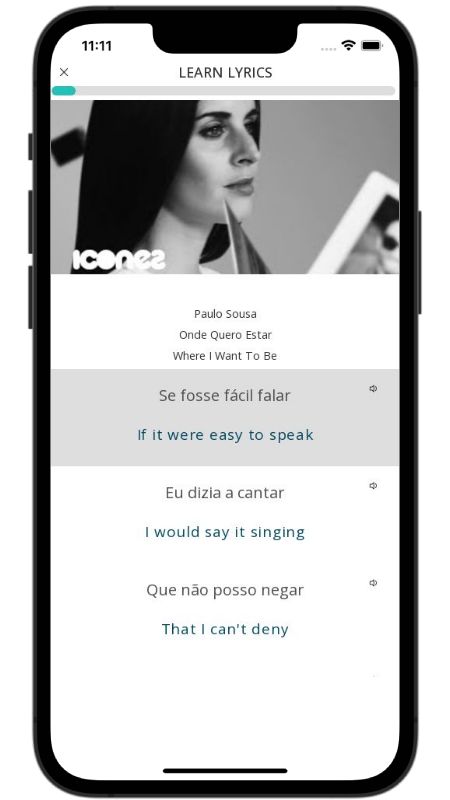
Portuguese pop singer Paulo Sousa gets straight to the point in "Onde Quero Estar" (Where I Want to Be): he is totally overwhelmed by love and cannot find the right words, so he sings them instead. Right away, he describes this natural pull with the line "sou rio, tu és mar" ("I am the river, you are the sea"), showing how effortlessly he flows toward this person day and night ("Sempre que anoitecer / Sempre que amanhecer" [Whenever night falls / Whenever dawn breaks]). He even claims he would steal the entire sky without a second thought ("Se eu pudesse roubar / Todo o céu p'ra to dar" [If I could steal / All the sky to give to you]) just to hand it over.
Things get dramatic in the chorus with an urgent plea for rescue: "Diz que é hoje que me vais salvar / Beija-me, não quero sufocar" ("Say that today is the day you will save me / Kiss me, I don't want to suffocate"). In everyday Portuguese, you will spot contractions like "p'ra to dar" (short for para to dar, meaning "to give it to you") and "p'ra mim" (para mim, "for me"), which make the track feel like a real conversation. By the bridge, he builds up an intense wish list asking them to fly, sing, dance, and simply stay: "E então, fica / Fica só p'ra mim" ("And then, stay / Stay just for me"). Above all, the main goal is never slipping away from their embrace.