La Gata Bajo La Lluvia Lyrics in English by Rocio Durcal
Maullaré is the future tense of the verb maullar, meaning 'to meow'. It's an incredibly rare and memorable word to find in a song, making it a perfect one to learn.
In this classic ballad, the singer compares herself to an abandoned cat in the rain and sings, "Y maullaré por ti" (And I will meow for you). She uses this powerful metaphor to describe how she will cry out in loneliness and sorrow for her lost love. It's a beautifully poetic and heartbreaking image.
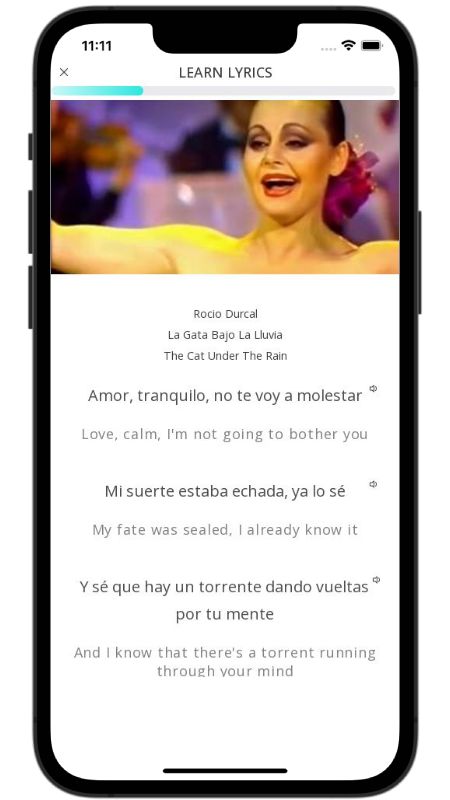
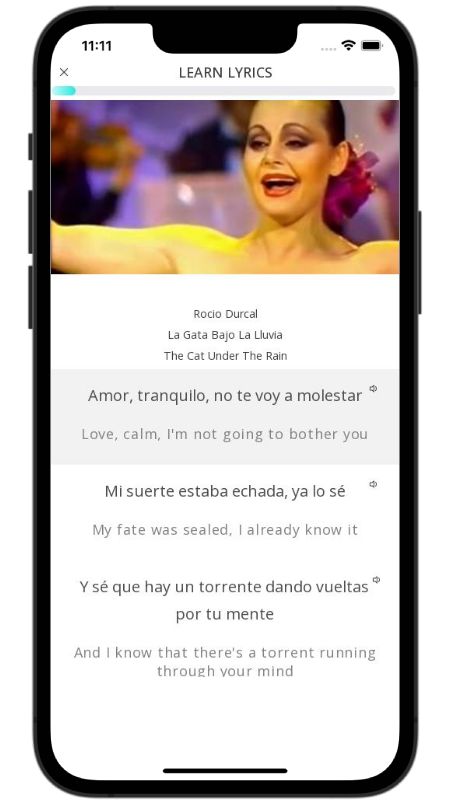
Spanish singer Rocío Dúrcal delivers the ultimate dramatic breakup scene in "La Gata Bajo La Lluvia". Instead of throwing a fit, the speaker accepts the end of the romance with a mix of fake composure and wild vulnerability. She starts by telling her ex not to worry: "Mi suerte estaba echada" ("My fate was sealed"). That line uses a classic Spanish idiom meaning the die was already cast. She insists their whole connection was just pure coincidence ("la misma hora, el mismo bulevar" [the same time, the same boulevard]), absolving him of guilt even as her tears give her away.
Then she drops one of the most memorable metaphors in Spanish pop: "Seré la gata bajo la lluvia / Y maullaré por ti" ("I will be the cat in the rain / And I will meow for you"). Comparing yourself to a soaked, abandoned alley cat crying in a storm is deliciously dramatic. But right after playing the helpless, wounded stray ("un gato herido" [a wounded cat]), she gets surprisingly bold and direct: "Invítame a un café y hazme el amor" ("Buy me a coffee and make love to me"). There is no beating around the bush there. She knows he is walking away, but she leaves that open invitation anyway.