Learn Italian With Toto Cutugno with these 23 Song Recommendations (Full Translations Included!)
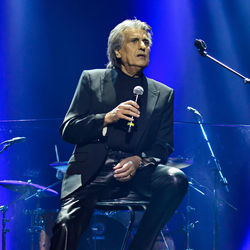
Salvatore "Toto" Cutugno (1943-2023) was a celebrated Italian singer-songwriter, musician, and television presenter known worldwide for his iconic song "L'Italiano". Born in Tuscany, he began his musical journey as a drummer and went on to enjoy a prolific career spanning over five decades, selling more than 100 million records globally.
Cutugno won the Eurovision Song Contest in 1990 with his original song "Insieme: 1992", a powerful ballad celebrating European unity. Renowned as "one of the most successful Italian songwriters of all time," he wrote hits for many artists and remains a symbol of Italian melody cherished by fans around the world.
Toto Cutugno just wants you to let him sing with his guitar in hand (Lasciatemi cantare con la chitarra in mano), and what follows is a proud, funny, snapshot of daily life in Italy. He greets his homeland countryman-style with Buongiorno Italia (Good morning, Italy) and immediately lists the little details that make up his world: perfectly cooked pasta (gli spaghetti al dente), mint shaving cream (la crema da barba alla menta), and strong espresso (caffè ristretto). He notices the rapid modernization around him, pointing out that there is too much American influence on local billboards (troppa America sui manifesti) and fewer nuns around (più donne sempre meno suore), yet he embraces all of it with a wink.
The lyrics are packed with very specific cultural references from that era. When Cutugno sings about a partisan as president (un partigiano come presidente), he refers to Sandro Pertini, the beloved Italian president who fought in the anti-fascist resistance. He pokes fun at the routine of carrying a detachable car radio in your right hand (con l'autoradio sempre nella mano destra) so nobody steals it, watching slow-motion soccer replays on Sunday television (la moviola la domenica in tivù), and driving an old Fiat 600 with battered bodywork (una Seicento giù di carrozzeria). Through all the melancholic eyes (occhi pieni di malinconia) and dry-cleaned flags, he declares loudly that he is un italiano vero (a real Italian).
Toto Cutugno, ein Künstler aus Italien, hat mit „L'italiano“ eine Hymne geschaffen, die voller Stolz und Liebe für sein Land steckt. Der Song ist eine Aneinanderreihung von Bildern, die für ihn das italienische Leben ausmachen. Er singt: „Lasciatemi cantare / Perché ne sono fiero / Sono un italiano / Un italiano vero“ (Lasst mich singen / Denn ich bin stolz darauf / Ich bin ein Italiener / Ein echter Italiener). Das ist die Kernaussage: ein Bekenntnis zu seiner Identität, mit all ihren Facetten.
Der Text ist wie eine Postkartensammlung aus Italien. Cutugno erwähnt die kleinen, alltäglichen Dinge wie „spaghetti al dente“, den „caffè ristretto“ (starker Espresso) und die „crema da barba alla menta“ (Rasiercreme mit Minzgeschmack). Er streift aber auch größere Themen, wie die Kritik an „troppa america sui manifesti“ (zu viel Amerika auf den Plakaten) oder die gesellschaftliche Veränderung mit „più donne sempre meno suore“ (mehr Frauen, immer weniger Nonnen). Es ist ein liebevoller, aber auch ehrlicher Blick auf ein Land voller Widersprüche, von der sonntäglichen Fußball-Analyse im Fernsehen bis zum alten Fiat 600 mit Dellen.
Toto Cutugno'nun bu şarkısı, İtalyan olmanın ne anlama geldiğine dair adeta bir marş! Şarkıcı, eline gitarını alıp basitçe şarkı söylemek istiyor: "Lasciatemi cantare / Con la chitarra in mano" (Bırakın şarkı söyleyeyim / Elimde gitarla). Bu istek, şarkı boyunca İtalyan yaşamına dair küçük ama anlamlı detaylarla dolu bir tablo çiziyor. Cutugno, *"dişe gelen spagetti"*den Pazar günleri televizyonda futbol maçlarının ağır çekim tekrarlarını izlemeye kadar, İtalyan kültürünün en bilinen klişelerini sevgiyle kucaklıyor.
Şarkı sadece yemek ve futboldan ibaret değil. Aynı zamanda afişlerdeki Amerikan etkisinden ve toplumun değişiminden de bahsediyor: "Con più donne sempre meno suore" (Giderek daha az rahibe, daha çok kadınla). Bu, İtalya'nın modernleşen yüzüne bir gönderme. Şarkının kalbinde ise büyük bir gurur var. Cutugno, tüm bu özellikleriyle ülkesini sevdiğini ve "un italiano vero" (gerçek bir İtalyan) olmaktan gurur duyduğunu ilan ediyor. Bu şarkı, bir ülkenin ruhunu küçük anlarda bulan samimi bir kutlama.
Если вы хотите понять, из каких повседневных мелочей складывается итальянская жизнь, эта песня раскладывает все по полочкам с первых же секунд. Тото Кутуньо буквально просит дать ему спеть с гитарой в руках («Lasciatemi cantare con la chitarra in mano» [Дайте мне спеть с гитарой в руках]), потому что он — настоящий итальянец («un italiano vero»). Дальше идет череда очень точных бытовых зарисовок. Утро начинается с приветствия стране, макаронам аль денте («gli spaghetti al dente» [спагетти аль денте]), президенту-партизану («un partigiano come presidente»), канарейке на окне и съемной автомагнитоле в правой руке («con l'autoradio sempre nella mano destra» — в те годы магнитолы часто уносили с собой, чтобы их не украли из машины).
Кутуньо открыто подмечает противоречия своего времени: в песне звучит легкая ирония над засильем американской культуры («troppa America sui manifesti» [слишком много Америки на афишах]) и переменами в обществе («più donne sempre meno suore» [больше женщин, все меньше монахинь]). В тексте мелькает классический крепкий эспрессо («caffè ristretto»), костюм в тонкую полоску («vestito gessato»), футбольные повторы по телевизору («la moviola la domenica in tivù») и помятый старенький Fiat («una seicento giù di carrozzeria» [«шестисотый» с помятым кузовом]). Это искренний гимн привычкам целой нации, спетый с гордостью и теплой улыбкой.
"Il Cielo" is Toto Cutugno doing what he does best: turning a huge, vague feeling into something you can actually picture. He opens lost in his own head, singing "Mi perdo nell'immensità" (I get lost in the immensity), unsure of anything except the sky above him, full of clouds. That's the whole trick of the song. He keeps staring up and asking the same question over and over, "Ma com'è grande e immenso il cielo" (But how big and immense the sky is), as if repeating it might finally answer something.
By the second half it stops being about the weather and starts being about a person. He's scanning the stars for someone, "E fra le stelle in mezzo al blu, cerco se adesso ci sei tu" (And among the stars in the middle of the blue, I'm looking to see if you're here now). The sky he can't stop describing turns out to be a stand-in for a love he isn't sure has shown up yet, and the song just keeps circling back to "Il cielo" (The sky), like it's the only word big enough to hold the question.
Cutugno takes stock of a life and finds it made of small, dated things. The word emozioni ("emotions") stands alone on six of the song's lines, and each time it introduces an inventory rather than a feeling: L'inventario dei miei giorni migliori ("The inventory of my best days"), a suburban church, a woman in white — Com'eri bella vestita di bianco ("How beautiful you were dressed in white"). The disappointments get their own entry, and they are specific about who they wound: Per un uomo come me sincero / Che quando crede, ci crede davvero ("For an honest man like me / Who, when he believes, truly believes").
The chorus answers with presence rather than grandeur. Da quando tu sei qui che dormi al mio fianco ("Since you're here sleeping by my side") is the hinge, and the promises that follow are plain ones — to live, to breathe, to stop. A touring life shows through in the verses: a concert that carries him off, and Il telefono è l'amico migliore / Per dare un calcio alla malinconia ("The phone is the best friend / To kick melancholy away"). The last minute drops the sentences and repeats the one word.
Toto Cutugno's "Le Mamme" is a beautiful and heartfelt tribute to mothers everywhere. The song paints a vivid picture of a mother's love from a child's perspective, remembering her as a guardian angel with "two big arms to abandon myself in." The lyrics recall specific, tender moments: how she could understand him without a single word, her comforting presence during a scary thunderstorm, and the sweet words that were like freshly baked cakes. She is a source of immense comfort and safety, a figure so perfect the singer wonders, "Why doesn't this angel fly?"
As the song progresses, it reflects on the universal nature of motherhood. It acknowledges that mothers also have their own lives—they dream, they grow older—but their love for their children is always the most powerful force: "Le mamme si amano / Ma ti amano di più" (Mothers love themselves / But they love you more). The song also touches on the bittersweet feeling of time passing, as mothers watch their children grow up and move away, holding onto memories in front of a photograph. It's a nostalgic and loving ode to the unbreakable bond between a mother and her child.
Cutugno builds this one entirely out of "what if." He opens with "Se quel sogno maledetto mi svegliasse senza te" ("If that cursed dream woke me up without you") — so the whole song is him staying inside the nightmare on purpose, testing how much it would hurt if it were true. A friend tells him she's playing games with him, and he decides "Io non ci crederei" ("I wouldn't believe it"), he'd rather burn his own dreams than believe it.
Then he flips it: what if he woke up and she really was gone, with another man holding her the way he never quite managed to? His answer isn't jealousy, it's pride: "Allora dico di no, e con la forza che ho, io non ti cercherei" (Then I say no, and with what strength I have left, I wouldn't come looking for you). He'd rather get sick and die quietly than let her see it cost him anything — "Forse mi ammalerò, ci morirò e non lo saprai mai" (Maybe I'll fall ill, I'll die from it, and you'll never know). By the bridge the mask slips: "Che l'amore grande, immenso tu me l'hai buttato via" (That you threw away a love that huge), and admitting there's a man who loves her now, "e io da quasi alla follia" (and it's driving me almost mad). It's a very Sanremo way to write heartbreak — all that composure is the performance, and the song lets you hear it crack.
"Con Te" opens with Toto Cutugno alone at home, tallying the mess a month apart has left behind: "La tua cucina è già un grande casino" ("Your kitchen is already a big mess"), a detergent bottle he can't identify, dust gathering on the chairs. Coffee with friends can't compete with what he's missing: "Ma se ci penso non c'è un paragone con te, no" ("But if I think about it there is no comparison with you, no").
By the chorus the complaint turns into pure longing, repeating "Con te, ti amo e non ti lascio più" ("With you, I love you and will never leave you again") as he pictures unknown woods, open beaches, a rose bought on the highway home, waking her with a kiss at sunrise. It's less a grand declaration than a diary of small domestic proof that she's missed — the unmade bed, the tinned dinners, the sunrise he wants to share.
Har du någonsin känt en sådan stolthet över ditt hemland att du bara vill sjunga ut det? Det är precis vad Toto Cutugno gör i "L'italiano"! Han vill bara sjunga med gitarren i handen, för han är italienare, en äkta italienare. Han målar upp en bild av sitt älskade Italien med humor och värme.
Föreställ dig att vakna upp till doften av "spaghetti al dente" [spaghetti al dente] och se en "partigiano come presidente" [partisan som president]. Han sjunger om att ha bilradion i höger hand och en kanariefågel på fönsterbrädan. Det är en hyllning till de små sakerna, till artisterna, till kärlekssångerna och till det italienska livet som inte räds något, inte ens rakborstskum med mintsmak! Han nämner till och med en "seicento giù di carrozzeria" [en Fiat 600 med karosskada] – det är så detaljerat och charmigt! Han är stolt över att vara italienare, och det hörs i varje ton.
Denne sangen er en skikkelig hyllest til Italia og det å være italiener, sunget av den italienske artisten Toto Cutugno. Han synger «Lasciatemi cantare / Sono un italiano» [La meg synge / Jeg er en italiener], og du kan virkelig føle stoltheten hans! Han maler et bilde av Italia med gjenkjennelige ting som «gli spaghetti al dente» [spaghetti al dente] og «caffè ristretto» [sterk kaffe].
Det er også noen morsomme og litt uventede detaljer, som «un partigiano come presidente» [en partisan som president] og «un canarino sopra la finestra» [en kanarifugl på vinduet]. Han snakker om «troppa america sui manifesti» [for mye Amerika på plakatene], noe som kanskje viser en liten bekymring for amerikansk innflytelse. Men uansett hva, så er han «fiero» [stolt] av å være en «italiano vero» [ekte italiener].
Tämä Toto Cutugnon kappale on hauska ja sydämellinen ylistyslaulu Italialle ja italialaisena olemiselle! Artisti haluaa laulaa kitaran kanssa, koska hän on ylpeä italialainen. Hän maalaa kuvan Italiasta, jossa on spagettia al denteä, partisaanipresidentti ja autoradio oikeassa kädessä. Hän mainitsee myös kanarialinnun ikkunalla ja taiteilijoita, vaikka Amerikka tuntuu olevan liikaa esillä julisteissa.
Kappaleessa on paljon ihastuttavia yksityiskohtia, kuten aamukahvi, uudet sukat ja jopa lippukin pesulassa! Vaikka hän toivottaa huomenta Marialle "silmät täynnä melankoliaa", yleistunnelma on iloinen ja ylpeä. Hän sanoo: "Lasciatemi cantare / Sono un italiano vero" [Antakaa minun laulaa / Olen todellinen italialainen]. Se on kuin pieni matka Italiaan musiikin kautta!
Uronite u bezvremenski klasik Totoa Cutugna,
Przygotuj się na prawdziwą włoską ucztę! "L'italiano" Toto Cutugno to piosenka, która jest jak list miłosny do Włoch i wszystkiego, co czyni je wyjątkowymi. Artysta prosi: "Lasciatemi cantare / Con la chitarra in mano" [Pozwólcie mi śpiewać / Z gitarą w ręku], bo jest dumny z bycia Włochem – "Sono un italiano / Un italiano vero" [Jestem Włochem / Prawdziwym Włochem].
Toto Cutugno wita się z Włochami, wymieniając mnóstwo rzeczy, które kojarzą się z tym krajem: od "spaghetti al dente" [spaghetti al dente] i "partigiano come presidente" [partyzant jako prezydent], po "canarino sopra la finestra" [kanarek na parapecie] i "troppa america sui manifesti" [za dużo Ameryki na plakatach]. To zabawne, jak łączy te codzienne obrazy z głęboką miłością do swojego kraju, nawet jeśli widzi w nim trochę melancholii, zwracając się do "Maria / Con gli occhi pieni di malinconia" [Mario / Z oczami pełnymi melancholii]. To piosenka pełna dumy, ale też z nutką refleksji nad tym, co to znaczy być Włochem.
Pojďme se podívat na jednu z nejznámějších italských písní! "L'italiano" od Toto Cutugna je taková hymna hrdosti na to, být Ital. Zpěvák nás hned na začátku vyzývá: "Lasciatemi cantare / Con la chitarra in mano" [Nechte mě zpívat / S kytarou v ruce] a hrdě dodává: "Sono un italiano" [Jsem Ital].
Pak nás provede typickým italským dnem plným detailů. Zmiňuje "spaghetti al dente" [špagety al dente], "partigiano come presidente" [partyzán jako prezident] nebo třeba "caffè ristretto" [silné espresso]. Je to taková milostná píseň pro Itálii, plná malých postřehů o každodenním životě, od rádia v autě až po kanárka na okně. I když se občas objeví náznak melancholie, jako v "Buongiorno Italia, buongiorno Maria / Con gli occhi pieni di malinconia" [Dobré ráno, Itálie, dobré ráno, Marie / S očima plnýma melancholie], celkově je to oslava italské identity. Zpěvák je na to, že je "un italiano vero" [pravý Ital], opravdu hrdý!
U pesmi "L'italiano", Toto Cutugno nam donosi pravu oda Italiji i svemu što je čini posebnom. On želi da peva, sa gitarom u ruci, jer je ponosan što je Italijan. Kroz stihove, on nas vodi na putovanje kroz svakodnevni život u Italiji, spominjući stvari kao što su "spaghetti al dente" [špageti al dente] i "un partigiano come presidente" [partizan kao predsednik].
Ova pesma je puna šarma i humora, sa slikama koje su tako prepoznatljive: "Con l'autoradio sempre nella mano destra" [sa auto-radiom uvek u desnoj ruci] i "un canarino sopra la finestra" [kanarinac na prozoru]. On pozdravlja Italiju, njene umetnike, njene pesme o ljubavi i srcu, pa čak i "con più donne sempre meno suore" [sa više žena, a sve manje časnih sestara]. Cutugno jasno kaže da je "un italiano vero" [pravi Italijan], ponosan na svoju zemlju, čak i sa svim njenim manama, kao što je "una seicento giù di carrozzeria" [fiat šesto sa udubljenom karoserijom]. To je iskrena i topla pesma o ljubavi prema domovini.
¡Prepárate para un viaje a Italia con Toto Cutugno! En "L'italiano", este artista italiano nos canta con orgullo sobre su identidad. Desde el primer momento, nos dice: "Lasciatemi cantare / Con la chitarra in mano / Sono un italiano" [Déjenme cantar / Con la guitarra en la mano / Soy un italiano]. Es una declaración sencilla pero poderosa de quién es.
La canción es como una postal sonora de Italia, llena de imágenes cotidianas y un poco de humor. Menciona "gli spaghetti al dente" [los espaguetis al dente], un "partigiano come presidente" [un partisano como presidente], y hasta "un canarino sopra la finestra" [un canario sobre la ventana]. Toto Cutugno nos lleva por su país, con sus artistas, sus canciones de amor, y hasta un guiño a la modernidad con "troppa america sui manifesti" [demasiada América en los carteles]. Es una celebración de ser italiano, de una manera muy auténtica y con mucho corazón. ¡Te va a encantar!
Pasiruoškite tikram Italijos skoniui! Toto Cutugno daina "L'italiano" yra tarsi meilės laiškas jo gimtajai šaliai, kupinas detalių, kurios privers jus nusišypsoti. Jis prašo: "Lasciatemi cantare / Con la chitarra in mano" (Leiskite man dainuoti / Su gitara rankoje), nes jam tai yra būdas išreikšti, koks jis didžiuojasi būdamas italas.
Ši daina – tai tarsi atvirukas iš Italijos, kuriame minimi ir "spaghetti al dente" (spagečiai al dente), ir "un partigiano come presidente" (partizanas kaip prezidentas), ir net "un canarino sopra la finestra" (kanarėlė ant lango). Jis kalba apie Italiją su "troppa america sui manifesti" (per daug Amerikos ant plakatų), bet vis tiek su "canzoni con amore, con il cuore" (dainomis su meile, su širdimi). Tai daina, kuri privers jus jaustis lyg vaikščiotumėte saulėtomis Italijos gatvėmis, o Toto Cutugno tiesiog nori, kad žinotumėte, jog jis yra "un italiano vero" (tikras italas).
Ah, essa música é um hino! Em "L'italiano", Toto Cutugno nos convida a entrar no universo italiano, e ele faz isso de um jeito muito divertido e cheio de orgulho. Logo de cara, ele pede: "Lasciatemi cantare / Con la chitarra in mano" [Deixem-me cantar / Com o violão na mão], e se apresenta como "Sono un italiano" [Sou um italiano].
Ele pinta um quadro da Itália com imagens super específicas e um pouco estereotipadas, mas com muito carinho: tem "gli spaghetti al dente" [os espaguetes al dente], "un partigiano come presidente" [um partisão como presidente], e até "un canarino sopra la finestra" [um canarinho em cima da janela]. Ele fala da melancolia nos olhos de Maria e até de um "Buongiorno dio / Lo sai che ci sono anch'io" [Bom dia, Deus / Você sabe que eu também estou aqui]. É uma celebração da identidade italiana, com todos os seus detalhes e paixões, e ele repete com muito orgulho: "Sono un italiano / Un italiano vero" [Sou um italiano / Um italiano de verdade].
See laul on tõeline armastuskiri Itaaliale! Toto Cutugno laulab uhkelt ja südamest, paludes endal laulda kitarriga käes, sest ta on itaallane – "Lasciatemi cantare / Con la chitarra in mano / Lasciatemi cantare / Sono un italiano" [Lubage mul laulda / Kitarriga käes / Lubage mul laulda / Ma olen itaallane].
Ta tervitab Itaaliat igapäevaste piltidega: spagetid al dente, partisanist president, autoradio paremas käes ja kanaarilind aknal. Ta mainib kunstnikke, aga ka seda, kuidas Ameerika mõju on plakatitel liiga suur. Lauludes on armastus ja süda, ning naisi on rohkem kui nunnasid. See on aus ja armas pilk Itaalia hinge, kus on isegi koht melanhooliale – "Buongiorno Italia, buongiorno Maria / Con gli occhi pieni di malinconia" [Tere hommikust, Itaalia, tere hommikust, Maria / Silmad melanhooliat täis]. Ta on uhke, et on tõeline itaallane – "Sono un italiano / Un italiano vero" [Ma olen itaallane / Tõeline itaallane].
Prépare-toi à un voyage en Italie avec « L'italiano » de Toto Cutugno ! Ce n'est pas juste une chanson, c'est une déclaration d'amour à son pays, pleine de fierté et de petites touches du quotidien. Dès les premières lignes, il nous dit : « Lasciatemi cantare / Sono un italiano » [Laissez-moi chanter / Je suis un Italien], et on sent tout de suite qu'il est fier de ses racines.
Il nous emmène dans une Italie pleine de saveurs et d'images : les « spaghetti al dente », un président « partigiano » [partisan], et même un « canarino sopra la finestra » [un canari sur la fenêtre]. Il y a de l'humour, de la nostalgie, et une tendresse folle pour son pays, ses artistes, ses femmes, et même ses défauts. C'est une chanson qui te donnera envie de chanter avec lui, guitare en main, et de découvrir l'Italie à travers ses yeux. C'est un vrai « italiano vero » [Italien authentique] qui nous parle !
Ești gata să descoperi o odă adusă Italiei, plină de mândrie și umor? "L'italiano" de Toto Cutugno este exact asta! Artistul ne invită să-l lăsăm să cânte, cu chitara în mână, pentru că el este un italian. Ne salută Italia, cu "spaghetti al dente" și un "partigiano come presidente" [un partizan ca președinte], cu radioul mereu în mână și un canar la fereastră. E o imagine plină de viață, nu-i așa?
Cântecul continuă să descrie Italia prin artiștii ei, prin "canzoni con amore, con il cuore" [cântece cu dragoste, cu inima] și chiar prin numărul tot mai mic de măicuțe. Ne salută și o "Maria cu ochii plini de melancolie", iar apoi, cu o sinceritate amuzantă, îi spune lui Dumnezeu: "Lo sai che ci sono anch'io" [Știi că sunt și eu aici]. Este o declarație de identitate, o celebrare a micilor detalii care fac Italia unică, de la crema de ras cu mentă la o mașină veche, "una seicento giù di carrozzeria" [un Fiat 600 cu caroseria șifonată]. Toto Cutugno este mândru, un "italiano vero" [un italian adevărat], și vrea să ne cânte despre asta.
Hallottad már Toto Cutugno klasszikusát, a „L'italianót”? Ez a dal egy igazi himnusz Olaszországnak és az olasz identitásnak, tele szeretettel és büszkeséggel.
A szövegben Toto arról énekel, hogy „Lasciatemi cantare / Con la chitarra in mano” [Hagyjátok, hogy énekeljek / Gitárral a kezemben], és azt mondja, „Sono un italiano / Un italiano vero” [Olasz vagyok / Egy igazi olasz]. Tele van vicces és szerethető utalásokkal az olasz életre: „Buongiorno Italia gli spaghetti al dente / E un partigiano come presidente” [Jó reggelt, Olaszország, az al dente spagettivel / És egy partizánnal elnökként]. Még a „canarino sopra la finestra” [kanári az ablakon] és a „crema da barba alla menta” [mentás borotvahab] is megjelenik! A dal egy kedves, nosztalgikus pillantás arra, hogy milyen is olaszul lenni, tele „amore, con il cuore” [szerelemmel, szívvel]. Szerintem ez egy nagyon őszinte és szívből jövő dal, ami tényleg elmondja, milyen büszke Toto az országára.

