Learn Spanish With Los Tucanes De Tijuana with these 12 Song Recommendations (Full Translations Included!)
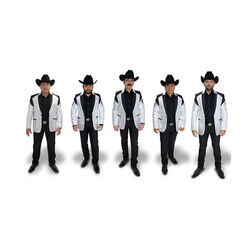
Mario Quintero Lara, born in Las Huacapas, Sinaloa, Mexico, is a renowned musician and philanthropist best known as the leader and primary songwriter of the iconic Regional Mexican band Los Tucanes de Tijuana. Since forming the group in 1987, Quintero has crafted over 600 songs, including hits like "La Chona" and "El Tucanazo," earning him 34 gold and 30 platinum albums.
His work has transcended music charts, contributing soundtracks to films such as Perdita Durango and El Infierno, and prestigious TV series like Señora Acero and El Chema. A recipient of more than 30 BMI awards and the 2012 Latin Grammy for Best Norteño Album, Mario Quintero continues to influence the industry with his powerful Pacific Norteño sound.
If you have ever been to a Mexican party, you have heard this song. Mexican group Los Tucanes de Tijuana tell the hilarious story of a woman everyone knows as "La Chona." Her husband is at his wit's end, complaining: "Su marido dice ya no se que hacer con ella / Diario va a los bailes y se compra una botella" [Her husband says I don't know what to do with her / Every day she goes to dances and buys herself a bottle]. The moment the brass and accordions start playing ("Se arranca la banda con la primera canción" [The band kicks off with the first song]), she wastes zero time and instantly looks for a dance partner ("luego luego busca bailador"). In Mexican Spanish, "luego luego" means right away, without hesitation.
She dominates the dance floor completely. The crowd cheers her on with "Bravo bravo Chona nadie te puede igualar" [Bravo bravo Chona, nobody can match you!], specifically hyping her skills in la quebradita—a fast, energetic style of regional Mexican dancing full of dramatic dips and turns. The lyrics say "Ella baila de todo, nunca pierde su trote" [She dances to everything, she never loses her pace]. The word "trote" literally means a horse's trot, which makes total sense given the bouncing, nonstop rhythm of norteño music. It is a pure, fun story about a party queen who simply refuses to stay home.
Get ready to dive into the world of "La Firma Del Flaquito" by Los Tucanes de Tijuana! This song introduces us to a powerful figure known as "El Flaquito" (The Skinny One), whose banner is Arellano. From the young age of thirteen, he was already a "bélico el plebito" [a warlike kid].
Now, he's a force to be reckoned with, escorted by soldiers, federales, and estatales who are all part of his team. He commands thirty fighting groups, operating in government attire and bulletproof cars, patrolling and watching over his territory. If you don't pay up, "se les aparece el diablo" [the devil appears to them]! The song makes it clear that "nada pasa por Tijuana sin la firma del flaquito" [nothing happens in Tijuana without the skinny one's signature], emphasizing his absolute control over the city. It's a pretty intense look into the world of cartels, with mentions of new routes, partners, and clients, but also the harsh reality for anyone who turns "sapo" [a snitch]: "Matarile, ya no hay de otra" [Kill him, there's no other way]. It's a bold and direct song that doesn't shy away from its subject matter.
Get ready to meet Comandante R1! This song by Los Tucanes de Tijuana introduces us to a truly intimidating figure. The lyrics tell us he was promoted for being brave, a "rango muy bien merecido" [very well-deserved rank]. When he arrives, he instills fear, not even leaving dogs alive! He's the R1 Commander, the head of operations, with an army at his command, always patrolling his territory in armored cars.
He's all about cleaning up for the Gulf Cartel, starting a new era. The song says he loves his job and gets excited "echando bala" [shooting bullets]. He's even made a pact with the devil, and his strategy never fails. Neither rivals nor the government can stand against his weapons. He's got calluses on his fingers from pulling the trigger so much! Despite all this, the song claims he's a true man who never attacks without reason, always putting honor first. He's a straight shooter, and men like R1, "que poquitos han nacido" [few have been born]. He's not one for threats; he's already proven himself, earning trust by delivering good results. Short and long guns are firing "por todo el estado" [all over the state], as the Gulf Cartel advances, with R1 reporting in.
Get ready for some serious post-breakup swagger with Los Tucanes de Tijuana's "Prueba Superada"! This song is all about telling an ex, loud and clear, that you're not just over them, you're thriving. The singer is completely done with the relationship and can't believe their ex thought they'd be crying and begging to get them back. As he puts it, "Que tontería, que tarugada" [What foolishness, what stupidity] – he's the one who gets begged, not the other way around!
He's so over it that he's completely cut ties, even online! He sings, "Ya no me busques ni en internet / No tengo Facebook ya lo cerré" [Don't look for me on the internet anymore / I don't have Facebook, I already closed it]. He's changed everything from Instagram to WhatsApp, Twitter, and even Skype, making it clear that finding him will be a struggle. This song is a fun, blunt declaration of independence and a celebration of moving on to a much better place. It's a true "prueba superada" [challenge overcome]!
Get ready to dive into the world of "Le Apodan El Fresa" by Los Tucanes De Tijuana featuring Luis R Conriquez! This song introduces us to a powerful figure known as 'El Fresa' [The Strawberry], a man who "pesa" [carries weight] and has a large armed group. He's always watching, controlling his territories, and with financial backing, his crew is ready for anything. The lyrics tell us he's the boss of his family, both by blood and from Michoacán, and he's never alone. If you cross him, you'll "arde en llamas" [burn in flames], but he's not inherently bad and will even spare lives, depending on your actions.
The song also describes El Fresa as a warrior, just like his home state. He loves to party and spend money, always with "la mujer más bella" [the most beautiful woman] by his side. He's surrounded by powerful friends and associates from the respected FM cartel. While he doesn't look for trouble and focuses on making money, he has people ready for war "24/7." He's peaceful when things are good but becomes "un hombre letal" [a lethal man] if someone offends him. The song ends by reminding us that nothing in life is easy, and sometimes, if there's no other choice, you have to "denle plomo" [give them lead].
This song is basically a big, dramatic apology set to music. The singer admits he chased all the flashy stuff in life, thinking “las cosas buenas eran aquellas del mundo fanfarrón” [the good things were the show-off things in the world], and now he knows he was wrong because losing this love hurts more than anything. He calls himself “un tonto” [a fool], says he knows he did damage, and that he probably doesn’t deserve to be loved again. But he still asks for “otra oportunidad” [another chance] like someone who knows he messed up badly, yet refuses to give up.
What makes it fun is how over-the-top and honest he is. He swears he is “rehabilitado” [rehabilitated] and that he doesn’t want “amores de mercado” [market loves, cheap loves] anymore, only real love with this one person. His heart is so desperate it “quiere salirse” [wants to jump out] because it “no puede estar sin ti” [cannot be without you]. He promises “ya no ser sinvergüenza” [to no longer be shameless] and to always stay by their side if he gets forgiveness. It is the classic story of the ex who partied too hard, hurt someone good, and now is ready to risk everything “para hacerte feliz” [to make you happy] and prove that this time, he has actually changed.
”La Chona” berättar med glimten i ögat om en kvinna som alla känner till under smeknamnet Chona. Hennes man säger: ”Su marido dice ya no sé qué hacer con ella” [Hennes man säger: jag vet inte längre vad jag ska göra med henne]. Varje dag går hon till danserna och köper en flaska: ”Diario va a los bailes y se compra una botella” [Varje dag går hon till danserna och köper en flaska]. Det låter som att Chona hellre följer musiken och festen än håller sig hemma, och raden om hennes frustrerade man gör bilden både komisk och lite överdriven.
Så fort bandet börjar spela söker Chona en danspartner: ”Y la Chona luego luego busca bailador” [Och Chona letar genast efter någon att dansa med]. Publiken hejar på henne eftersom ingen kan mäta sig med hennes dans. Hon är särskilt bra på quebradita, en livlig mexikansk pardans, men hon klarar vilken rytm som helst: ”Ella baila de todo, nunca pierde su trote” [Hon dansar till allt och tappar aldrig sitt steg]. Ordet ”trote” betyder egentligen trav eller lunk, men här beskriver det hennes stadiga, säkra dansstil. Det är en enkel festscen med en väldigt tydlig huvudperson: Chona slutar inte dansa, oavsett vilken låt bandet spelar.
La Chona van de Mexicaanse groep Los Tucanes de Tijuana vertelt met veel humor over een vrouw die iedereen kent onder haar bijnaam. Haar man weet niet meer wat hij met haar aan moet, want zij gaat elke dag naar een dansfeest en koopt daar een fles. Zodra de banda begint te spelen, zoekt ze meteen een danspartner. De regel “Su marido dice ya no sé qué hacer con ella” [Haar man zegt: ik weet niet meer wat ik met haar aan moet] maakt haar feestlust lekker direct en een beetje komisch.
Op de dansvloer is Chona de grote ster. De mensen roepen “Bravo, bravo, Chona, nadie te puede igualar” [Bravo, bravo, Chona, niemand kan aan je tippen]. Ze danst de quebradita, een Mexicaanse dansstijl met snelle, speelse bewegingen, maar volgens het lied kan ze eigenlijk op elk ritme dansen. “Ella baila de todo, nunca pierde su trote” [Ze danst op alles en verliest nooit haar vaste pas]. De muziek klinkt daardoor als een vrolijke aanmoediging om mee te doen: Chona heeft haar fles, haar danspartner en het publiek dat haar luid toejuicht. Geen wonder dat haar man even met zijn handen in het haar zit.
„La Chona“ erzählt mit viel Humor von einer Frau, die beim Tanzen niemand bremsen kann. Ihr Spitzname ist Chona, und ihr Mann weiß angeblich nicht mehr, was er mit ihr machen soll: „Diario va a los bailes y se compra una botella“ [Jeden Tag geht sie zu Tanzveranstaltungen und kauft sich eine Flasche]. Sobald die Band ihr erstes Lied spielt, sucht sie sich einen Tanzpartner. Das Bild ist direkt und ein bisschen übertrieben, genau deshalb macht es so viel Spaß.
Im Mittelpunkt steht Chonas Können auf der Tanzfläche. Das Publikum ruft: „Bravo, bravo, Chona, nadie te puede igualar“ [Bravo, bravo, Chona, niemand kann dir das Wasser reichen]. Besonders gut ist sie bei der quebradita, einem schnellen mexikanischen Paartanz mit schwungvollen, teils stark geneigten Bewegungen. Doch Chona tanzt zu allem, was die Band spielt: „Ella baila de todo, nunca pierde su trote“ [Sie tanzt alles und verliert nie ihren Schritt]. Die wiederholten Rufe, die Flasche und ihr unermüdliches Tanzen machen aus ihr die unangefochtene Hauptfigur jedes Festes.
Get ready to party with Los Tucanes de Tijuana's "Parrandeando"! This song is all about living life to the fullest, enjoying good times, and celebrating with friends and family. The singer makes it clear that his wallet is his sponsor, saying "Mi cartera es quien me patrocina / Donde llego responde por mí" [My wallet is my sponsor / Wherever I go, it answers for me]. He loves a good party, calling them his "adoration" and even his "medicina" [medicine] when he's feeling down. If problems come his way, he drowns them "con whisky en las rocas" [with whiskey on the rocks] because, for him, being happy is what matters most.
Even though he loves to party, the singer also values his roots and his family, stating "Pero mi más grande bendición / Siempre ha sido y será mi familia" [But my greatest blessing / Always has been and always will be my family]. He's a hard worker from Juanacatlán, Jalisco, and his success allows him to celebrate. He's Juan Carlos Ruvalcaba, and he's going to keep the party going, even "aunque no haya motivos" [even if there are no reasons]! It's a fun, upbeat anthem for anyone who loves to celebrate life.
Get ready to meet some unforgettable characters in Los Tucanes De Tijuana's "Mis Tres Viejas"! This song introduces us to a man who lives with three "viejas" [old women] in the same house. He says they don't fight and they all get along, and he loves them very much, calling them "la crema y nata" [the best of the best]. He can't live without them because they bring him joy, money, and power.
But here's the twist: these aren't just any women! He describes them by color: Blanca [White] is the most active, Mari [Mary] is fragrant with green eyes, and La Negra [The Black One] drives him crazy when he's sad. He even says, "Las tres mujeres que tengo Trabajan todos los días" [The three women I have work every day] and help him when the police show up at his "lavandería" [laundromat]. It turns out these "viejas" are actually different types of drugs, and he's not sorry about it, even though they're dangerous. It's a clever play on words that's both fun and a little dark!
Get ready to meet a true original in Los Tucanes De Tijuana's "Ranchero Y Medio"! This song is all about a guy who's super proud to be a ranchero, and not just any ranchero – he's "ranchero y medio" [ranchero and a half], meaning he's extra ranchero! He tells us he's the "number one" and that he talks and dresses in his own unique style. He's a gentleman with women and a good friend to everyone else. He even says he knows everything "menos el miedo" [except fear], because when he was born, fear had already been given out!
Our ranchero is humble but also very proud, always in his boots and hat, loving horses, trucks, and motorcycles. He enjoys all the good things in life and doesn't hold back when he wants something. He's got money to have a good time, loving to listen to banda and norteño music, and he loves to dance with his horses. He's just like his dad and has his mom's spark too! He works hard so that "la matita siga dando" [the little plant keeps giving], meaning he keeps the money coming in. He's a man of his word, not worried about competition, and his investments are doing great. He's happy to help everyone and knows how to respect others, but he also knows how to fight if someone crosses him. This song is a fun and confident declaration of who he is!

