Bésame Mucho Lyrics in English by Andrea Bocelli
Bésame is the command form of the verb 'besar' (to kiss) with the pronoun 'me' attached. It's a direct and passionate plea that translates to "Kiss me".
This single word is the heart of the song, setting an urgent and deeply romantic tone. The singer isn't just asking for a kiss, they are imploring their lover to kiss them as if it were the last time, making this simple command incredibly powerful and memorable.
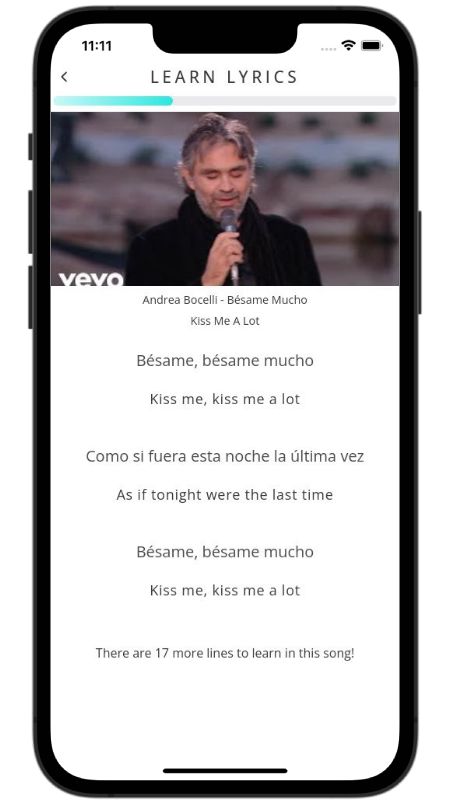
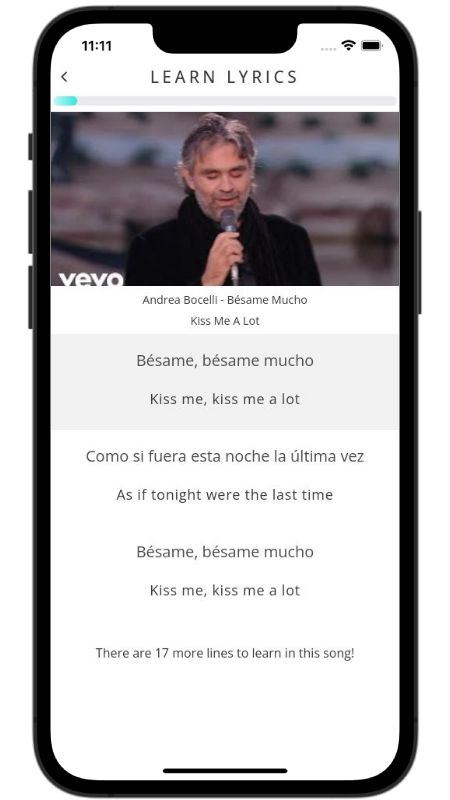
Italian tenor Andrea Bocelli tackles one of the most famous romantic boleros ever written, and he keeps the drama dialed all the way up. The whole track is built on pure urgency. The singer begs their partner with the title phrase, "Bésame, bésame mucho" ("Kiss me, kiss me a lot"), treating the moment like a ticking clock: "Como si fuera esta noche la última vez" ("As if tonight were the last time"). It is an intense, slightly desperate plea where love and worry collide.
Why the rush? Fear of separation. The lyrics spell it out directly: "Que tengo miedo a perderte, perderte después" ("Because I'm afraid of losing you, losing you afterwards"). The singer wants absolute closeness right now—to look into their partner's eyes and have them by their side—because tomorrow brings distance: "Piensa que tal vez mañana / Yo ya estaré lejos, muy lejos de ti" ("Think that maybe tomorrow / I will already be far, very far from you"). Bocelli's classical style gives this simple fear of a lonely tomorrow a grand, operatic weight.