Vivo Por Ella Lyrics in English by Andrea Bocelli, Marta Sánchez
Musa translates to "muse," a person or force that inspires an artist. The word comes from the Muses of Greek mythology, who were the goddesses of the arts, literature, and science.
In "Vivo Por Ella," the entire song is a passionate ode to a mysterious "ella" (her). The line "Es la musa que te invita" (She is the muse that invites you) is a key clue, revealing that the singer's devotion is not for a woman, but for his artistic inspiration: music itself. This clever, poetic personification is the heart of the song.
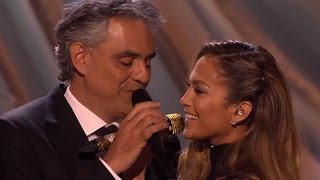
At first, this duet sounds like an intense love drama. Italian tenor Andrea Bocelli and Spanish singer Marta Sánchez sing back and forth about an obsession that rules their entire world. He opens with "Vivo por ella sin saber si la encontré o me ha encontrado" ("I live for her without knowing if I found her or she found me"). She tells him not to get jealous because this lady is by her side to silence loneliness. The imagery gets dramatic quickly: they sing that she lands a punch that doesn't hurt ("es un puño que no duele"), and Marta sings that she lives in her throat to scream out her darkest sorrows ("ella canta en mi garganta / Mis penas mas negras de espanto").
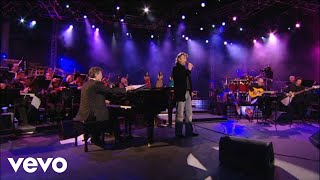
Then comes the big twist right near the end: the mystery lover is not a human being at all. Bocelli admits, "ella se llama música" ("her name is music"). Once that secret drops, every grand line clicks into place. The piano that chases away death, the bright lights from a theater box ("desde un palco"), and the unconditional loyalty ("Fiel y sincera de por vida" / "Faithful and honest for life") turn out to be a massive, romantic tribute to the art of making sound.