Hecha Pa' Mí Lyrics in English by Grupo Frontera
Hecha pa' mí is the heart and soul of this romantic hit, and it's a perfect example of real-world, spoken Spanish. It means 'made for me', but the key is the word pa', a common contraction of para (for) that you'll hear constantly in music and conversation.
By saying 'tú estás hecha pa' mí', the singer declares that his partner is his perfect match, as if she were custom-designed for him by fate. It's a phrase that's both sweet and authentically colloquial.
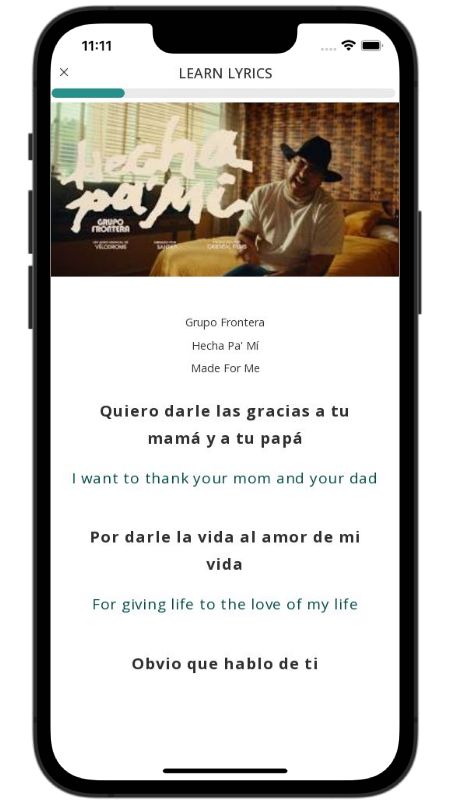
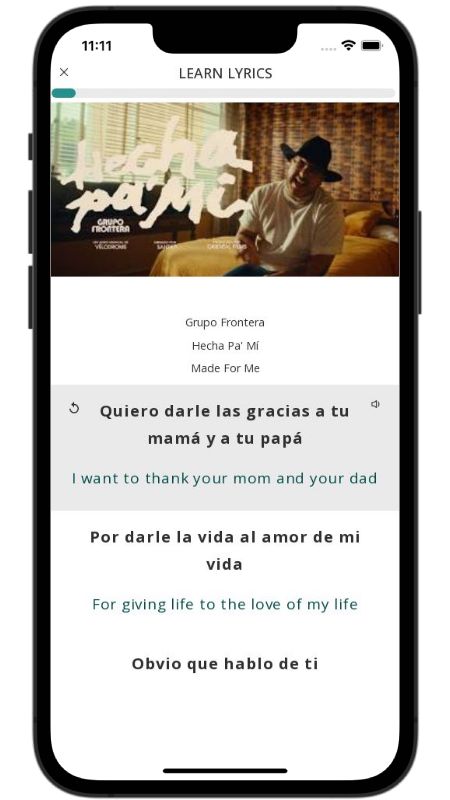
Grupo Frontera goes all-in on wholesome, over-the-moon romance in Hecha Pa' Mí. The singer is so head-over-heels that he starts by thanking his partner's parents just for bringing her into the world: "Quiero darle las gracias a tu mamá y a tu papá por darle la vida al amor de mi vida" ("I want to thank your mom and your dad for giving life to the love of my life"). He admits he is not perfect, but promises to protect her until his days are up. He even throws in a cheeky bit of math about his loyalty, joking that he only belongs to her twelve months out of the year ("Al año soy tuyo nomás doce meses").
The title phrase "hecha pa' mí" means "made for me," and the chorus treats this romance like a custom fit: "Así, a la medida, ¿dónde andabas perdida?" ("Just like that, custom-made, where were you hiding?"). The word pa' is everyday spoken shorthand for para ("for"), while a la medida literally means "tailor-made" or "to size." He calls her mija (a warm contraction of mi hija, meaning "my daughter" or "my girl") and drops the Mexican slang phrase "está cabrón" (it is tough/impossible) to say that with her around, it is pretty much impossible to feel stressed ("Teniéndote a ti, está cabrón que me estrese"). It is pure, joyful appreciation for finding someone who feels designed specifically for you.