Love Story Lyrics in English by Indila
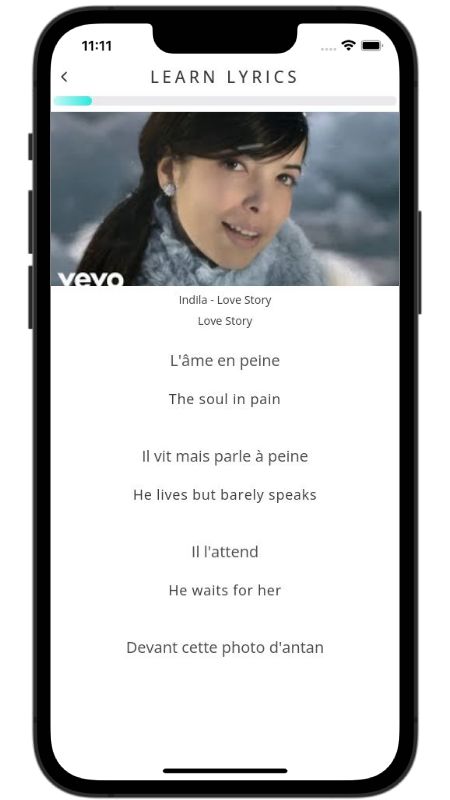
d'antan is a beautiful, literary way to say "of yesteryear" or "of old." It's a word that evokes a deep sense of nostalgia and times gone by.
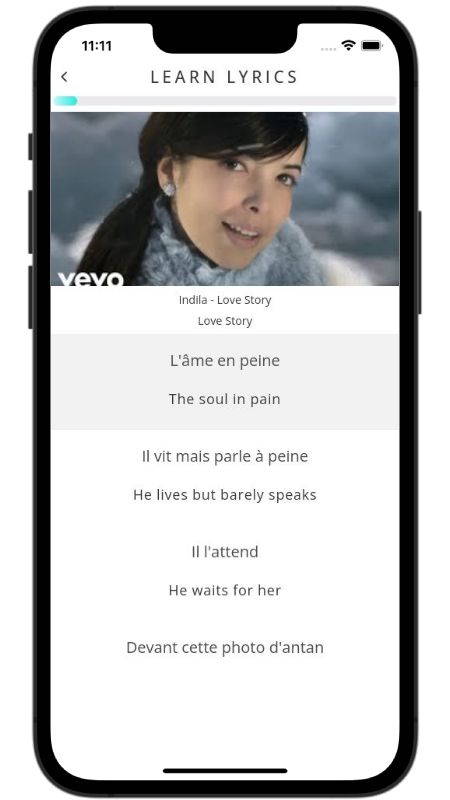
In the song, the story begins with a man looking at a photo d'antan (a photo from yesteryear) while he waits for his lost love. Using this word instead of a more common one like vieux (old) adds a layer of poetry and timeless romance to his devotion, perfectly setting the scene for this poignant love story.
Indila tells a dramatic pop story about a man who refuses to let go of a lost romance. He spends his days standing still with a single flower, waiting in front of an old photograph: "Une rose à la main / A part elle il n'attend rien" [A rose in hand / Apart from her, he waits for nothing]. Other people probably think he has lost his mind, but she insists "Il n'est pas fou / Il l'aime c'est tout" [He is not crazy / He loves her, that is all]. For him, reality has faded away, and this memory is the only thing keeping him alive.
As the song shifts perspective, we hear direct pleas filled with guilt and desperate promises. The speaker begs for comfort ("Prends ma main / Promets moi que tout ira bien" [Take my hand / Promise me everything will be fine]), while admitting "J'ai été trop bête" [I was too foolish/stupid; "bête" literally means "beast" or "animal," but in everyday French it means "silly" or "foolish"]. The devotion turns absolute with dramatic offers of gold, waiting by the harbor, or even giving up a final breath: "Je t'offrirais mon dernier souffle de vie" [I would offer you my last breath of life]. With big lines like "L'amour fait d'un fou un roi" [Love makes a king out of a madman], Indila turns this stubborn, painful waiting into a full romantic myth.