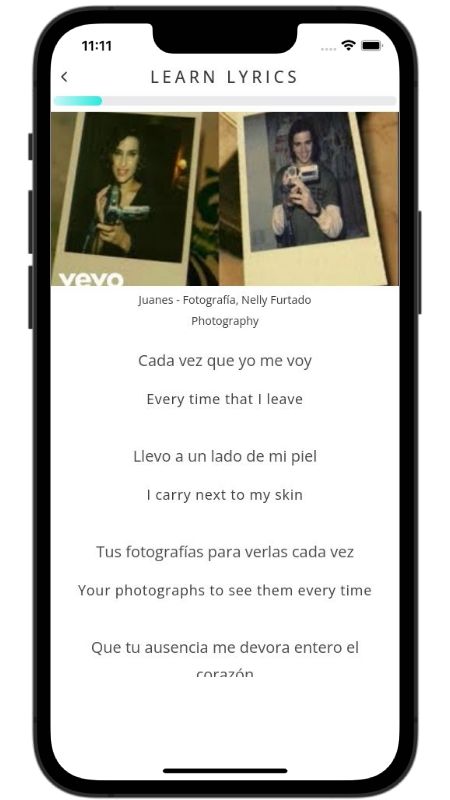
Fotografía Lyrics in English by Juanes, Nelly Furtado
Taciturno translates to "melancholy," "gloomy," or its English cognate, "taciturn." It's a beautiful, literary word used to describe someone or something that is sad, silent, and withdrawn.
In the song, Juanes sings of "el recuerdo taciturno de tu voz" (the melancholy memory of your voice). This poetic adjective perfectly captures the profound sadness and nostalgia of remembering a loved one who is far away, adding a deep layer of emotion to the lyrics.
Missing someone terribly? Colombian rock star Juanes and Nelly Furtado know the feeling all too well in this sweet, nostalgic duet. The song is all about the pain of distance and relying on old snapshots to keep someone close. Juanes admits that whenever he travels, he keeps pictures right next to his skin ("Llevo a un lado de mi piel / Tus fotografías" [I carry next to my skin / Your photographs]) because longing eats away at his heart ("tu ausencia me devora entero el corazón" [your absence completely devours my heart]). When you can't be with the person you love, looking at their pictures is the only cure left.
Yet there is also a frustrating sense of one-sided chasing in the chorus: "Cada vez que te busco, te vas / Y cada vez que te llamo, no estás" (Every time I look for you, you leave / And every time I call you, you aren't there). The singer feels like a huge physical gap ("un abismo desnudo" [a bare abyss]) stands between them, so looking up at the stars and holding printed photos are the only ways to bring those eyes back into focus. It is simple, a little dramatic, and completely honest about how lonely distance feels.