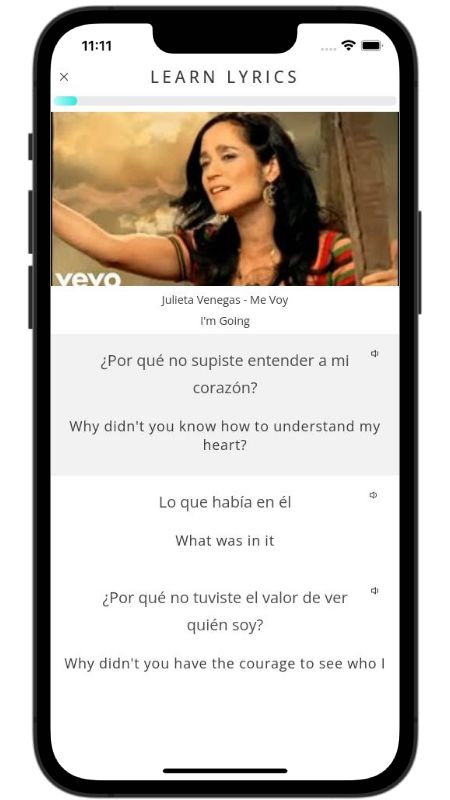
Me Voy Lyrics in English by Julieta Venegas
Endulza is the third-person conjugation of the verb endulzar, which literally means "to sweeten". It comes from the word dulce (sweet).
In this iconic breakup anthem, Julieta Venegas sings about finding a new love "que endulza la sal" (that sweetens the salt). This beautiful and poetic phrase suggests a love so powerful it can turn the bitterness of tears or hardship into something sweet, making it a truly memorable and hopeful line.
Mexican pop artist Julieta Venegas serves up one of the calmest, most direct breakup tracks you will ever hear in "Me Voy" (I'm Leaving). Instead of yelling or begging, she asks point-blank why her partner paid attention to outside noise while she vanished right next to them: "¿Por qué no escuchas lo que está tan cerca de ti? / Sólo el ruido de afuera y yo / Que estoy a un lado desaparezco para ti" (Why don't you listen to what's so close to you? / Only the noise outside, and I / Who am right beside you, disappear to you). Then comes the sharpest line in the whole track: "No voy a llorar y decir / Que no merezco esto, porque / Es probable que / Lo merezco, pero no lo quiero por eso / Me voy" (I'm not going to cry and say / That I don't deserve this, because / It's likely that / I deserve it, but I don't want it, so / I'm leaving). It is delightfully blunt. She skips the usual self-pity, shrugs off the drama, and just packs her bags.
Her farewell is wrapped in a tidy catchphrase: "Qué lástima, pero adiós" (What a shame, but goodbye). Notice how she describes the future she actually wants. She looks forward to "alguien que sepa darme amor / De ese que endulza la sal y hace que salga el sol" (someone who knows how to give me love / The kind that sweetens salt and makes the sun come out). She thought they had "amor del bueno" (the good kind of love)—a classic everyday Spanish phrase for real, genuine, wholesome love meant for the long haul—before realizing there simply was not enough to go around. No tears, no screaming matches, just a clean exit toward better days.