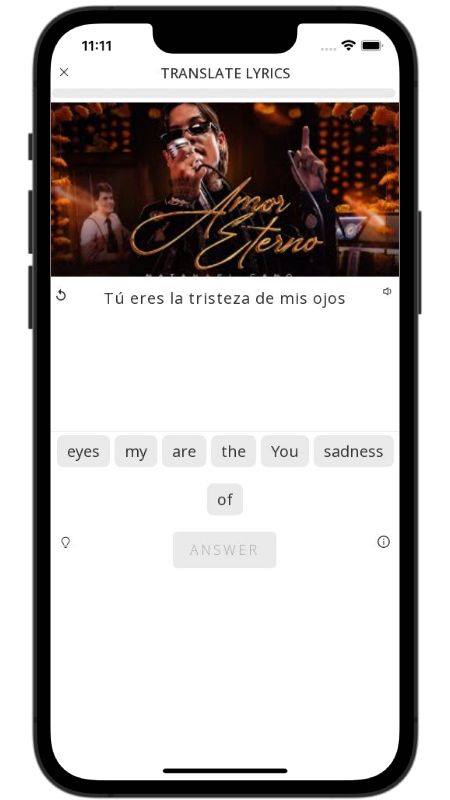
Amor Eterno Lyrics in English by Natanael Cano
Sepulcro is a powerful and somewhat rare word for 'tomb' or 'sepulcher'. It's much more poetic and solemn than the more common word, tumba.
In this heartbreaking song about losing a loved one, the singer compares his own dark loneliness to the "soledad de tu sepulcro" (the solitude of your tomb). This creates a chilling and unforgettable image of his profound grief, making it a key word to understand the song's depth.
Natanael Cano brings his corrido tumbado sound to this grief-stricken ballad, and the pain hits immediately. Right off the bat, the singer stares into a mirror and sees the face of someone who died instead of his own reflection: "Me miro en el espejo y veo tu rostro" [I look in the mirror and I see your face]. He is stuck in the past, wishing he could sleep all day just to avoid the agony of being awake. The guilt eats at him too. Even though he says his conscience is clear, he immediately admits, "Sé que pude haber yo hecho más por ti" [I know I could have done more for you].
There is no silver lining here, only heavy grief tied to specific places and physical realities. He compares his present isolation directly to a grave, singing of the "Oscura soledad que estoy viviendo / La misma soledad de tu sepulcro" [Dark loneliness that I am living / The same loneliness of your tomb]. Then comes a real-world location: Acapulco. Rather than being a sunny Mexican beach town to celebrate, he calls it his most painful memory ("El más triste recuerdo de Acapulco" [The saddest memory of Acapulco]). It is an uncompromising look at total loss, with the singer holding on to one desperate conviction: they will reunite after death ("Tarde o temprano estaremos juntos" [Sooner or later we will be together]) to keep loving each other forever.