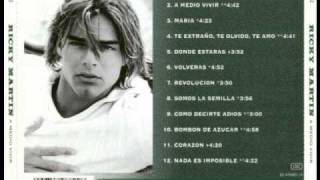
María Lyrics in English by Ricky Martin
Espejismo translates to 'mirage' or 'illusion' and perfectly derives from the root word espejo, which means mirror.
In this iconic dance hit, Ricky Martin describes María as an espejismo, a captivating illusion that drives you completely crazy. It is a highly poetic word to describe someone who is undeniably alluring but ultimately impossible to hold onto.
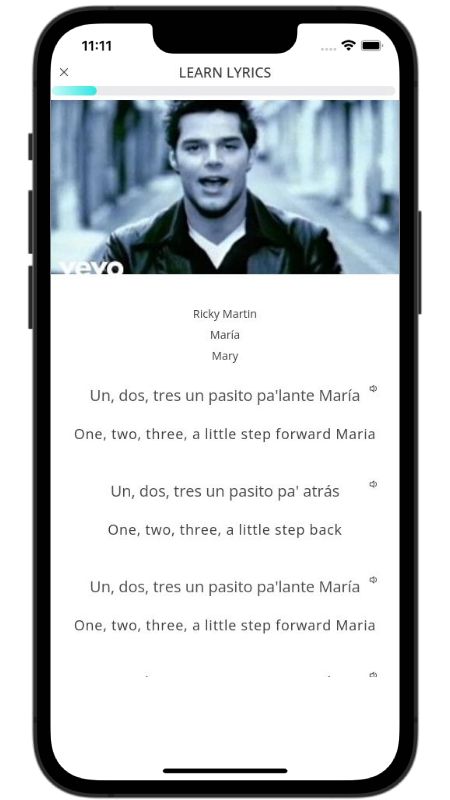
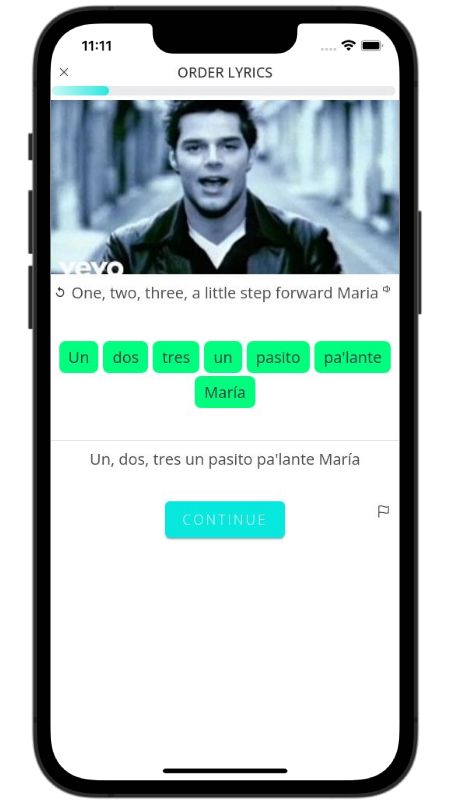
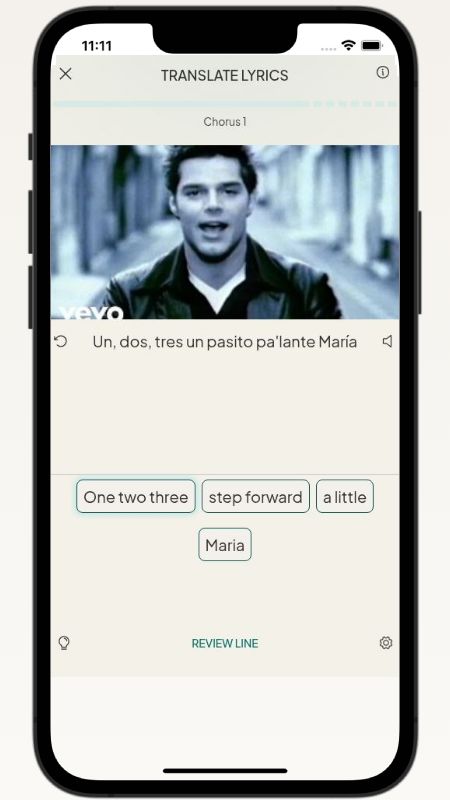
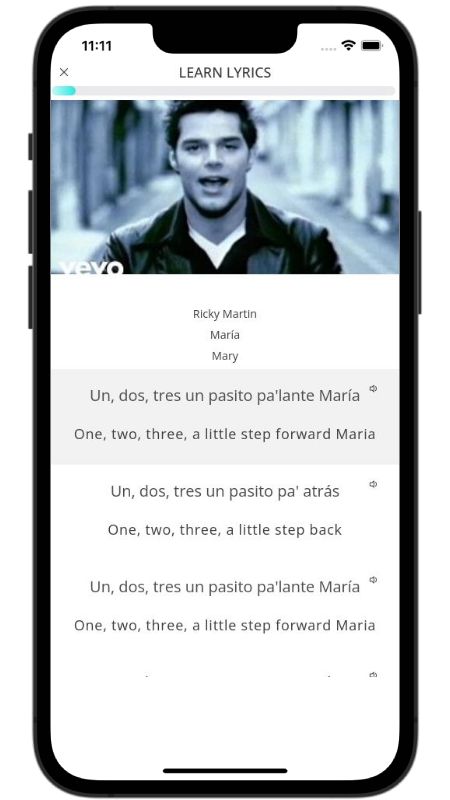
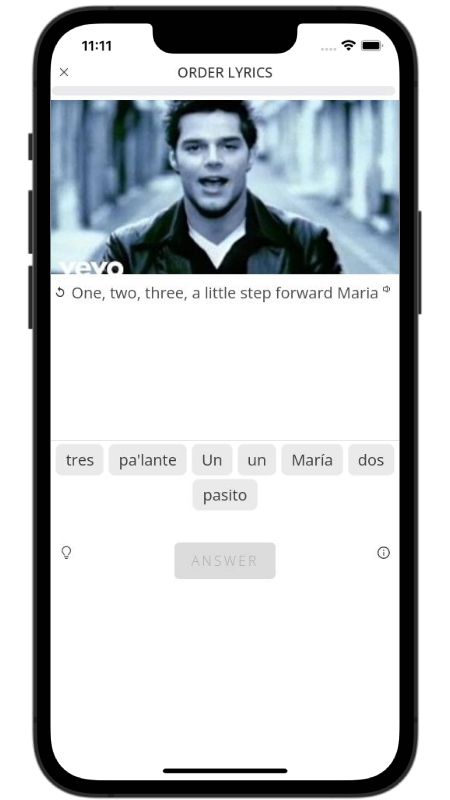
Puerto Rican pop star Ricky Martin delivers pure dancefloor adrenaline with "María," turning a warning about a dangerous woman into an irresistible party. Right from the jump, you get the famous countdown hook instructing you to take a little step forward and a little step back: "Un, dos, tres un pasito pa'lante... un pasito pa' atrás" (One, two, three, a little step forward... a little step back). Notice the street-smart contraction pa'lante (short for para adelante, meaning forward) and pa' atrás (short for para atrás, meaning backward)—this everyday conversational shortcut makes the beat hit fast and keeps everyone moving in sync.
Beneath the bouncy rhythm, Ricky describes María as magnetic trouble. He calls her "como caída de otro planeta" (like she fell from another planet) and "un laberinto carnal que te atrapa y no te enteras" (a flesh-and-blood maze that traps you before you even notice). Then comes the blunt chorus: "Así es María blanca como el día, pero es veneno si te quieres enamorar" (That is María, white as the day, but poison if you want to fall in love). He claims she is both burning hot and freezing cold ("tan caliente y fría"), warning that drinking her in will surely kill you. It is over-the-top, classic pop melodrama, wrapped in a step-by-step dance routine you cannot resist following.
















![Adiós [Mambo Remix] Lyrics Translation](https://img.youtube.com/vi/C4plFyIPeLk/mqdefault.jpg)