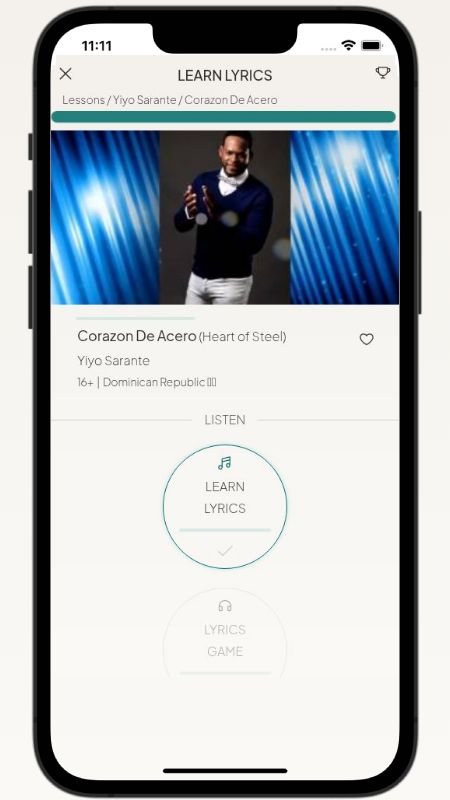
Corazon De Acero Lyrics in English by Yiyo Sarante
Desilusión translates to "disillusionment" or "disappointment." It's a strong emotional word that goes beyond simple sadness, implying a loss of hope or belief in something.
In the song, Yiyo Sarante sings, "Y es que mi corazón para tanta desilusión él no fue diseñado" (And my heart was not designed for so much disillusionment). This word perfectly captures the depth of betrayal and heartbreak the singer feels, making it a powerful and relatable term for anyone who has experienced a profound letdown in love.
If someone is going to treat romance like a game, the very least they can do is hand you body armor first. That is the exact complaint Dominican artist Yiyo Sarante brings to "Corazón de Acero". He looks back on a failed relationship and delivers some blunt arithmetic: "puedes darte cuenta quién perdió más de la cuenta" ("you can see who lost more than they should have"). His verdict? His ex lost out the most, ending up entirely alone. He admits his chest was never built to take so much damage ("mi corazón para tanta desilusión él no fue diseñado" / "my heart was not designed for so much disappointment"). So, he serves up a delightfully bitter guilt trip: "si esto fue un juego, debiste por lo menos regalarme un corazón de acero" ("if this was a game, you should have at least given me a heart of steel").
The track does not stay in the misery zone for long, though. Yiyo moves quickly from bruised pride to total revenge through recovery. True love curdles into pure bitterness ("ahora solo resentimiento en mí, tú puedes provocarme" / "now you can only cause resentment in me"), but he flips that spite into fuel. In fact, he sarcastically thanks his former flame's cruelty for pushing him straight into someone else's arms: "hoy vuelvo a respirar, gracias a ti y a toda tu maldad hoy logro reemplazarte" ("today I breathe again, thanks to you and all your evil I manage to replace you"). By the time the outro rolls around, he repeats "necesitaba otras caricias para olvidarte" ("I needed other caresses to forget you") like a personal mantra. It turns out the quickest fix for a fragile heart is simply moving on to the next touch.