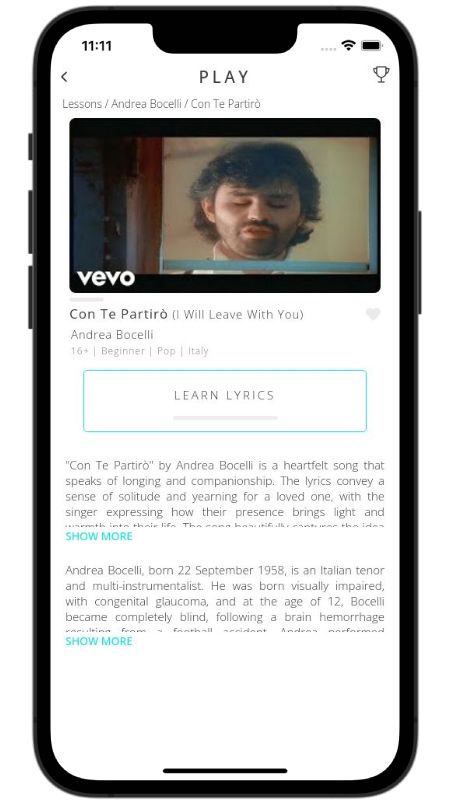
Con Te Partirò Lyrics in English by Andrea Bocelli
Partirò is the future tense of the Italian verb partire, meaning "to depart". It literally translates to "I will depart".
This single word is the heart of the song's iconic title, Con te partirò (With you, I will depart). It's not a sad goodbye, but a powerful promise to embark on a grand journey with a loved one, exploring new worlds ("paesi che non ho mai veduto") that will now be brought to life. It captures the epic, hopeful spirit of this world-famous ballad.
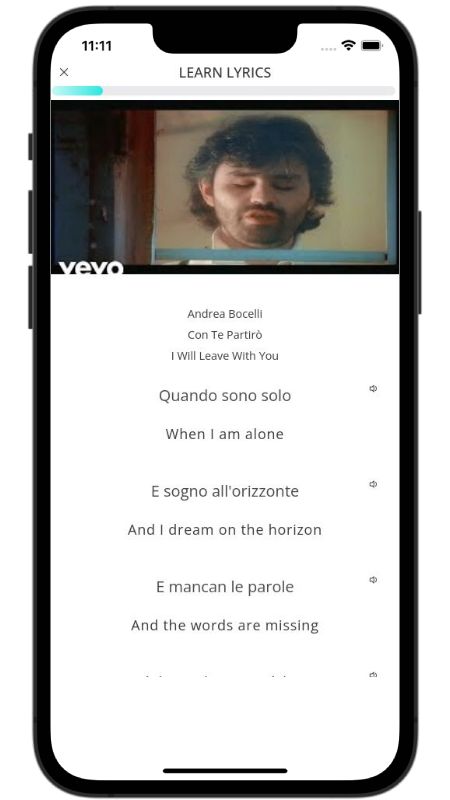
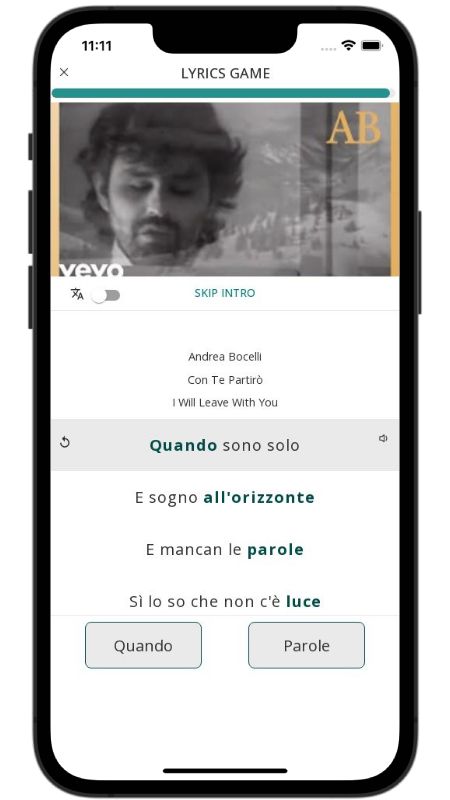
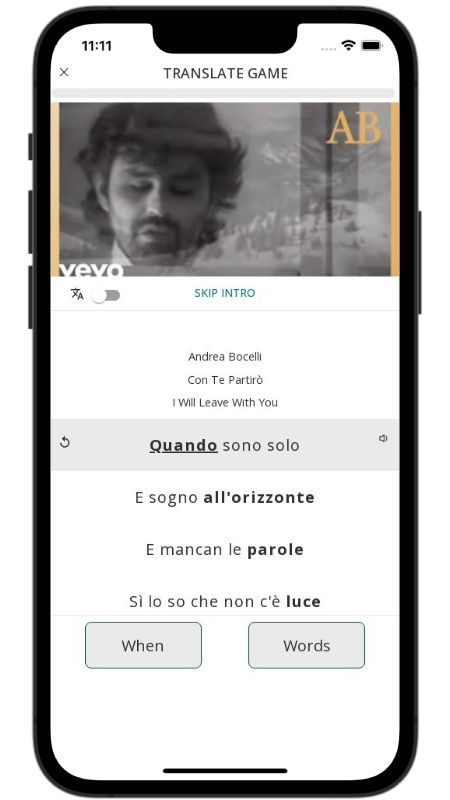
Italian tenor Andrea Bocelli starts this classical track in total quiet: "Quando sono solo e sogno all'orizzonte, e mancan le parole" ("When I'm alone and dream on the horizon, and words are missing"). He compares sitting alone in a room without his love to sitting in a place where the sun refuses to shine. But the mood does not stay quiet for long. He pleads to show his lit-up heart to the whole world right on the windows, and then he makes his giant promise in the chorus: "Con te partirò" ("With you I will leave"). Notice he uses the future tense partirò—he is packing his emotional bags right in front of you.
He is not just talking about catching an ordinary train, either. The dream gets delightfully dramatic: "Paesi che non ho mai / Veduto e vissuto con te / Adesso sì li vivrò" ("Countries that I have never / Seen and lived with you / Now yes, I will live them"). He even vows to sail on ships across seas that "non esistono più" ("no longer exist"). Calling his partner "mia luna" ("my moon") and "mio sole" ("my sun"), he turns an empty room into a fantastical voyage to lost oceans, all because he refuses to travel without them.