TELEFONO NUEVO Lyrics in English by Bad Bunny, LUAR LA L
Tablilla is a classic Puerto Rican slang word for a car's "license plate." The more standard Spanish words are placa or matrícula, so learning tablilla gives you a cool piece of regional vocabulary.
In the song, Bad Bunny boasts that his car is so recognizable that people don't even need to read the plate to know it's him: "To' saben que soy yo sin leer la tablilla" (Everyone knows it's me without reading the license plate). It's a powerful flex that highlights his status and Puerto Rican roots.
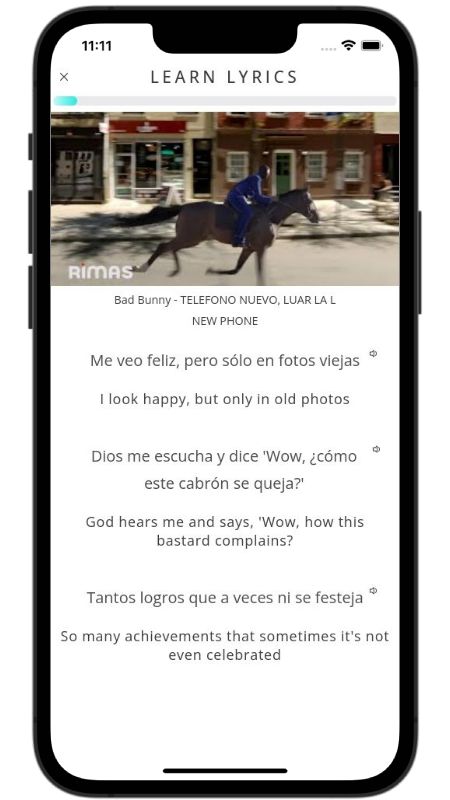
“TELEFONO NUEVO” begins with Bad Bunny admitting that success has not brought him peace: “Me veo feliz, pero sólo en fotos viejas” [I look happy, but only in old photos]. He ignores calls, says he hates fame, and describes his body as free while his heart remains behind bars. One clever line turns celebrity praise upside down: people see “una cabra” [a goat, also “the greatest of all time” in English slang], but he feels like “otra oveja” [just another sheep]. Changing his number becomes a way to escape attention, pressure, and anyone demanding access to him. The mention of 787, Puerto Rico’s best-known area code, keeps that idea tied to home.
Then Luar La L and Bad Bunny switch into full competitive mode, packed with boasts, threats, luxury, and very explicit sexual lines. In reggaeton and Latin trap, chanteo means a hard, rhythm-focused rap verse, and theirs is loaded with sports and pop-culture comparisons: Kobe Bryant scoring 61 at Madison Square Garden, Messi and Mbappé as symbols of elite status, and “jaque mate” [checkmate] as the final defeat of their rivals. There are also deliberately wild flexes, from private jets and a Bugatti to stormtroopers and Michael Jackson’s Thriller. The title’s joke returns after the hookups and bragging: “Después cambio de número y no me consiguen” [Then I change my number and they can’t find me]. It is funny, cold, and central to the song’s split personality: fame feels like a prison at first, but the new number later becomes a tool for disappearing whenever he wants.