Un Poco Loco Lyrics in English by João Pedro Gonçalves, Pedro Leitão
Oco literally means "hollow". It's a fun and unusual word that you won't find in every song, and it has a great sound that plays with the title, "Un Poco Loco".
In the context of the movie Coco, this word has a clever double meaning. While it could refer to the characters being literal skeletons, the line "Não sou tão oco assim" ("I'm not that hollow") is used to say that there's more to someone than meets the eye—that they have feelings and substance, not just an empty space inside.
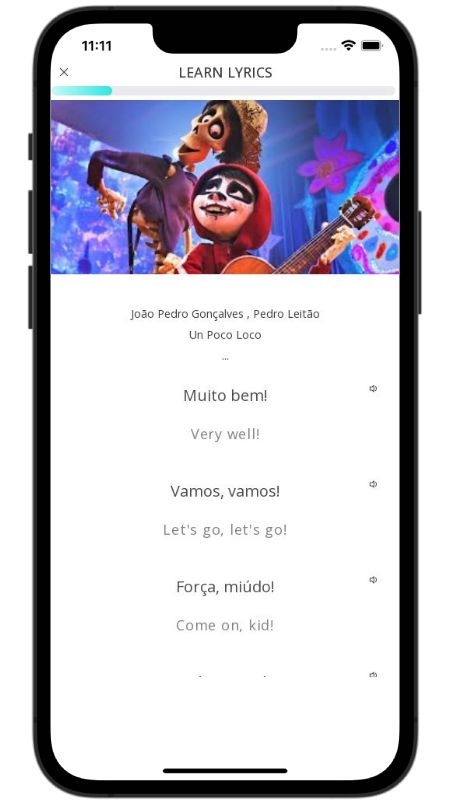
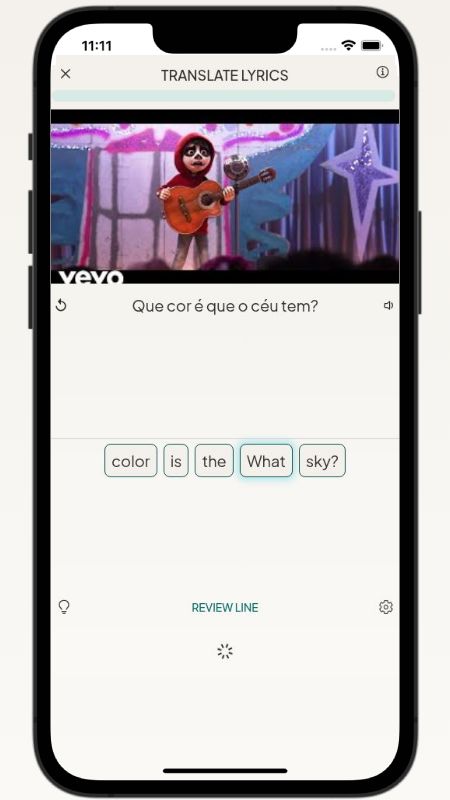
This track is an absolute riot of chaotic back-and-forth banter. Portuguese singer João Pedro Gonçalves and Pedro Leitão take on the playful, dizzying energy of someone driving them right up the wall. You hear it immediately in the cheeky opening lines, where everyday logic gets thrown out the window: you ask what color the sky is, and they tell you red ("Vermelho dizes que é"); you ask where to put your shoes, and they shout to put them on your head ("Dizes 'na cabeça', olé!"). It is completely upside down, leaving the singer feeling "un poco loco" (a little crazy) and even "un poquititito loco" (a tiny bit crazy). Between funny spoken cheers like "Força, miúdo!" (Come on, kid!) and a comical boast like "Nada mau para um morto" (Not bad for a dead guy), the whole performance feels like a lively stage skit.
Beneath the silly arguments, there is a fun language mix at play. The lyrics freely blend Portuguese with Spanish phrases like "¡Ay, mi amor!" (Oh, my love!) to mimic that fiery, dizzying rhythm of falling into someone else's madness. By the end, the singer throws up his hands: "Fazes un loco de mim" (You make a fool out of me) and "A mente dói sem ter fim" (My head hurts without end). He insists he is not totally hollow inside ("Não sou tão oco assim") and tries to protect his freedom, but the dizzying confusion wins out. In the end, he turns right back around to blame his partner: "Tu, sim, és un poco loco" (You, yes, you are a little crazy)!