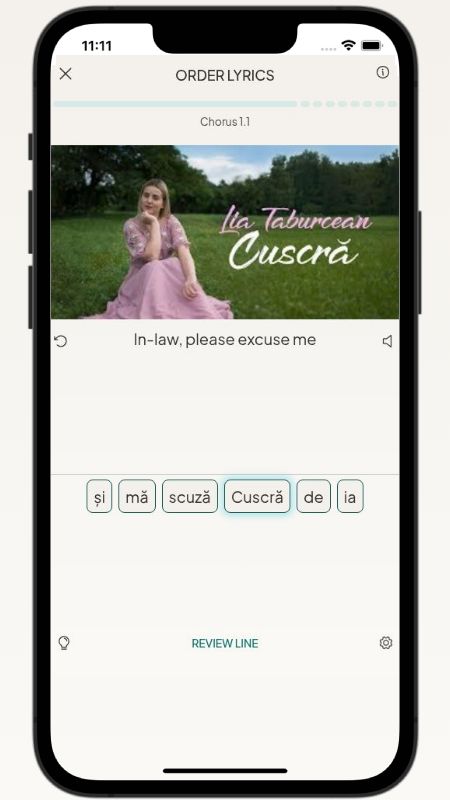
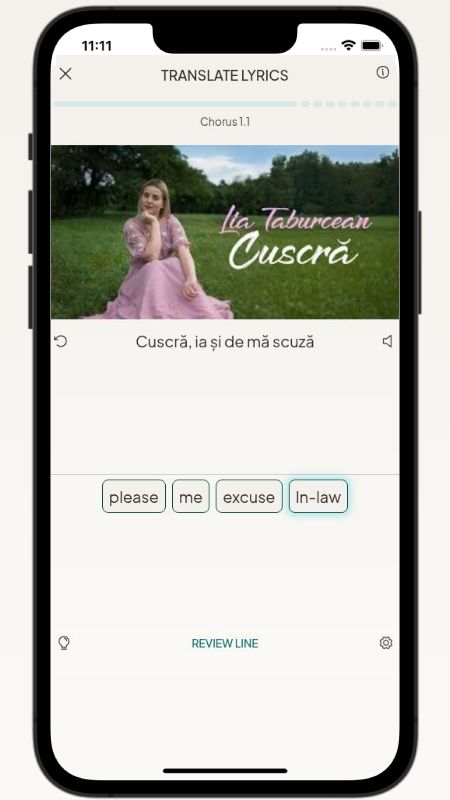
Cuscra Lyrics in English by Lia Taburcean
Cuscră refers to a specific family relationship: the mother of one's child's spouse. In English, we don't have a single word for this, often using phrases like 'my son's wife's mother' or 'my daughter's husband's mother'.
This word is central to the song, as the singer (a mother) addresses her future co-mother-in-law, praising her son and the other woman's daughter. It's a unique and culturally significant term that highlights the intricate family bonds celebrated in Romanian tradition, making it a fascinating word to learn.
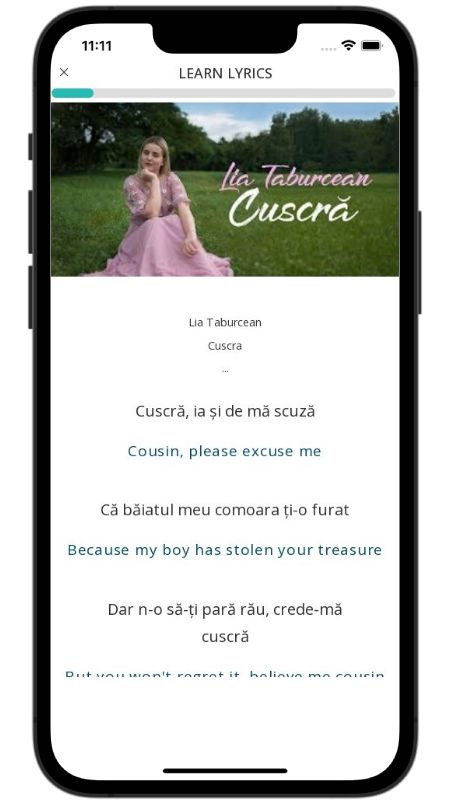
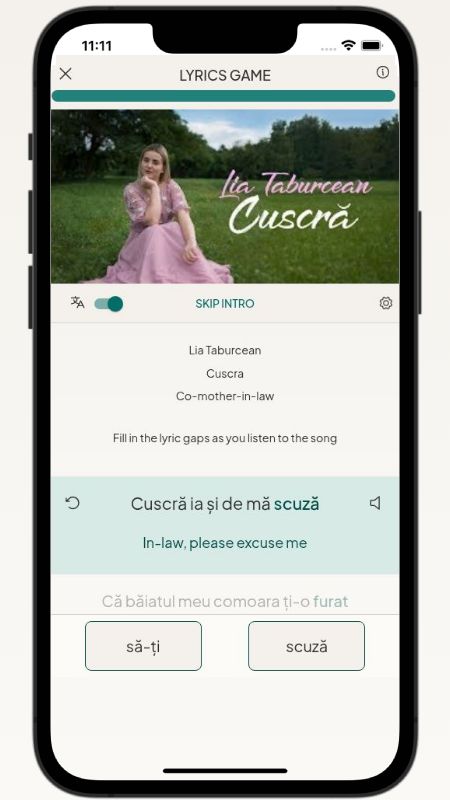
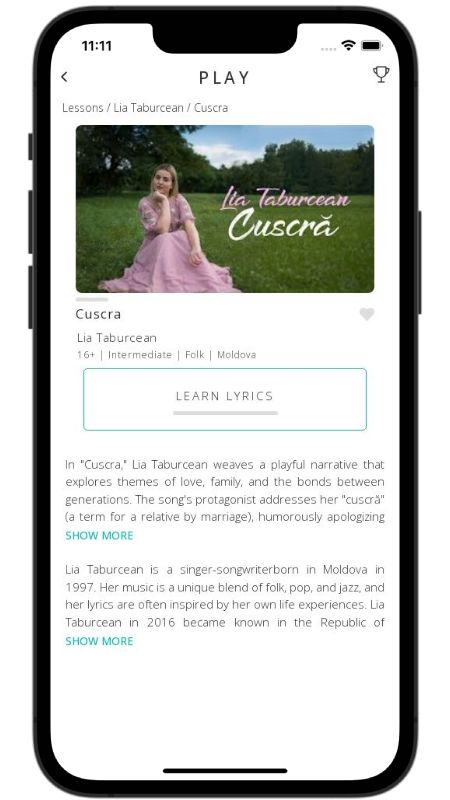
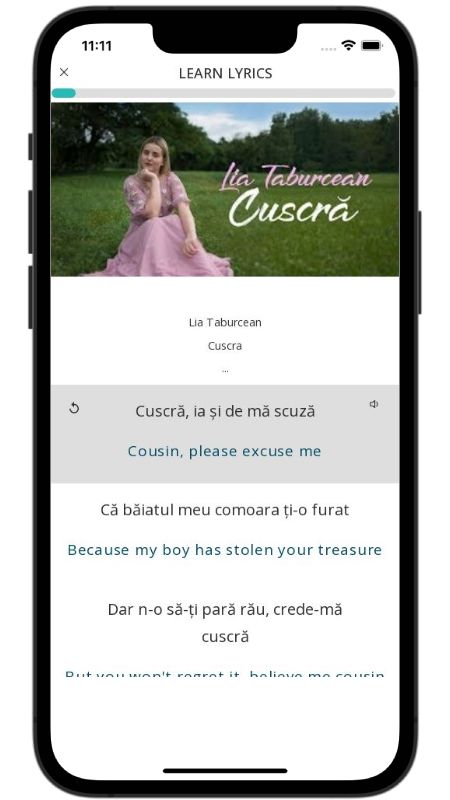
Moldovan folk singer Lia Taburcean gives us a front-row seat to village wedding banter in "Cuscra." The title itself introduces a term that does not really exist in standard English: a cuscră is the mother of your child's spouse (the relationship between the two mothers-in-law). In the song, the groom's mother teasingly tells the bride's mother to forgive her because her son "stole your treasure" ("Că băiatul meu comoara ți-o furat"). She quickly promises there will be no regrets, swearing the groom's father taught him properly how to love a woman.
What makes this track hilarious is how shamelessly the narrator brags about her family while pretending to be polite. Her boy, Ion, is a hard worker who can party all night and still show up for work the next morning ("Azi muncește, chiar de ieri o petrecut"). If he spends one coin, he brings home a whole leu the next day. But she also showers the bride with cheeky praise, calling her the kind of girl who would take gold in a homemaking contest ("Care ia aur la concurs de gospodine"). Of course, she can't resist taking credit for that, too, claiming the girl reminds her of herself: "Fata ta, cuscră, seamănă cu mine" (Your daughter, in-law, takes after me). It is pure, witty village gossip set to a danceable beat.