Salma Hayek Lyrics in English by Luis R Conriquez, Grupo Frontera
Cazadora is the feminine form of the Spanish word for "hunter", meaning "huntress". It's a powerful and evocative word that you won't find in everyday conversation.
In the song, the singer uses it as a metaphor to describe a woman who is completely in control of their dynamic. He sings, "Cazadora, yo la presa" (Huntress, I am the prey), vividly illustrating how captivated and powerless he feels under her charm. This word perfectly captures the image of a dominant, alluring woman who always gets what she wants.
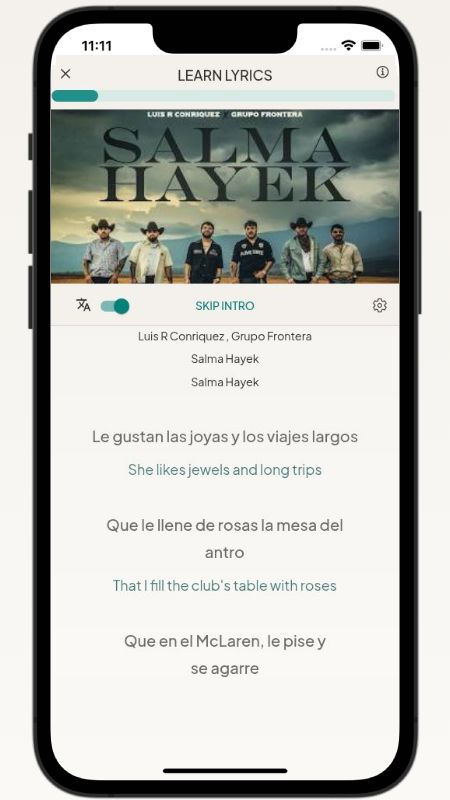
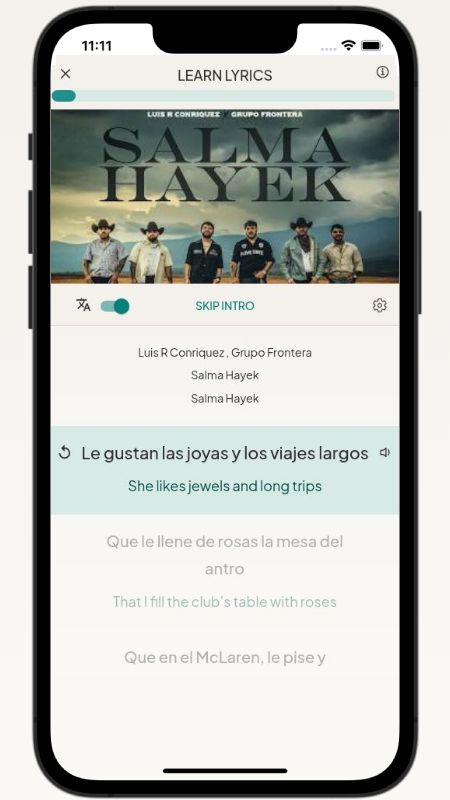
In "Salma Hayek," Mexican artist Luis R Conriquez teams up with Grupo Frontera to describe a girl who completely runs the show. She rolls around in high-end fashion like Bottega and Prada, speeds down the road in a McLaren, and checks the time only so she can glance at his luxury Patek Philippe watch. The singers nickname her after Mexican Hollywood star Salma Hayek because she has that same magnetic star power: "Mexicana internacional, parece Salma Hayek" ("International Mexican, she looks like Salma Hayek"). She treats romance like a sport where she stays in control, calling herself the hunter while he is the target ("Cazadora, yo la presa" [Hunter, I am the prey]).
What makes the song fun is its playful contrast between a luxury lifestyle and party slang. The lyrics use blunt Mexican expressions like "No quiere encularse, ella quiere hangear" ("She doesn't want to get hooked on love, she wants to hang out"), where encularse is very informal slang for falling head-over-heels obsessed with someone. Even though she acts like an untouchable work of art ("Mona Lisa, difícil de tocar" [Mona Lisa, hard to touch]), she still craves chaos when the night gets going ("Niña de casa, pero le encanta la calle" [Homebody girl, but she loves the streets]). It is a catchy story about chasing someone who enjoys fast cars, club tables full of roses, and zero emotional strings attached.