Clavado En Un Bar Lyrics in English by Maná
Clavado literally means "nailed," as in with a hammer and a nail. It's a strong, physical word that immediately grabs your attention.
In this iconic rock anthem, the singer feels "clavado en un bar"—stuck in a bar. He's metaphorically nailed to his seat by heartbreak, completely trapped by his sorrow and unable to move on. This powerful image is the core of the song's desperate and passionate feeling.
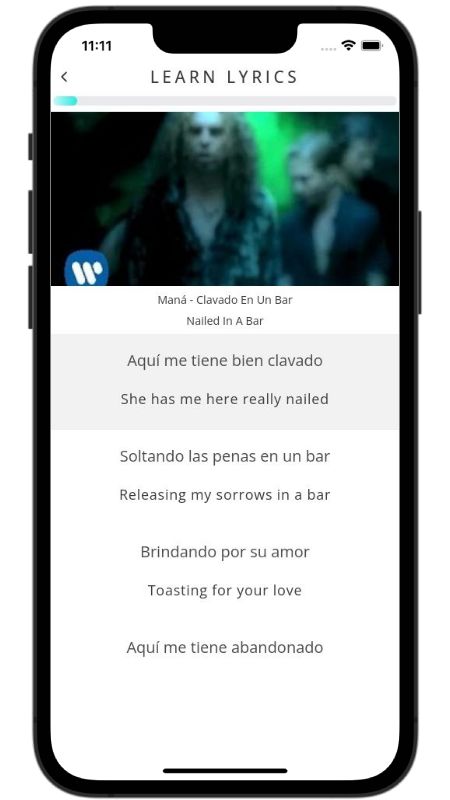
Mexican rock band Maná delivers the ultimate anthem for anyone who has ever handled heartbreak in the messiest way possible: stuck at a table, downing tequila, and crying into their glass. The title phrase "clavado en un bar" sets the scene immediately. While clavado literally means "nailed" or "stuck," in Mexican Spanish slang it means you are completely obsessed, hooked, or hung up on someone. He is literally stuck to his barstool ("Aquí me tiene bien clavado" [Here she has me totally stuck]) and emotionally trapped by his obsession, begging his ex to walk through the door and rescue him with lines like "Ven y sácame de este bar" [Come and get me out of this bar].
What makes this track so fun to sing along to is the wild mood swings in the lyrics. One second he calls her "bendita" [blessed one], pleading "Abre un poco el corazón" [Open your heart a little], and a few verses later he is yelling "¿Dónde estás, maldita?" [Where are you, damned woman?]. He knows other suitors are chasing her ("Sé que te buscan demasiados" [I know too many people are after you]), but he insists his loyalty is unmatched, using the classic Mexican idiom "mi amor nunca se raja" [my love never backs down or chickens out]. Between the anger, the dramatic pledges to be her sun and sea, and admitting he is "llorando de rabia" [crying with rage], it turns a disastrous night out into a high-energy rock classic.