Alors On Danse Lyrics in English by Stromae
Huissier translates to "bailiff", an officer who seizes property for unpaid debts. It's a specific and dramatic word you definitely wouldn't expect to find in a world-famous dance track.
In the song, Stromae lists a chain reaction of life's problems, singing "Qui dit dette te dit huissier" (Who says debt says bailiff). This sharp contrast between the harsh reality of the verses and the euphoric escape of the chorus ("Alors on danse" / So we dance) is what makes the song so brilliant and powerful.
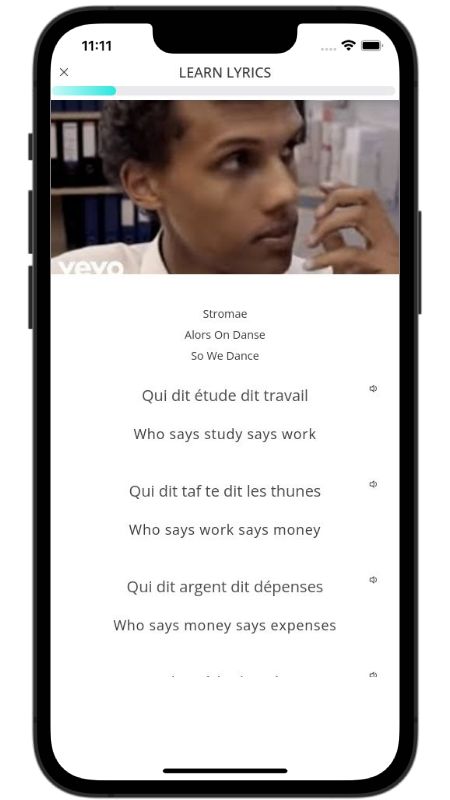
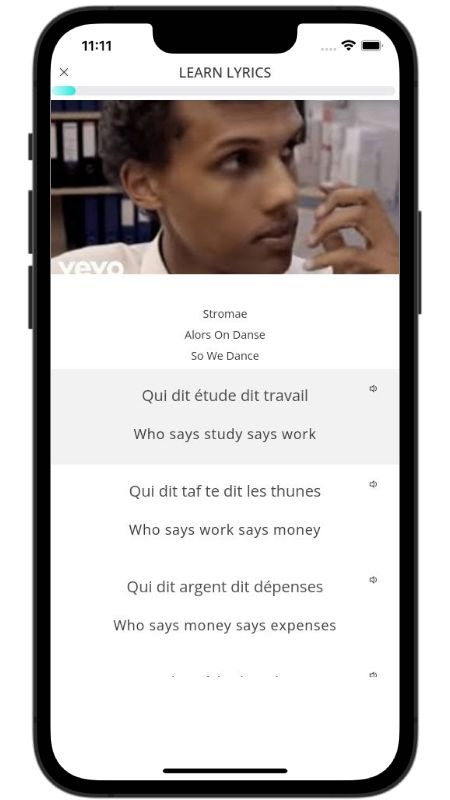
Belgian artist Stromae takes the dark spiral of everyday adult life and turns it straight into a relentless dance track. The song lays out a chain reaction of stress: school leads to work, love leads to kids, and forever leads to divorce. He packs the verses with French slang like taf [job] and thunes [cash], tracing how a paycheque quickly turns into credit, debt, and eventually a visit from the huissier [bailiff]. His lyrics are brutally blunt: Lui dit assis dans la merde [He says sitting in deep trouble, literally: sitting in the shit]. Even global issues like famine and the tiers-monde [Third World] pile onto the weight of waking up exhausted from the day before.
Instead of offering a fake solution, Stromae's answer is pure escapism: Alors on sort pour oublier tous les problèmes [So we go out to forget all the problems] and Alors on danse [So we dance]. He knows the relief is temporary. Just when you think you are finally out of trouble, Et ben y en a encore [Well, there is still more]. The beat takes over your guts (les tripes) and your head (la tête), making you yell and dance through the chaos simply because you have no other choice.