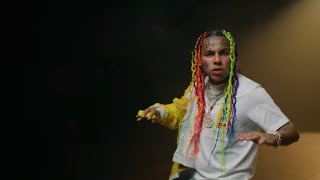
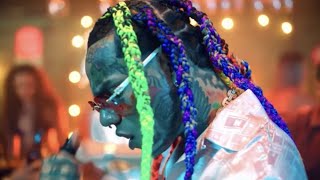
BEBE Lyrics in English by 6ix9ine, Anuel AA
Manicomio literally translates to "asylum" or "mental hospital". It's a dramatic and powerful word that you won't find in your average pop song.
In "BEBE", it's used metaphorically in the phrase "un amor de manicomio" (a love from an asylum). This paints a vivid picture of a wild, chaotic, and crazy love affair, perfectly capturing the song's intense and rebellious energy.
In "BEBE", 6ix9ine teams up with Puerto Rican star Anuel AA to deliver an explicit, high-energy Latin trap story about sneaking around with someone else's girlfriend. The narrator tells a woman that her partner treats her badly and leaves her alone, so he is happy to step in as the bad-influence lover. He nicknames her "mi diablita" (my little devil) and calls her "hija de Lucifer" (daughter of Lucifer) because the moment the sun goes down, she wants to drink, party, and cheat on her man. There is zero guilt here. He bluntly asks "¿Pa' qué vas a serle fiel?" (Why are you going to be faithful to him?) and promises violence if the boyfriend gets in the way, dropping frantic gun sound effects like "con ra-ta-ta-ta-ta" and threatening "dos tiros, lo voa' matar" (two shots, I'm going to kill him).
Lyrically, the track is full of blunt street slang and flexes. When 6ix9ine brags, "Siempre hacemos la 69 como Tekashi" (We always do the 69 position like Tekashi), he is punning on his own stage name. He drops brand names like "Medusa, Versace" and flashes cash with a trip to the club in a "Ferrari". You will also spot Caribbean slang like "R.D." (shorthand for the Dominican Republic, where he claims she got plastic surgery), "mari'" (marijuana), and very explicit Puerto Rican slang words like "bicho" (dick) and "totito" (pussy). It is messy, chaotic, and completely wild, painting a chaotic romance they straight-up call "un amor de manicomio" (an insane asylum kind of love).