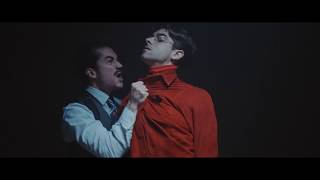
Todo Va A Estar Bien Lyrics in English by Don Patricio
Braile refers to Braille, the raised-dot writing system used by people who are blind. In the line “Si el amor es ciego, yo un braile” (“If love is blind, I’m a Braille”), Don Patricio creates a playful, surreal pun by connecting blindness with Braille, making this unusual word especially memorable.
Don Patricio’s “Todo Va A Estar Bien” mixes confidence with uncertainty. The repeated promise, “Todo va a estar bien” [everything is going to be okay], sounds reassuring, but the verses admit that he sometimes feels lost, especially “a las tres de la mañana” [at three in the morning], when other people hear his stories but do not know what he really feels. He says he will leave “con lo puesto” [with only the clothes he has on] and “dejarte con ganas” [leave you wanting more], a playful way to sound ready to walk away while keeping the other person interested.
The relationship in the lyrics keeps swinging between confusion and fun. He says he no longer writes songs for this person or looks at her naked, yet still asks her to take him dancing while he has doubts. “No te prometo el cielo” [I won’t promise you heaven] and “No te prometo la luna” [I won’t promise you the moon] reject big romantic promises. Then comes the funny wordplay “Si el amor es ciego, yo un braile” [if love is blind, I’m Braille], turning the idea of blindness into a joke about reading by touch. Even “naide” is a casual, nonstandard form of nadie, meaning “nobody,” so when he says he would not trade her for anyone, the line sounds personal and very conversational. Between “lunas de miel” [honeymoons, or happy romantic periods] and moments of feeling lost, the song keeps returning to its simple answer: everything will be okay.