Échame La Mano Lyrics in English by Grupo Frontera, Tito Double P
Descaro translates to "shamelessness" or "impudence". It's a fantastic word to describe a bold, forward action that ignores social norms.
In the song, the singer makes a very direct proposition and then cheekily asks, "¿O es mucho descaro?" (Or is that too shameless?). He's acknowledging his own audacity in a playful way, perfectly capturing the song's flirty and straightforward tone.
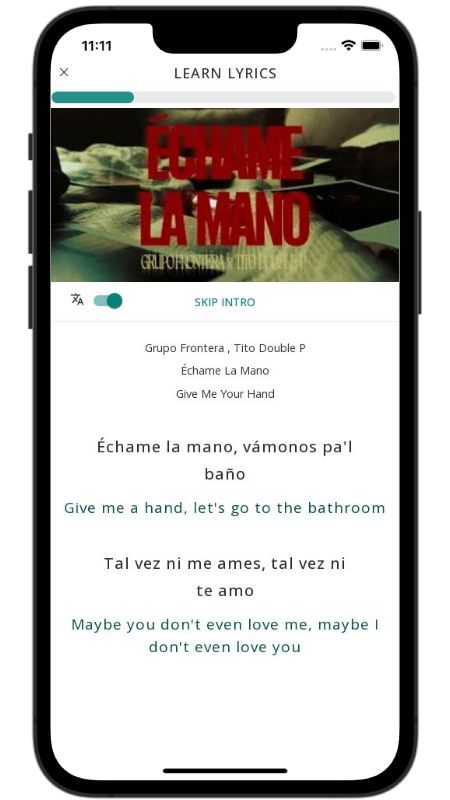
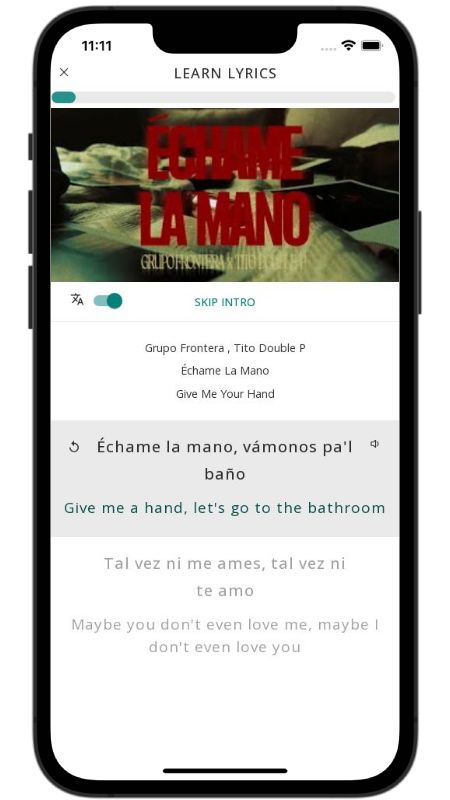
Grupo Frontera and Tito Double P drop all romantic pretense in "Échame La Mano", delivering a blunt, playful invitation for a secret, no-strings-attached hookup. The title itself comes from a common Spanish idiom: "Échame la mano" literally means "throw me your hand," which translates naturally to "give me a hand" or "do me a favor." Right from the start, the singer doesn't bother hiding his intentions, asking for a quick escape with the line "vámonos pa'l baño" ("let's go to the bathroom"). He openly admits that neither of them is in love with "Tal vez ni me ames, tal vez ni te amo / Pero no hace daño" ("Maybe you don't even love me, maybe I don't love you either / But it doesn't hurt").
The lyrics lean heavily on casual Mexican slang to set up the late-night offer. When he asks "hazme el paro" ("do me a favor"), he promises complete readiness from "las doce a las cinco" ("twelve to five"), adding the classic rhyming phrase "di 'Rana' y yo brinco" ("say 'Frog' and I jump"—essentially the Spanish equivalent of saying "tell me how high to jump"). Even while showering her with compliments like "qué ojitos tuyos tan bellos" ("what beautiful little eyes of yours"), he keeps expectations completely realistic by reminding her, "Créeme que esto va a ser pasajero" ("Believe me, this is going to be temporary"). It is bold, cheeky, and completely straight to the point.