Wenn Du Da Bist Lyrics in English by Sarah Connor
Quält comes from the verb quälen, meaning 'to torment', 'to trouble', or 'to plague'. It's a strong and evocative word that goes beyond simple discomfort.
In the song, Sarah Connor sings, "In deinen Arm'n gibt's nicht mehr, was mich quält" (In your arms, there's nothing left that torments me). This highlights the profound peace and relief she finds in her partner's presence, suggesting that their love has the power to alleviate deep-seated worries or pains.
"Wenn du da bist" ("When You're There") is a quiet, tender Sarah Connor love song built around one simple idea: how different life feels depending on whether her partner is with her or not.
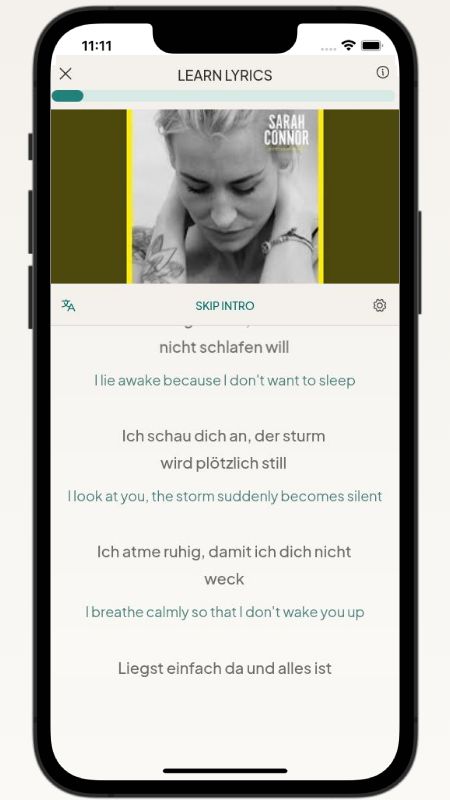
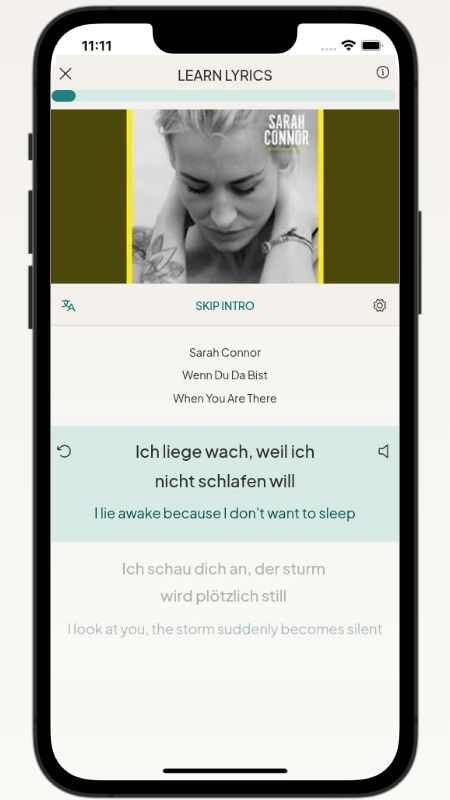
The verses set an intimate, almost still scene. She's lying awake at night, watching her partner sleep, breathing carefully so she doesn't wake them. It's not a song about grand gestures. It's about the small comfort of just being close to someone.
The chorus repeats the song's core feeling like a reassurance to herself: when you're there, I have everything I need, my mind stops racing, and everything else fades far away. It's really a song about how one person's presence can calm an anxious mind.
The middle verse looks back at life before this relationship, calling it "too loud and too fast," restless and never quite settled. The bridge turns almost pleading. She's imagined this exact feeling so many times, and now that it's finally real, all she wants is for it to stay. She says so directly, repeating "please stay" as if she's afraid to lose it.