O Sol Lyrics in English by Vitor Kley
Melanina translates directly to "melanin," the pigment that gives color to skin, hair, and eyes. It's a scientific term that stands out in a song, making it quite unique and memorable.
In the lyrics, the singer asks the sun to "enriquece a minha melanina" (enrich my melanin), which is a poetic way of saying "give me a tan" or "make my skin glow." This unexpected use of a biological term in a pop song is both clever and enticing, inviting learners to discover how everyday concepts can be expressed creatively in Portuguese.
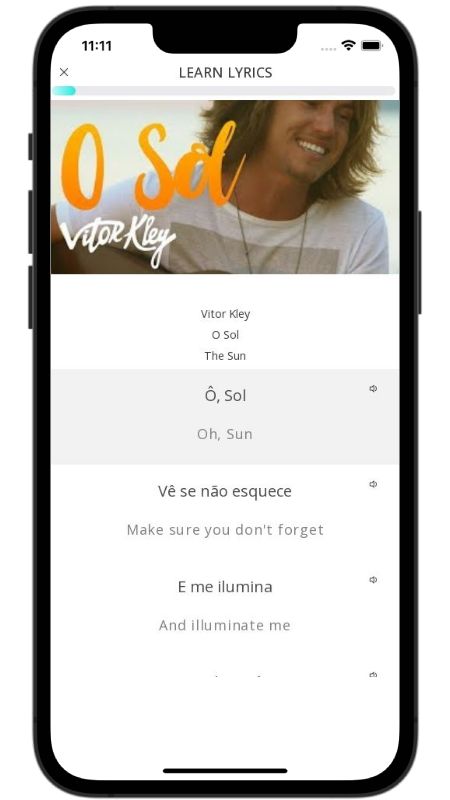
Think of "O Sol" as an open, joyful conversation directly with the sun itself. Vitor Kley literally treats daylight like a close friend who keeps slipping away. Right off the bat, he makes a lighthearted plea: "Ô, sol, vê se enriquece a minha melanina, só você me faz sorrir" ("Oh, sun, see if you enrich my melanin, only you make me smile"). He wants a tan, sure, but mostly he just wants the peace that sunlight brings him. When morning hits, anxiety vanishes: "O seu brilho é o meu abrigo" ("Your shine is my shelter"). It is a sweet, direct metaphor—sunlight acting as an actual roof over his head to keep him safe and calm.
Then comes the chill philosophy in the chorus: "E toda vez que você sai, o mundo se distrai / Quem ficar, ficou, quem foi, vai vai" ("And every time you leave, the world gets distracted / Whoever stayed, stayed; whoever left, goes, goes"). That phrase, "quem ficar, ficou", is everyday Brazilian phrasing for letting things happen without stressing—whoever sticks around is here, and whoever left is already on their way. In the final verses, he doubles down with an earnest plea: "Não esquece que eu existo e me faz ficar tranquilo" ("Don't forget that I exist and make me feel calm"). It is sunny, honest, and relaxed, making it a great feel-good track to learn real conversational rhythm.