Zivert's "Счастье" (Happiness) is a song about a woman who keeps running away from the very thing she is looking for. It opens almost like an apology: "Прости заранее, если не оправдаю" (Forgive me in advance if I don't live up to it). All those hopes, that "восторженное счастье" (ecstatic happiness), and she is already bracing to let someone down.
The chorus is the best part. "Давно мы босиком не гуляли по небу" (It's been a long time since we walked barefoot across the sky) and "И сонные глаза не будил поцелуй" (and no kiss has woken sleepy eyes). Then the punchline: happiness keeps knocking, "а нас будто тут нету" (but it's as if we're not home). Her answer is blunt: "Его не ожидают, его создают" (You don't wait for it, you make it).
There's a funny touch in the second verse: "Счастье наверно бесит" (Happiness is probably annoyed) that she keeps running from it. Бесит is everyday Russian for "it drives (someone) mad". She admits she chased perfection "до беспредела" (to the extreme), when "всё было под рукой" (everything was right at hand). Под рукой literally means "under the hand", the Russian way of saying "within reach".
The bridge turns to fate. Maybe it's just the wrong destiny, "типо за нас решено" (like it's all decided for us). Типо is casual slang for "like" or "kind of". But she pushes back: life is "не больше чем бумеранг" (no more than a boomerang). What you throw out comes back, and that is the film you get, "с хэппи эндом или без" (with a happy ending or without). Notice хэппи энд, the English "happy end" borrowed straight into Russian.
Did you know?
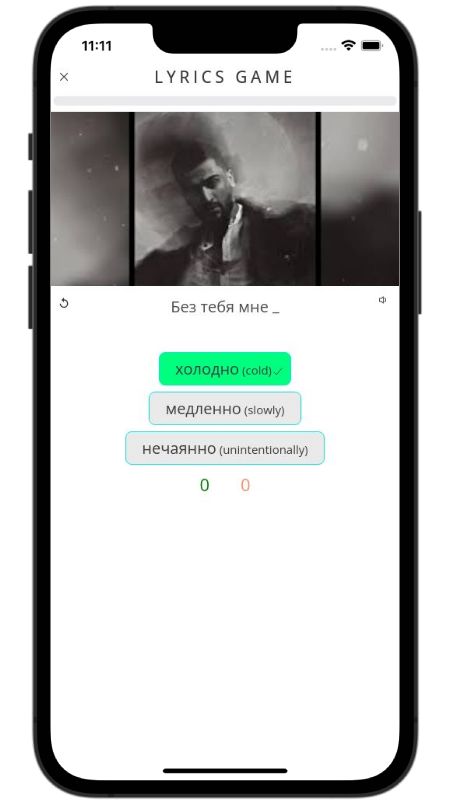
In addition to reading lyric translations, you can now learn Russian with music and lyrics from your favorite artists.
No more boring lessons. You can now learn with engaging and culturally relevant lyrics from the best artists.