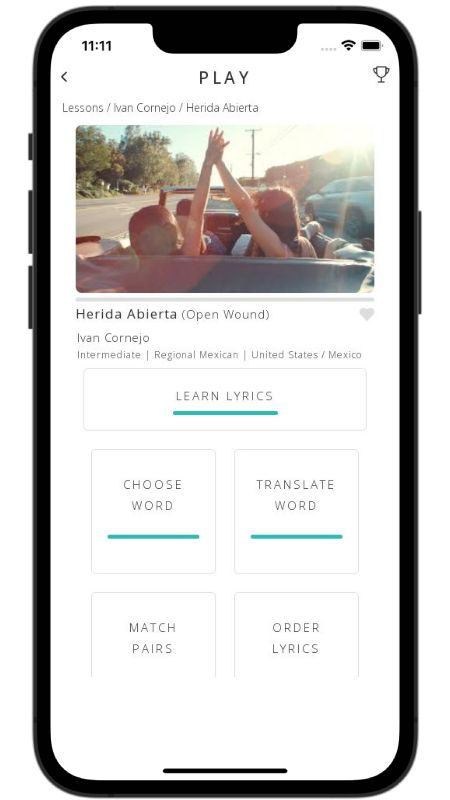
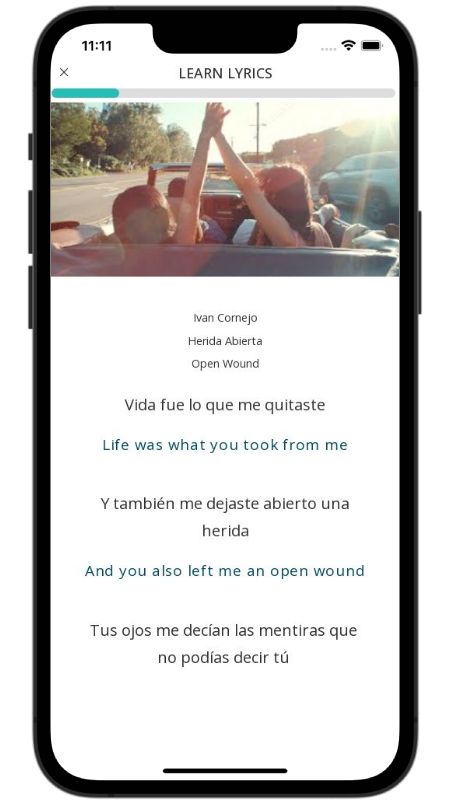
Herida Abierta Lyrics in English by Ivan Cornejo
Aguantarme comes from the verb aguantar (to endure, to put up with) plus the reflexive pronoun me, turning it into "to hold myself back."
In the line "Trato de aguantarme el llanto" the singer is struggling to keep his tears in, capturing that raw moment when you fight emotions bubbling up inside. It’s a memorable word because it combines a vivid feeling with a useful reflexive structure you can recycle in everyday Spanish.
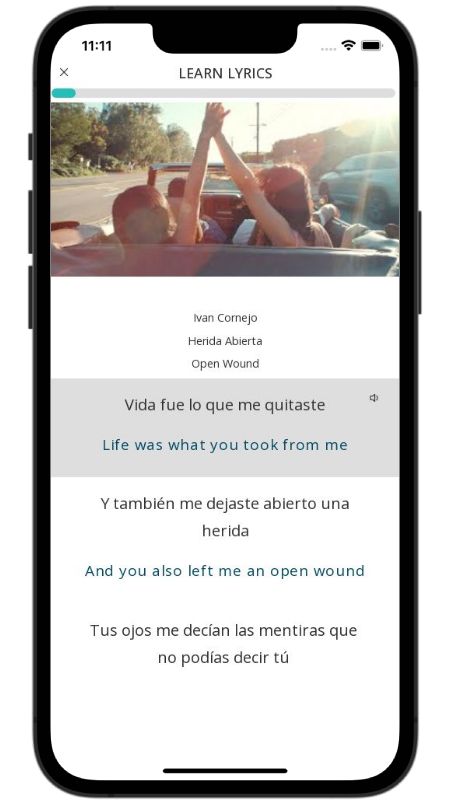
Ivan Cornejo delivers a heavy, dramatic dose of heartbreak in "Herida Abierta" (Open Wound). He kicks things off with the clever rhyme "Te quise dar el cielo y terminé en el suelo" (I wanted to give you the sky and I ended up on the floor), admitting that everyone warned him not to give this person everything. What stings the most is the unfairness of the breakup. While he is holding back tears, his ex is walking around happy as if nothing happened: "No creo que cuenta te diste que a alguien casi has matado" (I don't think you realized that you almost killed someone). It is dramatic, petty, and painfully honest about wanting your ex to suffer at least as much as you do.
Language-wise, watch out for the phrase "me toca" in "me toca aquí aprender a ya estar solo" (it's my turn / my duty here to learn how to be alone now). In Spanish, "tocar" usually means "to touch" or "to play an instrument", but here "me toca" acts as an idiom meaning "it falls on me" or "it is my lot in life." He knows he has to swallow his pride, stop crying, and adapt to the solitude, even if he still clearly misses them.