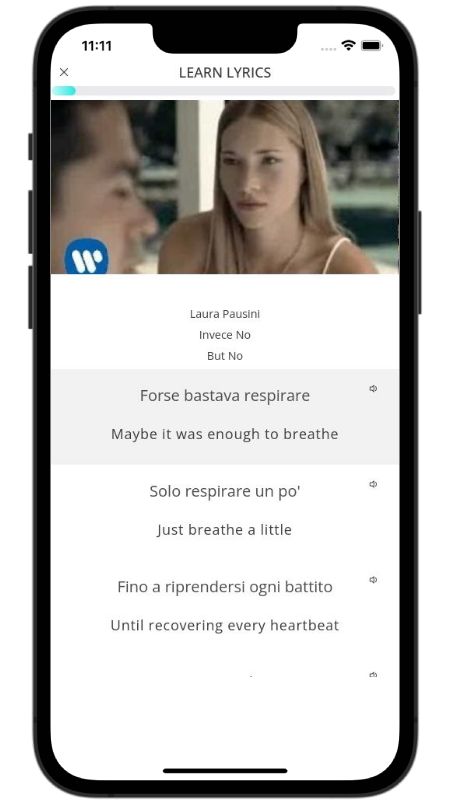
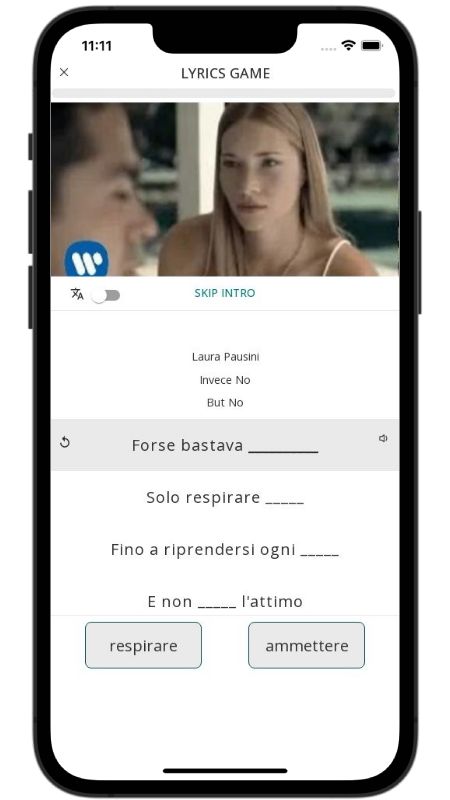
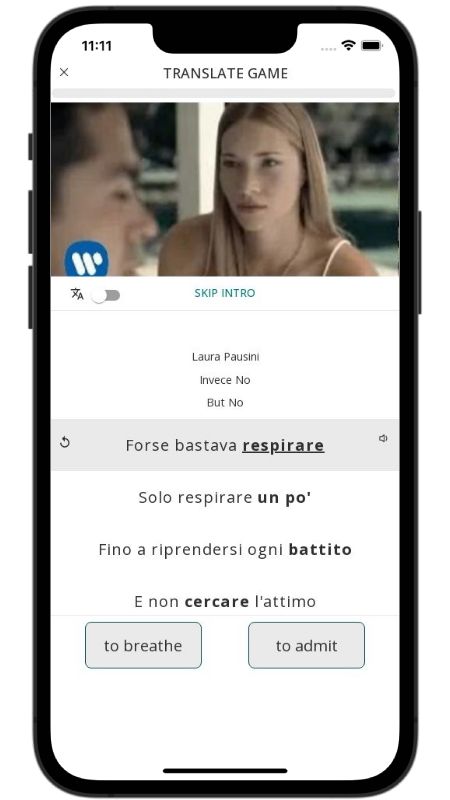
Invece No Lyrics in English by Laura Pausini
Spezzano comes from the verb spezzare, meaning "to break" or "to shatter". It's a much stronger and more evocative word than the more common rompere (to break).
In this powerful ballad, Laura Pausini sings, "Perché si spezzano tra i denti le cose più importanti" (Because the most important things shatter between the teeth). She uses this dramatic imagery to describe how the words we need to say the most get stuck and break apart before we have the courage to speak them, perfectly capturing the song's theme of regret.
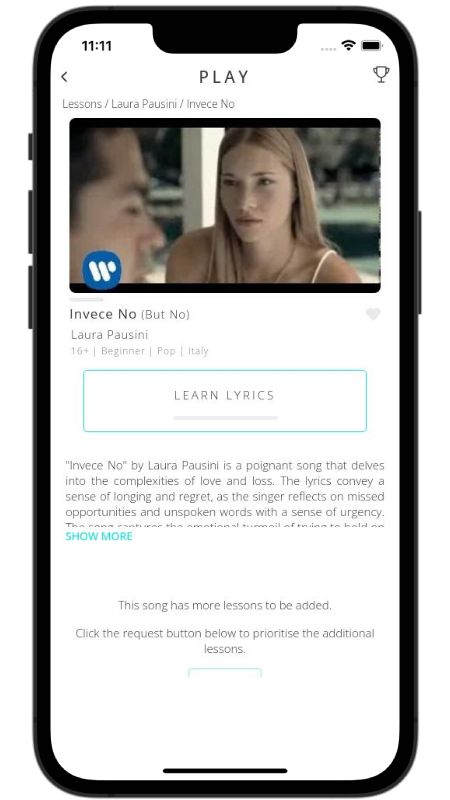
Have you ever kept words trapped behind your teeth until it was too late to spit them out? That sudden panic is the heart of Laura Pausini's pop ballad "Invece No". The title translates roughly to "On the contrary, no" or "Instead, no", and she uses it like a sudden wall you crash into. Throughout the track, she wrestles with an abrupt absence, refusing to accept that "Dicembre senza te" ("December without you") has to become a routine. Instead of moving on easily, she admits that the essential truths got stuck: "Perché si spezzano tra i denti / Le cose più importanti" ("Because the most important things break between the teeth"). It is a strikingly physical image for choking on your own feelings.
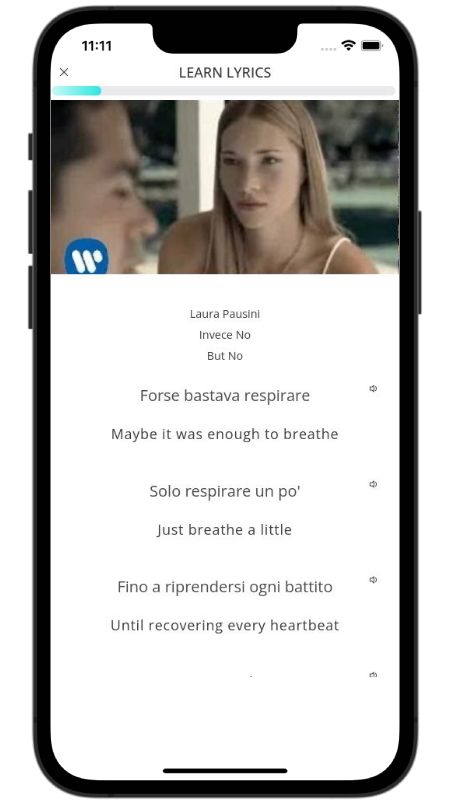
Now, left behind with racing memories where "piovono i ricordi" ("memories are raining down"), she realizes running out of time stings worse than anything. She desperately wants another chance to ask "se ti avevo dato amore" ("if I had given you love"), but the clock ran down. The song swings between sharp grief and a tiny flicker of defiance. Even after insisting there is no time left to finish what they started together, she circles back to the simplest physical act: "Forse mi basta respirare / Solo respirare un po'" ("Maybe it is enough for me to breathe / Just to breathe a little"). Right up to the final line, she hangs between "Forse è tardi" ("Maybe it is late") and a stubborn "Forse invece no" ("Maybe, instead, no").