Le Parole Lontane Lyrics in English by Måneskin
diluvierà literally means "it will pour" or "it will flood". It's the future tense of the verb diluviare, which comes from the noun diluvio (a deluge or flood).
In the song, frontman Damiano sings the beautifully contradictory line, "Sotto il sole poi diluvierà" (Under the sun then it will pour). This powerful imagery suggests a sudden, overwhelming wave of sadness that washes over everything, even in a moment that should be bright. It's a poetic way to describe emotional turmoil and a truly unforgettable word from the track.
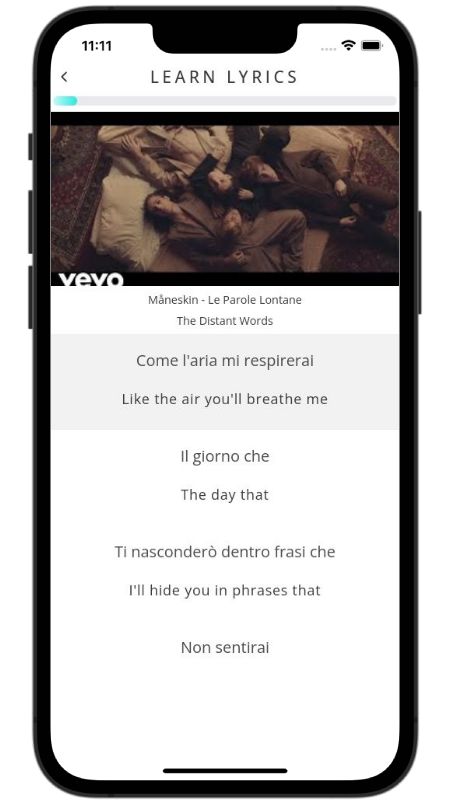
Le Parole Lontane shows the dramatic, desperate side of Italian rock band Måneskin. The singer feels an unbearable distance growing between him and a companion named Marlena. He screams into the void because she feels too far away, repeating the core ache of the track: "Perché ti sento lontana da me" ("Because I feel you far away from me"). Throughout the lyrics, physical senses blur with emotional panic. He swallows bitter tears ("Bevo le lacrime amare"), begs to get lost in sea water, and imagines burning every page of paper that mentions her name. There is a great, contradictory line where he imagines two people sharing grief without making a sound: "Canteremo insieme ma restando muti" ("We will sing together, but staying silent").
Things get truly desperate in the second verse when he pleads for shelter: "Marlena portami a casa che mi spaventa l'inverno" ("Marlena take me home because winter scares me"). His legs are giving out from the cold, and he claims that without her, "Non vedo neanche più a un metro" ("I can't even see one meter ahead"). Marlena functions here as a lifeline or a muse whose smile keeps him anchored. By the end, he resolves to hide himself away inside sentences she will never hear ("Ti nasconderò dentro frasi che non sentirai"), turning his unspoken words into the very air she breathes.