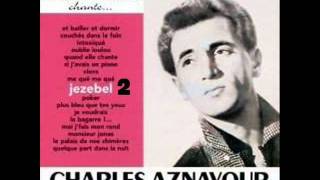
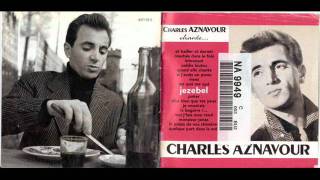
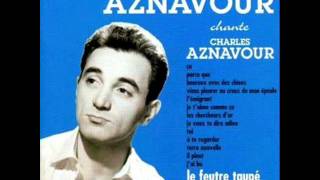
La Bohème Lyrics in English by Charles Aznavour
L'air du temps literally translates to "the air of the times". It's a classic French idiom that refers to the prevailing mood, style, or spirit of a particular period.
In "La Bohème," Charles Aznavour sings "nous vivions de l'air du temps" (we lived on the air of the times). This beautifully captures the essence of their youthful, artistic poverty: they had no money for material things, so they sustained themselves on creativity, love, and the vibrant, carefree spirit of the moment.
Charles Aznavour looks back on his youth as a starving artist in the Montmartre neighborhood of Paris, a time he says people under twenty today just can't understand. He and his lover lived in a shabby little room, but it was their world. He was literally crying famine—"Moi qui criais famine" [I who cried famine]—while she posed nude for his paintings. It was a life of romantic poverty. They defined this as La bohème, which to them meant "we are happy," even though, as he says bluntly, "Nous ne mangions qu'un jour sur deux" [We only ate one day out of two].
Years later, he walks through the same streets but recognizes nothing. He looks for his old studio, but it's gone, replaced by a "new decor" that makes Montmartre seem sad. Even the flowers are gone: "Et les lilas sont morts" [And the lilacs are dead]. The song is a bittersweet memory of a time when being young, in love, and full of artistic dreams was enough to survive on. Back then, La bohème meant they were young and crazy. Now, looking back from the present, he says the phrase "Ça ne veut plus rien dire du tout" [It doesn't mean anything at all anymore].