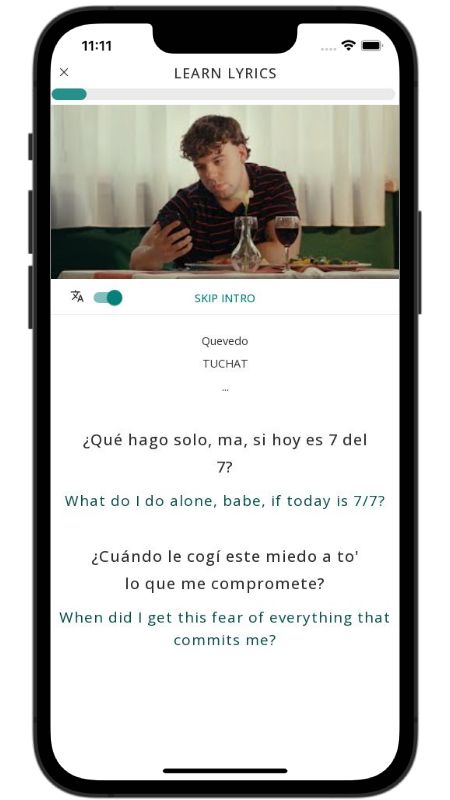
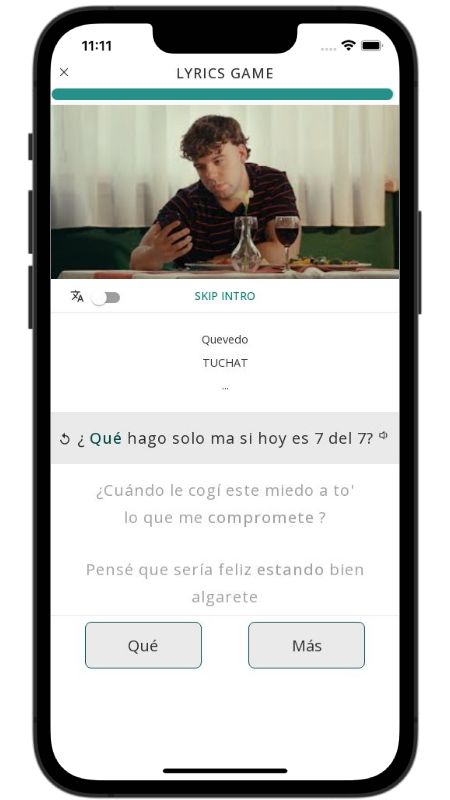
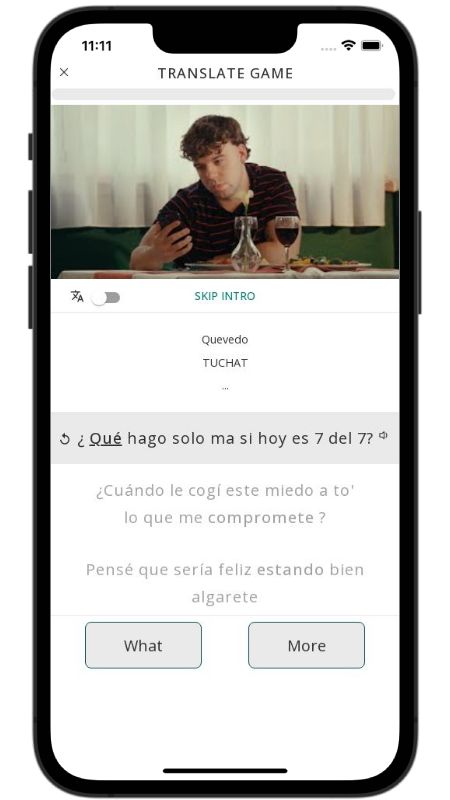
TUCHAT Lyrics in English by Quevedo
Jangueaba' is a fantastic example of Spanglish, derived directly from the English phrase "to hang out". It's a popular slang term in many parts of Latin America, especially the Caribbean, that means exactly what it sounds like: to hang out, chill, or spend time with friends.
In the song, Quevedo sings nostalgically, "hace un año tú jangueaba' a mi lado" (a year ago you used to hang out by my side), remembering a past time with his ex. The word itself, jangueaba', is the past tense (jangueabas), showing a repeated action, but with the final 's' dropped, a common feature in this dialect. It's a perfect word to learn if you want to understand modern, everyday Spanish.
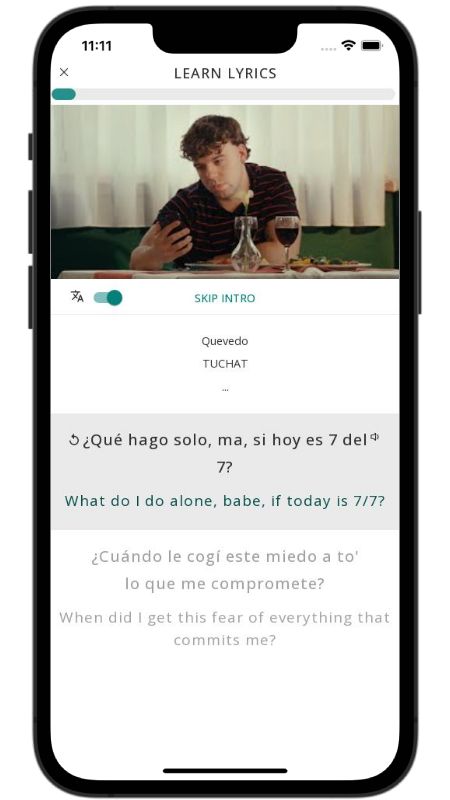
Ever found yourself staring at your phone at night, watching someone's chat screen and secretly hoping their new relationship crashes so they text you back? That is exactly the messy, late-night scenario Quevedo lays out here. The Spanish hitmaker admits he thought the single bachelor life would feel great ("bien algarete" [completely wild, with no control]), but instead, seeing photos of his ex with her new guy stings bad ("tus fotos con él me sientan fatal" [your photos with him make me feel awful]). He is lying in bed refreshing the conversation window, openly waiting to be the rebound the second her current boyfriend leaves her on read.
He uses plenty of everyday street slang to keep the mood brutally honest. When he begs "échame un cable" [throw me a bone / lend me a hand], he is using a common Spanish idiom meaning to help someone out—in this case, asking her to help him forget her by cutting off contact, even though he contradicts himself seconds later. He brags that he could easily replace her with twenty other girls ("llegan veinte más" [twenty more arrive]), but immediately admits that is a lie: he only wants to party, kiss, and sleep with her. The summer is slipping away, his ice cream is literally melting while he waits ("se me derritió el hela'o" [my ice cream melted]), and he knows he would fall into her trap all over again.