Reliquia Lyrics in English by ROSALÍA
Reliquia translates to "relic", typically a sacred or historical object kept for its significance. It's a rare and beautiful word to find in a modern pop song.
ROSALÍA uses it as the central metaphor of her song. After traveling the world and losing parts of herself in different cities, she sings "Seré tu reliquia" (I will be your relic), offering a piece of her heart as something precious to be cherished. It's a poetic way of turning loss and memory into something sacred.
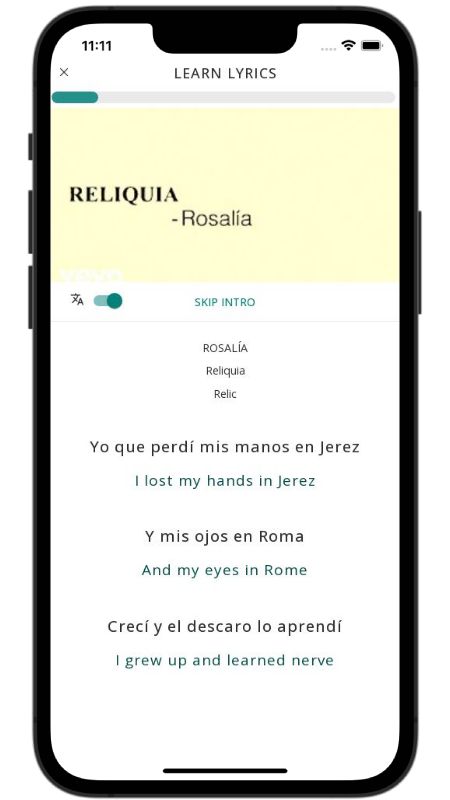
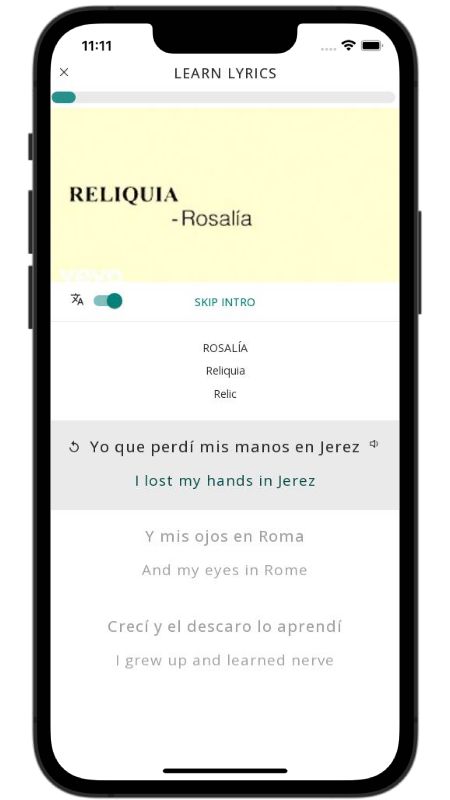
Spanish singer ROSALÍA turns her world travels into a literal checklist of things she has shed across the globe in Reliquia. Instead of collecting standard souvenirs, she treats her body and spirit like a trail of scattered pieces: losing her hands in Jerez, her eyes in Rome, and her high heels in Milan (Los heels en Milán). She picks up nerve and cheekiness in Barcelona (el descaro lo aprendí), loses a bad romance in Madrid, and even drops her bad temper in Berlin (La mala hostia en Berlín—where mala hostia is classic Spanish slang for a foul mood or aggression). She clips words naturally, turning Granada into Graná', and balances losing a blunt in Mexico with crying off her false eyelashes in Japan.
Even after a bad haircut in the "glass city" and running away like she fled Florida, she refuses to hoard what remains. Instead, she declares that her heart never belonged to her anyway (Pero mi corazón nunca ha sido mío), openly telling the listener to take a piece and keep it for when she is gone (Coge un trozo de mí / Quédatelo pa' cuando no esté). In her eyes, she becomes a sacred relic (Seré tu reliquia). She is not claiming to be a saint (No soy una santa pero estoy blessed), but by leaving parts of herself across every border, she embraces moving through time like a dolphin jumping through a fiery scarlet hoop.