Dios Es Un Stalker Lyrics in English by ROSALÍA
Stalkear is a modern Spanglish verb that means 'to stalk'. It's a fascinating example of how English words are adapted into Spanish, in this case by adding the common verb ending -ear.
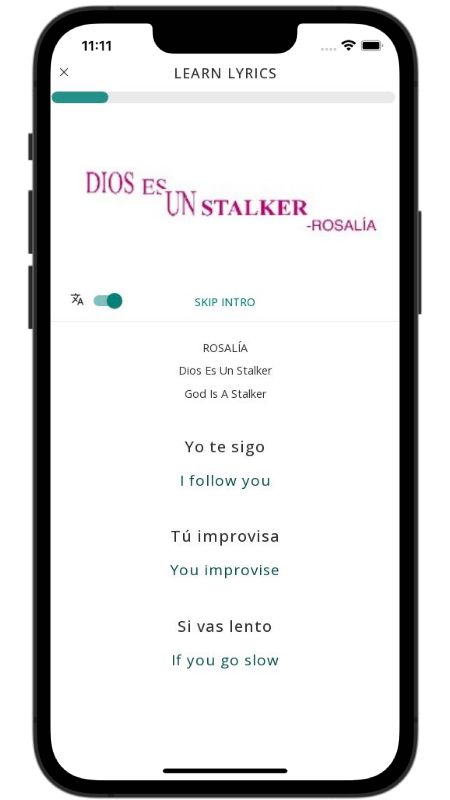
In the song, ROSALÍA uses it provocatively to describe her intense pursuit of a lover, singing "a mi baby yo lo voy a stalkear pa' poderlo enamorar" (I'm going to stalk my baby to make him fall in love). It's the key that unlocks the song's bold theme and its title, "Dios Es Un Stalker" (God is a Stalker).
Ever felt like someone was watching your every move? In "Dios Es Un Stalker", Spanish superstar ROSALÍA imagines God not as a distant, untouchable ruler, but as a lovesick admirer obsessed with trailing someone through daily life. Usually, everyone seeks divine favor, but here the roles flip. The speaker admits she hates breaking the rules with holy miracles—"No me gusta hacer intervención divina" [I don't like doing divine intervention]—yet she throws restraint out the window to obsessively follow her crush: "Pero a mi baby yo lo voy a stalkear / Pa' poderlo enamorar" [But I'm going to stalk my baby / So I can make him fall in love]. She borrows the English verb stalkear (to stalk online or in real life) and treats it like an act of devotion, comparing her breath to the wind brushing her lover's hair.
What makes this track so funny and sharp is how ROSALÍA mixes grand religious imagery with gritty, everyday arrogance. She lives high in the clouds with everyone fighting for her attention—"Tengo el buzón explotao" [My inbox is blown up]—leaving the devil stressed out: "Y el diablo pressed, apretao". She uses the English slang pressed alongside the Spanish apretao (short for apretado) to mean someone who is visibly stressed, cornered, and agitated. Balancing all that celestial power turns into pure comedy when she sighs, "Y la omnipresencia me tiene agotada" [And omnipresence has me exhausted]. Being everywhere at once is tiring, but she refuses to quit until she tracks down the one person who ignores her.