Learn Italian With Ricchi e Poveri with these 23 Song Recommendations (Full Translations Included!)
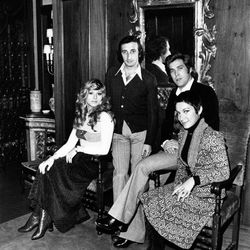
Ricchi e Poveri, meaning "The Rich and The Poor," is a legendary Italian pop group formed in Genoa in 1967. Originally a quartet consisting of Angela Brambati, Angelo Sotgiu, Franco Gatti, and Marina Occhiena, they are known for their distinctive four-part vocal harmonies that blend bass, tenor, alto, and soprano voices.
With a career spanning over five decades, Ricchi e Poveri have sold more than 20 million records and achieved international success with hits like "Sarà perché ti amo" and "Mamma Maria." They represented Italy at the Eurovision Song Contest in 1978 and have been frequent participants in the prestigious Sanremo Music Festival. The group continues to tour and release music, celebrating their enduring influence on Italian pop music.
Ever felt so dizzy in love that logic just flies right out the window? That is exactly what Italian pop group Ricchi e Poveri are singing about here. The opening line hits right away with "Che confusione" ("What confusion"), and their only explanation for feeling so spun around is "Sarà perché ti amo" ("It must be because I love you"). The lyrics lean into this delightful, giddy state of mind where nothing else matters. A shooting star drops, someone asks where they are, and the reply is a hilariously blunt "Che te ne frega" ("Who cares"). If you are learning Italian, notice that phrase: it is very common informal slang for brushing something off as totally unimportant!
Even when the lyrics imagine catastrophe, the mood stays playful. They sing, "Se cade il mondo / Allora ci spostiamo" ("If the world falls / Then we'll move"). It is absurd, funny, and completely unbothered. The song argues that the entire world is crazy anyway ("Il mondo è matto"), so you might as well sing along, hold someone tight ("Stringimi forte"), and float higher ("E vola vola si sa / Sempre più in alto si va"). Even if you do not have romance in your life, the chorus promises that "basta una sola canzone" ("one single song is enough") to stir up all that glorious chaos inside your head.
„Sarà Perché Ti Amo“ ist einer dieser Songs, die sich wie pures Glück anfühlen. Die italienische Gruppe Ricchi e Poveri beschreibt das Gefühl, so verliebt zu sein, dass alles ein wenig durcheinander gerät. Sie nennen es „Che confusione“ [Was für ein Durcheinander] und geben sofort die Antwort, warum das so ist: „Sarà perché ti amo“ [Es muss sein, weil ich dich liebe]. Es geht um eine Liebe, die langsam wächst und einen völlig einnimmt, bis man im Takt des Atems des anderen singt.
Der Song steckt voller unbeschwerter und romantischer Bilder. Die Welt fühlt sich an wie im Frühling, und wenn eine Sternschnuppe fällt, ist es egal, wo man ist. Die zentrale Botschaft ist einfach und stark: In einer verrückten Welt („Se il mondo è matto“ [Wenn die Welt verrückt ist]) ist die Liebe das Einzige, was zählt. Selbst wenn die Welt untergeht, ist ihre Lösung simpel: „Allora ci spostiamo“ [Dann gehen wir eben woanders hin]. Es ist eine fröhliche Hymne darauf, wie die Liebe alles andere unwichtig macht.
Have you ever wanted a fortune teller who only tells you good news? Meet Mamma Maria! The song introduces us to this mysterious woman in a room with a white cat with blue eyes and the smoke from candles. She seems to have a solution for everything, with a "filtro contro la gelosia" (a potion against jealousy) and a "ricetta per l'allegria" (a recipe for happiness). She reads your destiny in the stars and promises to tell you "solo cose belle" (only beautiful things).
The singer is dying of curiosity and has some big questions for Mamma Maria. First, they wonder what the future holds, hilariously wishing they could be a king to make an American blonde fall in love with them, or else they'll turn her into a frog! But the real question is about a specific love. They ask Mamma Maria for the truth: "Voglio sapere se questo amore / Sarà sincero" (I want to know if this love / will be sincere). Even though they admit, "Non ho una lira" (I don't have a lira/any money), they want to buy the sky and the moon for their beloved. All they need is a little bit of luck from Mamma Maria.
¿Alguna vez has sentido que el amor te descoloca la cabeza por completo? De eso trata exactamente este clásico pop del grupo italiano Ricchi e Poveri. Desde el primer segundo te lo dicen sin rodeos: Che confusione ("Qué confusión"). La letra es una explosión de euforia donde cualquier tontería tiene una única justificación: Sarà perché ti amo ("Será porque te amo"). Si cae una estrella, si parece primavera o si cantan al ritmo de la respiración del otro, la respuesta siempre es la misma. Tienen una actitud desenfadada genial: cuando se preguntan dónde están, sueltan un directo Che te ne frega ("Qué te importa"), una expresión italiana súper cotidiana para mandar las preocupaciones a volar.
El tema abraza el caos con mucho optimismo. Dicen que il mondo è matto ("el mundo está loco"), pero la solución es reírse juntos y pedir un abrazo: Stringimi forte e stammi più vicino ("Abrázame fuerte y quédate más cerca de mí"). Incluso bromean con que si se cae el planeta entero, simplemente se mudan de sitio (Se cade il mondo, allora ci spostiamo). Es una canción ligera, pegadiza y sin pretensiones, ideal para aprender frases directas sobre el enamoramiento mientras disfrutas de un torbellino de alegría.
This song is the ultimate sales pitch for a perfect Italian summer romance! The singer is trying to create an unforgettable memory for their lover, a "souvenir d'Italie" [souvenir of Italy]. They ask, with a bit of a wink, how a night this good couldn't be "Made in Italy?" It's a fun, sweet song about wanting someone to remember a perfect moment together, set against the backdrop of the Italian coast.
The singer lays out exactly what this perfect memory is made of. They repeatedly ask for the key ingredients: "dammi soltanto una musica" [give me just some music], "dammi un amore" [give me a love], and "dammi una notte da favola" [give me a fairytale night]. The beautiful scenery is part of the package too, with "Questo mare blu / Ed un cielo così" [This blue sea / And a sky like this] offered up as part of the souvenir. It's all about making this one night so special that it will be remembered forever, even if the person leaves the next day.
İtalyan pop müziğinin en neşeli şarkılarından birine hoş geldin! "Sarà Perché Ti Amo" baştan sona aşkın yarattığı o tatlı kafa karışıklığını anlatıyor. Şarkıdaki anlatıcı o kadar aşık ki, her güzel şeyin sebebini bu aşka bağlıyor. Baharın gelmesi mi? "Sarà perché ti amo" (Seni sevdiğim için olmalı). Nefes nefese kalması mı? Yine aynı sebep. Şarkı, aşkın dünyayı nasıl daha parlak ve biraz da "deli" bir yer haline getirdiğini kutluyor. Her şeyin anlamsızlaştığı bir anda bile, "Almeno noi ci amiamo" (En azından biz birbirimizi seviyoruz) diyerek aslında en önemli şeye sahip olduklarını söylüyor.
Şarkının en güzel yanlarından biri de bu kaygısız ve coşkulu hali. Dünya yıkılsa bile umurlarında değil, çünkü "Se cade il mondo / Allora ci spostiamo" (Dünya yıkılırsa / O zaman biz de yer değiştiririz) diyecek kadar rahatlar. Bu şarkı, aşkın nasıl kendi küçük, mutlu ve biraz da mantıksız evrenini yarattığını gösteriyor. Aşık olduğunda hissettiğin o uçuşan, her şeyin mümkün olduğu duyguyu mükemmel bir şekilde özetliyor.
Эта песня — чистое, искрящееся веселье! Она о том прекрасном, головокружительном чувстве, которое возникает, когда ты влюбляешься. Всё начинается со слов «Che confusione / Sarà perché ti amo» (Какой беспорядок / Должно быть, потому что я тебя люблю). Это не жалоба, а радостное признание: любовь переворачивает твой мир с ног на голову, и это прекрасно. Вся песня построена на этой простой, но такой знакомой идее. Любовь заставляет мир казаться новым, как весна — «È primavera / Sarà perché ti amo» (Сейчас весна / Должно быть, потому что я тебя люблю).
Припев — это гимн эйфории, чувству полёта, которое дарит любовь: «E vola vola si sa / Sempre più in alto si va» (И мы летим, летим, знаешь / Всё выше и выше). Но самое милое в этой песне — это её взгляд на мир. Мир может быть сумасшедшим, но кого это волнует? У певцов есть простое решение на случай апокалипсиса: «Se cade il mondo / Allora ci spostiamo» (Если мир рухнет / Тогда мы просто переедем). В конце концов, главное — это то, что у них есть друг друг: «Ma tutto è matto / Almeno noi ci amiamo» (Но всё вокруг сумасшедшее / По крайней мере, мы любим друг друга). Это очень простая и оптимистичная песня о том, как любовь становится твоим собственным счастливым и немного сумасшедшим миром.
Prepare-se para um clássico absoluto do pop italiano! "Sarà Perché Ti Amo" é uma celebração alegre e contagiante daquele sentimento vertiginoso de estar apaixonado. A letra descreve uma confusão deliciosa, onde cada emoção é explicada pela simples frase que dá nome à música: "Sarà perché ti amo" [Deve ser porque te amo]. É um sentimento que "cresce piano piano" [cresce pouco a pouco], criando um desejo de estar perto da pessoa amada: "Stringimi forte / E stammi più vicino" [Aperte-me forte / E fique mais perto de mim].
O que torna esta canção tão especial é a forma como ela cria um mundo só para o casal. O mundo lá fora pode ser louco, mas isso não importa. A letra diz de forma direta: "Se cade il mondo / Allora ci spostiamo" [Se o mundo cair / Então a gente se muda]. O refrão, com seu famoso "E vola vola si sa / Sempre più in alto si va" [E voa, voa, se sabe / Sempre mais alto se vai], é a expressão perfeita da euforia e da leveza que o amor traz, como se os dois estivessem flutuando acima de todos os problemas.
"Che Sarà" is a song about leaving a small hometown behind. The singer looks at the village on the hill, worn out and quiet, and decides he has to go, even though he doesn't know what waits for him.
The title phrase, "che sarà," means "whatever will be." It's the singer's way of accepting the unknown instead of fearing it. He is losing friends who are also moving away, and he knows he'll miss the company, but he still feels the pull to leave.
Even so, the song isn't really a goodbye. He promises he'll come back one day with his guitar, and that he'll always carry a piece of home with him wherever he ends up.
Picture this: you are stuck indoors by the fireplace while snow piles up outside, unable to sleep, with only quiet for company. That is the exact mood Ricchi e Poveri bring to life in "Come Vorrei" (How I Wish). The singer admits to being trapped inside with silence as their only companion: "Sto chiuso in casa col silenzio per amico" (I stay locked at home with silence as a friend). Just a year ago, everything felt magical, but now winter feels wrong and cold because the relationship is slipping away. The main wish throughout the chorus is simple and selfish in the way love often is: "Come vorrei che tu mi amassi a modo mio" (How I wish you loved me my way).
The lyrics mix genuine sadness with a bit of dramatic honesty. The narrator knows they should let go when their partner pulls away, but they cannot stop the jealousy: "Dovrei capirti quando vedo che vai via / E non amarti quando non vuoi farti amare" (I should understand you when I see you leaving / And not love you when you do not want to be loved). Instead of moving on, they watch their love melt away like snow in the sun ("come fa la neve al sole"). In a wonderfully dramatic line near the end, they even try bargaining with the night sky: "Anche alla luna gliel'ho chiesto e non ci sta" (I even asked the moon, and she's not having it). The Italian phrase non ci sta is great everyday slang meaning someone refuses to play along or agree. If even the moon will not help keep you company, you know you are truly on your own.
"Canzone d'Amore" is a gentle, hopeful love song built around a simple image: a ship sailing against the wind, carrying words of love to someone the singer cares about.
The verses describe how words of love act like fire — they can warm you, satisfy you when you're hungry or thirsty, and comfort you when you're far away. The singer asks the listener to really listen, because there isn't much time, and pleads for them to stay together as long as things feel good, since love should be beautiful and free, without chains.
The chorus repeats the song's title like a refrain, dedicating this "love song" and these "words of love" directly to the person being addressed. The final verse compares the arrival of new love to a swallow bringing spring and a flower's scent rising in the air — small, natural signs that tomorrow will be better.
¡Prepárate para un viaje de verano con este clásico italiano! "Made In Italy" de Ricchi e Poveri es la banda sonora perfecta para un romance de verano. La canción nos habla de crear un recuerdo inolvidable, un "souvenir d'Italie" [recuerdo de Italia], de una aventura amorosa. No se trata de un objeto que compras en una tienda, sino de la memoria de "un'estate così" [un verano así] que se quedará contigo para siempre. La letra tiene una confianza muy divertida, comparando la calidad de una noche romántica con la famosa etiqueta "Hecho en Italia". ¿Cómo podría una noche tan perfecta no ser italiana? Como preguntan en la canción: "Una notte così / Vuoi che non sia / Made in Italy?" [Una noche así / ¿Quieres que no sea / Hecha en Italia?].
Lo que el cantante pide es simple y directo: "Dammi soltanto una musica... dammi un amore... dammi una notte da favola" [Dame solo una música... dame un amor... dame una noche de cuento de hadas]. El escenario para este recuerdo perfecto es la clásica postal italiana: "Questo mare blu / Ed un cielo così" [Este mar azul / Y un cielo así]. La canción reconoce que este amor puede ser pasajero, mencionando "se domani vai via" [si mañana te vas], pero eso solo hace más importante crear un recuerdo que dure. Es una invitación a vivir el momento y convertirlo en algo eterno.
“M’Innamoro Di Te” is a sparkling slice of classic Italian pop that captures the irrepressible moment when love simply takes over. The singer confesses that she falls in love almost against her own will: the other person claims they never love, yet every smile, every note of their voice, makes her heart race. She compares this feeling to the most beautiful season, to summer skies so blue they stretch out the day, and even to nostalgia itself. Love, in her eyes, is an unstoppable emotion that belongs solely to her, a private fireworks show she cannot switch off.
Despite knowing she “shouldn’t” feel this way, she keeps surrendering to the rush:
- it ties a knot in her heart,
- it makes her fly,
- it refuses to leave when night falls.
The song balances joy and vulnerability, celebrating how love can be both a sweet companion and a risky leap into the unknown. By the final refrain, the message is clear – when true emotion strikes, you can try to push it away, but it always finds a melody to stay.
Prépare-toi à avoir cette chanson dans la tête pour le reste de la journée ! "Sarà Perché Ti Amo" du groupe italien Ricchi e Poveri est un hymne pop incroyablement entraînant sur le sentiment amoureux. La chanson décrit cet état de confusion joyeuse que l'on ressent quand on tombe amoureux : "Che confusione / Sarà perché ti amo" (Quelle confusion / C'est sûrement parce que je t'aime). C'est une émotion qui grandit doucement, comme le printemps, et qui donne l'impression de s'envoler.
Le refrain est une pure explosion d'optimisme : "E vola vola si sa / Sempre più in alto si va" (Et ça vole, ça vole, on le sait / On va toujours plus haut). Les paroles suggèrent que même si le monde est complètement fou, l'amour est la seule chose qui compte vraiment. Il y a une simplicité désarmante dans des phrases comme "Se cade il mondo / Allora ci spostiamo" (Si le monde s'écroule / Alors on se déplace). Face aux problèmes, la solution est simple : être ensemble. C'est une chanson qui ne se prend pas au sérieux et qui célèbre l'amour comme une force simple et puissante dans un monde chaotique.
“Che Sarà” é uma despedida com uma pergunta impossível de responder: “Che sarà della mia vita, chi lo sa?” [“O que será da minha vida, quem sabe?”]. A pessoa que canta deixa seu país, descrito como uma cidade na colina, “disteso come un vecchio addormentato” [“deitado como um velho adormecido”]. O lugar parece parado, tomado pelo tédio e pelo abandono, e quase todos os amigos já foram embora ou estão prestes a partir. Ainda assim, existe carinho: ela diz que se sentia bem na companhia deles e lamenta deixar tudo para trás.
O refrão aceita a incerteza com uma frase muito conhecida: “Sarà quel che sarà” [“Será o que tiver de ser”]. O futuro pode trazer tudo ou nada, e só o dia seguinte mostrará. Na bagagem, a pessoa leva o violão para tocar uma “nenia di paese” [“cantiga do vilarejo”] se chorar à noite, como uma forma de continuar ligada ao lugar. Também se despede de um amor, beijando a boca que foi “la fonte del mio primo amore” [“a fonte do meu primeiro amor”]. O encontro de volta fica sem data, mas a promessa é clara: “so soltanto che ritornerò” [“só sei que voltarei”].
В этой песне человек прощается с родным городком на холме. Он видит его «disteso come un vecchio addormentato» [лежащим, как старик, уснувший], а вокруг замечает только скуку, заброшенность и болезнь. Фраза «Paese mio ti lascio, io vado via» [Родной мой город, я оставляю тебя и уезжаю] звучит прямо и без украшений: здесь больше нечем жить, поэтому герой отправляется навстречу неизвестности. Припев «Che sarà della mia vita chi lo sa?» [Что будет с моей жизнью, кто знает?] превращает эту тревогу в почти беспечный вопрос. Он готов ко всему или ни к чему: «So far tutto o forse niente» [Я умею всё или, может быть, ничего], а «Da domani si vedrà» [Завтра будет видно] означает: будущее покажет.
Почти все друзья уже уехали, остальные тоже собираются, и герой жалеет, что теряет их компанию. С собой он берёт гитару: если ночью станет тяжело, сыграет «una nenia di paese» [деревенскую колыбельную, простую песню родных мест]. Перед отъездом он целует любимую, называя её «fonte del mio primo amore» [источником моей первой любви], и обещает вернуться, хотя сам не знает когда: «Ti do l'appuntamento come quando non lo so» [Назначаю тебе встречу, хотя не знаю когда]. В этом и прелесть песни: человек уезжает без чёткого плана, но с гитарой, воспоминаниями и фразой «sarà quel che sarà» [будет как будет].
I ”Che Sarà” lämnar berättaren sitt paese, alltså sin hemby eller hemstad, som ligger på en kulle och beskrivs som en gammal sovande person: ”Paese mio che stai sulla collina” [Min by som ligger på kullen]. Där finns tristess, övergivenhet och nästan ingenting kvar. Vännerna har redan flyttat, och fler ska ge sig av. Därför packar berättaren sin gitarr och lämnar själv, utan att veta vad som väntar: ”Che sarà della mia vita chi lo sa?” [Vad ska det bli av mitt liv, vem vet?]. Titeln betyder ungefär ”Vad ska det bli?”, och refrängen låter både bekymrad och lite trotsig: ”E sarà, sarà quel che sarà” [Det blir som det blir].
Samtidigt är avskedet inte kallt. Berättaren kysser sin älskade och minns hennes mun som platsen för den första kärleken. När natten blir för sorglig ska gitarren spela ”una nenia di paese” [en enkel visa från hemtrakten], där nenia betyder en vaggvisa eller stillsam sång. Det fina är att personen inte har någon säker plan, men ändå tar med sig musiken, kärleken och löftet: ”Ma so soltanto che ritornerò” [Men jag vet bara att jag ska komma tillbaka].
A „Che sarà” egy búcsúdal egy dombon fekvő, álmos kisvároshoz. A megszólaló úgy látja a szülőhelyét, mint egy „vecchio addormentato” [öreg alvót]: unalom, elhagyatottság és „niente” [semmi] veszi körül. Ezután útnak indul, miközben a refrén kérdése, „Che sarà della mia vita chi lo sa?” [Mi lesz az életemmel, ki tudja?], egyszerre hangzik bizonytalannak és felszabadítónak. A che sarà szó szerint azt jelenti: „mi lesz?”, a „sarà quel che sarà” pedig nagyjából: „lesz, ami lesz”.
A barátok többsége már elment, a többiek is készülnek, ezért a távozás nem hősi kaland, inkább egy kicsit szomorú, mégis praktikus lépés. A főhős nem tudja, hogy holnap mindent vagy talán semmit tesz, de majd kiderül. Magával viszi a gitárját, hogy ha éjjel sírna, eljátszhasson egy egyszerű falusi dalt. A szerelmének adott csók és a bizonytalan találkozóígéret még személyesebbé teszi a búcsút: nem tudja, mikor tér vissza, csak azt, hogy vissza fog. Ettől a dal egyszerre szól elindulásról, honvágyról és arról a kissé vakmerő hozzáállásról, hogy „lesz, ami lesz”.
In „Che Sarà“ geht es um das Gefühl des Abschieds und der Ungewissheit, wenn man seine Heimat verlässt. Der Sänger beschreibt sein Dorf, das „auf dem Hügel liegt, ausgestreckt wie ein alter Schlafender“ („Paese mio che stai sulla collina Disteso come un vecchio addormentato“). Es ist ein Ort der Langeweile und des Verlassenseins, den er nun hinter sich lässt, um in die Welt hinauszugehen.
Die große Frage, die ihn begleitet, ist: „Was wird aus meinem Leben werden, wer weiß das?“ („Che sarà della mia vita chi lo sa?“). Er weiß nicht, was die Zukunft bringt – ob er alles schaffen wird oder vielleicht gar nichts. Aber er ist bereit, es herauszufinden: „Ab morgen wird man sehen“ („Da domani si vedrà“). Er nimmt seine Gitarre mit, um sich in einsamen Nächten mit einem Wiegenlied aus seiner Heimat zu trösten, und verspricht seiner Liebe, dass er eines Tages zurückkehren wird. Es ist ein Lied über Mut, Hoffnung und die bittersüße Melancholie des Aufbruchs.
In “Che Sarà” neemt de zanger afscheid van zijn dorp, dat op een heuvel ligt en wordt voorgesteld als “un vecchio addormentato” [een oude man die slaapt]. Het dorp voelt verlaten: er is verveling, niets gebeurt en bijna al zijn vrienden zijn al vertrokken. Toch klinkt het afscheid niet als een definitief einde. Met “Paese mio ti lascio, io vado via” [mijn dorp, ik laat je achter, ik ga weg] kiest hij voor een onbekende toekomst. De titel betekent letterlijk: “Wat zal er gebeuren?” Het antwoord blijft open: “So far tutto o forse niente / Da domani si vedrà” [ik kan alles doen of misschien niets; vanaf morgen zullen we het zien]. Lekker nuchter, en ook een beetje brutaal tegenover zo’n grote levensbeslissing.
Zijn gitaar gaat mee voor de nachten waarop hij zal huilen. Dan speelt hij “una nenia di paese” [een dorpsslaapliedje], alsof hij een stukje van zijn thuis bij zich houdt. Hij neemt ook afscheid van zijn geliefde, die hij kust op de mond, “fonte del mio primo amore” [de bron van mijn eerste liefde]. Hij belooft terug te komen, maar weet nog niet wanneer: “Ti do l’appuntamento come quando non lo so” [ik spreek met je af, maar ik weet niet wanneer]. De terugkerende zin “E sarà, sarà quel che sarà” [en het zal zijn zoals het zal zijn] geeft het lied zijn eenvoudige houding: vertrekken, de onzekerheid meenemen en morgen laten beslissen wat er komt.
„Che Sarà” to pożegnanie z rodzinną miejscowością i skok w niepewną przyszłość. Narrator widzi swoje miasteczko na wzgórzu jako „vecchio addormentato” [starego śpiącego człowieka], miejsce ogarnięte nudą, opuszczeniem i niemal chorobliwym bezruchem. Mówi wprost: „Paese mio ti lascio, io vado via” [Moje miasteczko, zostawiam cię, odchodzę]. Refrenowe „Che sarà?” znaczy „Co będzie?”, a „sarà quel che sarà” to idiom w rodzaju „będzie, co ma być”. Nie brzmi to jak pewny plan. Bohater przyznaje: „So far tutto o forse niente” [Umiem zrobić wszystko albo może nic], więc jutro ma dopiero pokazać, co z tego wyniknie.
Wyjazd boli także dlatego, że przyjaciele już prawie wszyscy odeszli, a reszta wkrótce ruszy jego śladem. Na drogę narrator zabiera gitarę. Jeśli w nocy zapłacze, zagra „una nenia di paese” [wieśniankę, prostą kołysankę z rodzinnych stron], jakby chciał przenieść swój dom w dźwiękach. Żegna też ukochaną pocałunkiem i obiecuje powrót, choć nie potrafi podać daty: „Ti do l’appuntamento come quando non lo so” [Umawiam się z tobą, choć nie wiem kiedy]. Właśnie ta mieszanka czułości, żalu i wzruszającego „zobaczymy jutro” czyni piosenkę tak bliską: odejście jest decyzją, ale dom nadal jedzie razem z nim.
»Che sarà?« pomeni »Kaj bo?« in prav to vprašanje vodi celotno pesem. Govorec zapušča svoj domači kraj, ki leži na hribu in je opisan kot »stari speči človek«: miren, zapuščen in bolan od dolgočasja. Pravi: »Paese mio ti lascio, io vado via« [Moj domači kraj, zapuščam te, odhajam]. Tudi prijatelji so skoraj vsi že odšli ali pa bodo kmalu odšli, zato odhod ni samo njegova osebna odločitev, ampak del širšega razhajanja. Prihodnost je negotova: »Che sarà della mia vita chi lo sa?« [Kaj bo z mojim življenjem, kdo ve?] Nato skomigne z besedami »sarà quel che sarà« [bo, kar pač bo]. To je preprost, skoraj pogumen način, da sprejme vse, kar ga čaka.
Najlepši predmet, ki ga vzame s seboj, je kitara. Če bo ponoči jokal, bo zaigral domačo uspavanko oziroma otožno melodijo iz svojega kraja: »Con me porto la chitarra« [S seboj vzamem kitaro]. Pred odhodom poljubi svojo ljubezen, saj so njena usta opisana kot vir njegove prve ljubezni. Obljubi ji ponovno srečanje, čeprav ne ve, kdaj bo to: »so soltanto che ritornerò« [vem samo, da se bom vrnil]. Pesem je zato hkrati slovo in odprta obljuba. Ne ponuja načrta za jutri, ponuja pa kitaro, spomin na dom in odločitev, da gre naprej.
„Che Sarà“ je pesma o odlasku iz rodnog mesta i neizvesnosti koja dolazi posle njega. Pripovedač se obraća svom kraju, mestu na brdu koje „stai sulla collina“ [nalaziš se na brdu] i leži „come un vecchio addormentato“ [kao stari, uspavani čovek]. Tamo vladaju dosada, napuštenost i osećaj da je mesto bolesno. Zato kaže: „Paese mio ti lascio, io vado via“ [Moj zavičaju, ostavljam te, odlazim]. Refren „Che sarà?“ znači „Šta će biti?“, a pitanje „Che sarà della mia vita chi lo sa?“ [Šta će biti s mojim životom, ko zna?] zvuči kao iskreno priznanje da budućnost niko ne može da predvidi. Lepo je što italijansko „sarà quel che sarà“ znači otprilike „biće šta bude“, pa pesma ne nudi veliki plan, već prihvatanje nepoznatog.
Odlazak ipak nije hladan prekid. Skoro svi prijatelji su već otišli, a ostali će krenuti posle pripovedača, i njemu je žao jer mu je s njima bilo lepo. Sa sobom nosi gitaru, za slučaj da noću zaplače, pa će odsvirati „una nenia di paese“ [zavičajnu uspavanku ili jednostavnu melodiju iz rodnog kraja]. Obraća se i voljenoj osobi, ljubi je u usta, koja naziva izvorom svoje prve ljubavi, i obećava povratak iako ne zna kada: „Ti do appuntamento come quando non lo so, ma so soltanto che ritornerò“ [Zakazujem ti susret, iako ne znam kada, ali znam samo da ću se vratiti]. Upravo tu pesma postaje posebno bliska: čovek odlazi da bi video šta ga čeka, ali u koferu nosi gitaru, uspomene i obećanje povratka.

