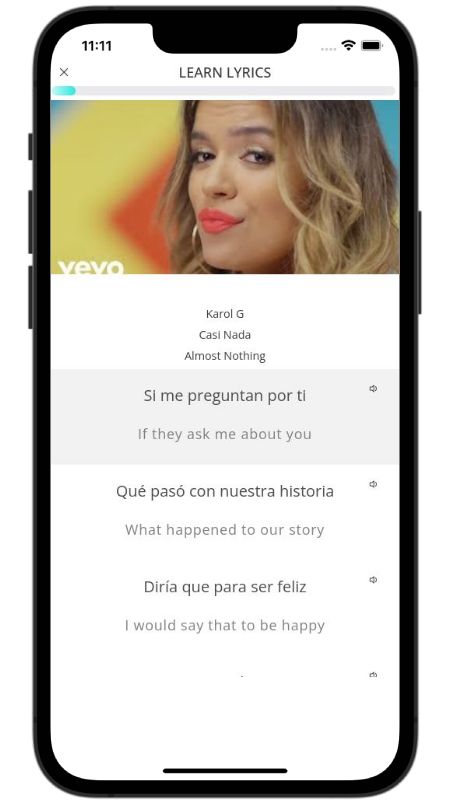
Casi Nada Lyrics in English by Karol G
Olvido translates to "oblivion" or "forgetfulness". It is a powerful and poetic word that suggests something more profound than simply forgetting.
In the song, Karol G sings that what she had with her ex "se perdió en el olvido" (was lost in oblivion). This phrase creates a dramatic image of the past not just being forgotten, but completely disappearing into nothingness, marking a definitive and final end to the relationship.
In "Casi Nada", Colombian artist Karol G delivers the ultimate post-breakup reality check with pure reggaeton bounce. She kicks things off with one of the most savage opening lines in modern Latin pop: "para ser feliz / Mejor tener mala memoria" ("to be happy / It's better to have a bad memory"). Her ex is running around telling everyone that she is still obsessed with him ("yo por ti sigo loquita" - "I'm still crazy about you"), but she calls his bluff instantly. The truth? She is finally free, having fun, and definitely not looking for him.
What makes this track hit so hard is its total lack of regret. She looks back at his toxic version of romance ("A eso que tú le llamabas amor" - "That thing you used to call love") and says it simply failed to work. The moment she walked away, all the bitterness vanished, replaced by pure fun ("Cuando me fui empezó la locura / Felicidad en vez de amargura"). Between the upbeat rhythm and the blunt chorus declaring that "no queda casi nada" ("there is almost nothing left"), Karol G makes it clear that while he is stuck sulking with a bad attitude, her past with him is completely wiped from memory.